Search This Blog

Sunday, May 31, 2015

It's never "the thing" that drives us

I heard a speech today from someone who hasn't really ever studied psychology.  But his opening setup for his speech was on what drives a person.  I am assuming that he was talking of intrinsic motivation.  He mentioned that people make decisions based on their driving force.  He singled out one driving force of one individual and then went on to talk about how we all should adopt this one driving force.

That flies in the face of everything we know about the decision-making process.  One of the best descriptions of decision-making is from the book by Gary Klein called Source of Power: How People Make Decisions.  His book is based on ten years of observations and takes into consideration a great number of articles written by experts in psychology as he applied the principles found in these articles to his observations.

Another view of decision-making is given in this 3 1/2 video.  It shows the affect of stress on decisions.  Other views exist as well, but this is a good sample of the plethora of ideas that exist on the subject.


The bottom line is that someone's driving force for doing what one does is a misrepresentation of how people make decisions. Many factors contribute to decision-making not one driving force.  And, the factors that contribute to making one decision are not necessarily the reasons for making the next decision.  Even when a hierarchy of reasoning exists for decision-making, the hierarchy is flexible from one decision to the next and can change over time.  \

So, the premise of the speech I heard today was erroneous, the examples, though moving, supported only one factor in a hierarchy on one occasion.  That's too bad since one person's strong belief in what he spoke on wasted my time because of lack of knowledge.  I try to limit the times that waste mine.  But, today my decision to listen to this speech failed me.  I need to make better decisions.  There are a plethora of books on that topic you can be sure.  Using Amazon's search engine for their site will give you a good picture of what's available on that topic.

Saturday, May 30, 2015

Bringing it till the end

When the chips are down has an obvious derivation from the world of gambling.  But, the analogy is a good one.  When a poker player doesn't have but a few chips, what does he do - continue to play or fold his cards and walk away from the table?

What I want people to remember about me is that I was in the game till the very end.  Not till I folded, but till the game ended.  I want Jesus' comment to Simon about the woman who brought her expensive perfume bottle, broke it open at his feet and then bathed his feet in it, to be true about me, Simon thought, "What a waste."  Jesus said, "The thing she had, she did."


When will this end?


Myths get started sometimes, and they seem so true that they stay around.  Popular notions, usually unsubstantiated, are very hard to change because of the sheer number of people that perceive it as truth.  One such notion is that men don't talk to their spouses (surveys of women's remarks saying husbands were uncommunicative) because they can't express their feelings very well.

I believe some of the fodder for such a notion came from the psychology sector.  In the 1980s and 1990s, some psychologists, particularly "Christian" psychologists, made an attempt to "fix" marriages according to the model of communication through expression of personal feelings.  The research behind this model turns out to be flawed because the studies were almost all qualitative in nature and many were designed to yield the evidence to support the model.  Subsequent linguistic studies, more quantitative in nature, produced different results presenting a much more complex picture of cross-sex communication.

In the 2000s, the idea of mapping communication ties (in fact, mapping of many ideas such as Facebook connections to track advertising in order to personalize it and mapping the effects of nerve trigger points to detect warning signs for various diseases) showed that communication is affected by a host of influences not merely by personal feelings.  It also showed that a person's method of expression is not influenced soley by sex, but by influences of region, teen networks while growing up, behavioral modification trends during childhood, and many, many other forces.

So, in the movie Aloha, when one of the supporting male characters had trouble in his marriage due to non-communication with his spouse, I was non-plussed to say the least.  It definitely showed how stereotypes are built on unsubstantiated, antiquated ideas and popular notions leading to years and years of erroneous thinking before discarding them.  The general plot of the movie was entertaining, but ignoring the terrible weakness of one of the characters dampened the enjoyment of good entertainment.


The movie trailer at 1:14-1:28 shows one of the 4 episodes in which the minor character is uncommunicative.  I get it. The character is an exaggeration (for humor's sake) of the type of man that doesn't communicate with anyone much less his wife.  The bad thing is that the movie is a reflection of a society that tries to denigrate men's ability to express themselves adequately in intimate relationships by perpetuating the misguided notion that expression of personal feelings with one's partner is the only, or at least the principal, currency of good, sustainable marriages.  That's simply not true.  The world of cross-sex communication will be better off as soon as this ill-founded whim dies.

Thursday, May 28, 2015

Looking to the skies

It was an average work day in 1977 for Walter Alvarez.  He is an American geologist who was chiseling rock in Italy one very ordinary day, just trying to read the rock record of the Earth.  Scientists had noticed for years that fossils and bones appeared everywhere in the Cretaceous strata of the Earth, but the number of bones and fossils diminish by about 75% in the Tertiary layer above the Cretaceous and change in type as well.  How curious, Alvarez thought, so he had gone to these two geologic strata in Italy to investigate.

He did his usual chiseling and collecting and then sent off samples to the lab and awaited the results hoping there would be a clue to this apparent period of dying off on the Earth.  He didn't know that his average work day in 1977 was his lucky day.  It was the beginning of evidence that rewrote the world's history.  It challenged the crux of Darwinism because of the amount of time evolution has to have in order to produce multiple forms of life.  It challenged the geological theory of uniformitarianism because of the abrupt and fairly immediate effects that could be seen around the globe after a catastrophic event.  It challenged religious ideas of creation because of the proof it offered of an event that predated written history, in fact all of human history.


What he discovered on this very ordinary day was something quite extraordinary, a layer of iridium in quantities that can only come from space and the layer in the Earth was evenly distributed, meaning that something had happened at this place in Italy and everywhere else on Earth, not merely in one place.  Now, nearly all scientists believe or give credence to the extinction event that killed the dinosaurs and 75% of all the species of life on the Earth.  Over the last 37 years, the meteor crater has been located that verifies the event and corollary theories of the impact's aftermath have shown more exactly why there is a change in the fossil record.

It was just a normal reporting day for Marco Cava as he combed through technology stories to bring to USA Today.  He was merely reporting on the recent coding conference.  But, this day he decided to report on a Google device that would really change the whole way information is brought to the average person.  It was premiered as the Oculus Rift.  And what a change to the world it promises to deliver.


Everyone has heard of and experimented with virtual technology.  Sometimes the term virtual reality is used, but mostly only the word virtual is used, rightly so.  Virtual reality is something that actually happens in real time, and people interact with the transmission because it is in 3D and people see each other as if they were in the same physical location.  Holograms are the nearest description we have to virtual reality.  The Oculus Rift will change all of that.  Subsequent generations of this invention will allow things to happen from anywhere in 3D reality.

In a parallel story, Edward Baig reports from the same tech conference that GoPro will have on the market a type of camera that will take spherical pictures.  It can also be mounted on the growing market of drones that is projected to be as commonplace as computers in the next 10 years.


Now, I'm thinking that if spherical pictures meet Oculus Rift, then...  our world will be VERY different, to say the least.  2D screens will suddenly be 3D globes and resemble the 3D spherical planet we live on already.

This is the technology side of things.  The education that exists today will be part of the 75% of life forms that will not survive this technological impact.  There's a meteor coming that will change our lifestyle radically, as radically as the K-T boundary.  Education will survive, but not anywhere close to its current form.  Banking and currency will survive, just not as we know it today.  Business will survive, but it will be completely changed in how it employs people.

Change usually occurs slowly and over time.  Sixty-five million years ago the dinosaurs went to sleep one night, along with other species, thinking that they would exist another million years into the future.  Little did they know the next day was their personal last and the last for their entire species.  Tonight is an average night for us as well, but those who don't follow the tech world will find themselves in the same position that many 80-year-olds are in today.  They don't know how to work a smart phone; they don't use email or other electronic message delivery systems; they don't trust Facebook because the government uses it to spy on people; they have no clue how to order from Ebay or Amazon (so they still go shopping, believe it or not); and they think the idea of a virtual world is ludicrous because it is detrimental to "real communication."  Their fossils will not be a part of the geologic record of any year past 2030.

We ourselves could also wake up tomorrow (figuratively speaking, but not by much) and wonder what the big booming noise is, what the fires everywhere on the Earth are from, why the Earth is shaking, and what the reason for the tsunamis is as we drown in the crash of their waves, burn alive, or are blown to smitherines by the tremendous force of shock waves. 

But if we look to the skies to see what is coming...

Tuesday, May 26, 2015

You just can't see them

The science channel today was showing a special about the universe we live in.  The topic of the show was finding other planets like Earth.  As a part of the show, the commentator read that most stars in our universe are classified as red dwarves.  That means they have a lower level of light than our sun, and they can't be seen in the night sky.  Only stars as bright as our sun or brighter can be seen with the naked eye.

At that point, the picture showed the night sky as we see it with our own eyes.  The commentator went on to say that the stars we see were in a 1:2 ratio with the stars that can't be seen, the red dwarves.  Then, the screen changed to show the night sky as it would be seen if one could see the red dwarves.  The number of stars tripled in the sky.  It was a good visual for indicating how much of the universe goes unseen.
 

I'm thinking so much of what we do and think in a day's time goes without being seen.  Sometimes it is a very good thing that what we think is not enacted, thus goes unseen.  But, it's also lamentable that the good intentions that we have, the good actions - usually the little things - go unnoticed. I think if we could see the unnoticed actions and thoughts the ratio by which others could benefit and at least judge us by would triple.  I suppose we just need to be a little more communicative, more revealing, so that people can know that we are good at our core.

Monday, May 25, 2015

Records


I like being around for weather records  There was something special about 1981.  It was one of those extreme season years.  In the summer of that year there were 70 days of 100 degrees or more.  It was a pain to work outside in such heat.  Fortunately, my main job was inside in that year.  In 2011, 30 years later, I was lucky enough to be in the same area and when the summer posted 71 days of intense heat above 100 degrees.  Who would have thought lightning would strike twice on that record.  I remember both summers very well.

Last August was the wettest August on record out of 120 years' worth of record keeping.  That was the precursor to a couple of other extremes this year.  January was the second coldest month on average for cold temperatures (second to a 1929 record) and the wettest January ever.  April was the wettest April, and May is on track to be the same.  There have been 42 tornadoes this year, double that of last year, but only half as much as the record year, 1994, thankfully.

I like being around when history is made.  It means you were there in the hardest (at least the most extreme) of times and survived, which makes one special in some way.  These records in weather mirror the way life works.  Seasons of life cycle around and some of them are really extreme, both highs and lows.  I remember them.  They are special because they make me a survivor.  And they give character that speaks volumes about who I am.

Sunday, May 24, 2015

A little blurry

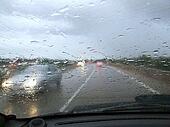
The rain had been a nuisance but it was tapering off for the moment.  The windshield still collected a little rain against so I had to use the lowest intermittent rain setting on the wipers to clear it off.  About every 15 seconds the rubber of the wipers made a small squeegee sound as it hugged the windshield, swiping off the rain.

I was thinking, as the rain would collect on the windshield, that it wasn't so hard to see through the rain before it was wiped clean.  But, I couldn't turn the wipers completely off because about every 30 seconds or so the windshield was too blurry to see through.

That's about right.  Not enough to merit the wipers on even the lowest intermittent setting, but too much to turn them off completely.  And how like life that principle is when it comes to irritations, limitations, false starts, and failed plans... the rains of life.  Not enough of them for them to impede completely because you can always see through them, but just enough where you can't ignore them because they cause accidents if your sight gets too blurry.  There should be a proverb to this effect - something like, when rain begins to lighten, always have your wipers on low intermittent so you can avoid the accident that could easily happen as the heavier rains clear.


I absolutely hate the feeling when "smoke clears."  If I could have at least had my wipers on low intermittent, I could have seen the water on the road that made me skid off of it.  Ravishing was my word a few years ago, smoke is A Thousand Horses' word for the one who makes you better than your normal best.

"Accidents happen," people say.  But not if your wipers are at least on low intermittent.

Wednesday, May 20, 2015

There will come a day

The movie Contact (from 1997) was so very good for several reasons.  First, it was good entertainment.  It certainly helped you escape from the day-to-day grind.  Second, it had merit literarily.  One of the more uncommon ways to write character development is to have a "crossover effect between two characters.  The scientist and the man of the cloth in this film certainly followed lines of development that made their points of view trade places during the course of the movie.  The conflict developed in the plot occurred with different characters, not just the two main characters.  So, it was a more complex plot than merely having two characters or two forces that merely had many obstacles to overcome before one force beat the other or one character won over the other.  Third, The climax was both the culmination and the catalyst for change at the same time.  That is a really difficult feat.  The culmination of the plot was the catalyst for two characters to completely change their points of view.  Job well done.  Other reasons exist to like this movie.  It"s very symbolic of life, for one, and contains a good starting point to discuss religion versus science, for another.

The one scene that captures the essence of two principles close to my heart is the scene in which Jody Foster's character finally hears the signal from space she has constructed her whole professional work around.  She had gone to great lengths to set up arrays of satellite dishes to listen to signals from space hoping against hope to be the first one to capture a message from extraterrestrial life.  All of her efforts had failed.  Immediately before the video begins, she is lying on the hood of her car at sunset with her earphones on, as she had done on hundreds of other occasions, listening to static while falling asleep.

This clip represents so much.  First and foremost, it represents what our parents told us about our dreams, what Churchill is often quoted as saying to the British on some of their darkest days - never, never, never give up.  That is one of life's greatest lessons.  Second, it symbolizes what our preparation does for us in our chosen fields.  We prepare, but often cannot use all of our preparation in our daily affairs.  However, there will come a day - a moment in time when we realize that we have to summon our array of knowledge to accomplish a goal, to rise to an occasion, or like the main character here, swing into action to bring all of our training to bear on the moment we have been waiting for all of our lives.

It's a beautiful thing when such a moment happens in our lives.  More than beautiful, really.  It's magnificent and monumental.  It's what we live for.


Wednesday, May 13, 2015

Rains of the new year

Back in December I began driving over one of the area lakes going to work.  I remember seeing how low the lake was at the time.  The piers were totally out of the water as were the boat lifts.  Around the banks, a person could see where the water lines had once been, about 8-10 feet above the water level at that time.

I still drive that route to work, but these days the rains of the new year have dumped more than the average rainfall for this time of year.  Half of the year's rainfall has fallen ahead of schedule this spring, so the lake levels are back to normal.  Piers stick out of the water only about 3 feet.  Boat slips actually raise the boat a couple of feet out of the water like they are designed to do.  Water lines no longer ring the banks, but water is lapping the shores creating new water lines.


It's good to see.  Everyone was very tired of the 5 year drought that had dominated the area lakes.  It's part of the cycle of the Earth, seasons of drought followed by seasons of flood and rain.  I see that principle as part of the cycle of life as well.  I'm thinking it might be time to end that 5-year drought, too.  Something refreshing, more than average would be really nice.

Saturday, May 09, 2015

Sky and mind


Last night, tonight, and every day next week I am going to have the symphony of the storm to sleep to.  Something about the big show of lightning, thunder, and wind make you sleep soundly, relaxed.  It also helps to focus one.  Often I use it to remember the tracks along my journey.  So tonight, in about 30 more minutes, I will be enjoying the big show in the clouds to the south.  The motherlode of rain will arrive in the morning as I wake.  Yeah, I'll be relaxed, and I'll be thinking of tracks, some of joy, some of sorrow.  But, either way, I'll be enjoying the show in the skies and in my mind's eye.


Thursday, May 07, 2015

Really not kidding

Already people would rather watch a video any day than pick up something to read.  The world went this way starting with MySpace and YouTube.  Google has been pushing for a decade to make everything functional from a phone rather than a computer.  Facebook made public declarations to that effect beginning 3 years ago and made it one of their main goals when it decided to go public and sell shares in the company through the stock exchange.

Easily a person can see the trend away from writing and reading and toward viewing and presenting through video.  Evidence of this is everywhere, but for about a year, people have been answering or "commenting" on Facebook by placing emoticons or pictures in the comment space rather than words.

I'm not kidding about the next step in the evolution of how people will give and receive information. The holographic transmission and storage of files will transform the form, format, and length of what gets passed around and learned.  I'm really not kidding.  (Click here for the article.)  There's a KT boundary here.  I don't think anyone really wants to be a life form that doesn't make it through the boundary, the event that was so impacting that about 75% of all species didn't make it from one side of the boundary to the other.  But, a lot of people are not believers in what is coming.


Beginning at 5:30 of this video, you won't believe what is about to be available with Microsoft Windows 10 even on mobile devices.

Tuesday, May 05, 2015

Anyone, anyone!


I met a dinosaur last Wednesday.  Well, I didn't actually get to meet him in person, but I did see the work of his mind and the effect it had on a young man.

The young man labored, not looked at, reviewed, studied, or tried hard (although all of these are true descriptions), but LABORED over a set of study questions for a History test.  "Tell me about the test," I had asked the young man.  "It's 50 questions, multiple choice, short answer, and matching," he replied.

That's not just a method used last decade, that's a method used half a century ago when I was in school, and a method used in the 1800s, the 1700s, just keep going back.  I understated my true thoughts of a string of expletives a mile long by saying, "Holy mackeral," and shaking my head.

History is important to some people especially those like this teacher who excelled in it and received his Ph.D. in it.  But for others it is more of a boredom thing.  Especially, is it mind-dulling to learn the names of treaties, alliances, and small events when they have already happened and their impact on the world has already passed into oblivion.

There are not enough words in all the languages of the world to express how dull it makes a person to remember trivial information for only the blank on a test.  The young man told me yesterday that he was pretty sure he failed the test.  I'm pretty sure that he did and that whoever took the time to memorize the set of restrictions put in place in Germany in the 1930s  called Kristallnacht will not know what that information is the day his or her summer vacation begins.


Somewhere between this man's learning and awesome knowledge and the kind of teaching that affects and inspires people to reach for the stars is a total lack of awareness of advances in society, a total disconnect.  He's a dinosaur.  His days are numbered.  If he lasts past 2017, he will gasp a breath of air and want to die.  Reading reams of material (Yes, I have seen the articles he hands to his students) and testing it in writing is not even on the radar of study skills for this generation of students.  They're so far beyond this point, they could teach the teacher a thing or two about Kristallnacht - in 3D holographic scenes of reality from the time period.

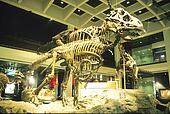
The young man will survive into the generation of adults that take the world to the next level of medicine, space exploration, global reformation, and digitized economy.  The Dinosaur will join his species in the bogs and tar pits around the country for museum purposes.

Sunday, May 03, 2015

Rats and racing

Glastonbury 2008 was a kind of Woodstock in England.  The crowds gathered for many artists and were ecstatic about them all.  At one point, Chris Martin from Coldplay introduced Richard Ashcroft of Verve and allowed him to sing Verve's biggest song while Chris played the keyboard.  In the introduction, Chris said he was going to let Ashcroft sing "the best song ever written."

You be the judge.


Ashcroft sang Bittersweet Symphony.  No doubt it is a good song.  He compares life to a bittersweet symphony.  In verse 1 the song takes you down the only road the composer has ever been down, the road called the rat race and getting off seems impossible.  In verse 2, he frees himself the race.  But you get the clear idea that nothing will change even with the  freedom achieved.  He repeats, "I can't change," and asks "Have you ever been down?" (meaning down on your luck).  The song ends with life still being a bittersweet symphony, and chants, "That's life" as the song fades out.

Life can easily be this way.  I have had this experience myself.  It's the human condition.  I do choose the other path, however.  I see the sweet even if the bitter is mixed in and mitigates the taste of the sweetness from its full effect.

Life is a symphony - beautiful - bitter - sweet.

Friday, May 01, 2015

Crystal clear


I had a great discussion last night with a man I met about a year ago.  It centered around a short story by Mary McCluskey called Before/After.  McCluskey is a really succinct writer.  Her comparisons are crystal clear and appeal to everyone's common experiences.

In our conversation, we talked of defining moments.  Both of us have had a few of those.  I have thought of this before and have narrowed mine to one a decade, but I only told of two.  He's a much younger man than I am, but his moments bore much similarity to mine.  That's partly due to McCluskey's genius in creating the universal nature of the human condition in the story.  But, partly it's due to similarity of personalities.

Each of us told two of the defining moments in our lives.  We spoke of someone we loved having to undergo cancer treatment and walking that journey with him (her in his case).  And we told of an experience in our younger years.  But we continued to talk and commiserate over a few other memorable moments without mentioning the specifics of the situations.

I enjoyed the discussion.  Afterward, I drove home under the cover of dark.  So, naturally, I had time for my mind to reflect on some of the conversation.  I couldn't help but think of the term we had used, defining moment, and link it to a sacred memory, sacred, sacred flashes across the mind's eye.  Sometimes I recall the time with a song that was popular then.


They drown me for sure.

Thursday, April 30, 2015

But have they played the Red Rocks?

Ten miles west of Denver, Colorado, is an amphitheater not built by human hands (for the most part).  It's a natural setting in the rocks, which look red.  Being invited to play there has grown in popularity among bands who really want to be somebody.  Everyone has heard of U2, for example, but not in 1983.  Those in attendance the day U2 played at the Red Rocks Amphitheater say it was, still is, U2's best ever concert.  After playing the Red Rocks amphitheater, people began to spread the word about this great band called U2.  A band may be popular, but until they have played at the Red Rocks, then their stardom is not written in stone.

One of my favorite bands is Coldplay.  They sing songs with a message.  I'm not alone.  Many people enjoy their lyrics.  Of course, they're nobody unless they've been to the Red Rocks.

Oh, but they have!  Enjoy.


Wednesday, April 29, 2015

Homespun genius

The Zac Brown Band came to notoriety a few years back.  Whatever It Is was one of their hits.  I absolutely loved it.  The lead singer brings a homespun genius to lyrics that talk of everyday matters.


This song is about Sweet Annie.  How down-home is this idea.  How true for all of us.

Monday, April 27, 2015

Disruption and delay

Bank of America advertises in the lobbies of its many branches that one can become investment savvy by going to the internet and watching a short video of how to make your money multiply.  BOA has teamed with Kahn Academy to produce this video because it is in its best interest.  Because BOA advertises and provided funds for this video, it has a smarter clientele who will invest with it and make both investor and investee money.


There are many, many of these videos from BOA and Kahn from banking and budgets to understanding interest and investing.  Khan Academy is well known, and it caught the eye of Bill Gates as an investor shortly after it started.  It represents how current education can go from a very compartmentalized form of imparting knowledge to a rather seamless and non-disruptive way of helping people achieve the degree of quality of life that they desire.  People don't really want to go school 6-8 hours a day.  It gets in the way of making progress in life and becoming productive in order to enjoy life.  As it is, children take a hiatus of 18 years of their lives to "learn" how to become productive and enjoy life.  That is probably a whole decade too long.  Learn and learn well through Kahn's method AND get on with your life at the same time.

It makes sense to me.  I relish the thought of a productive citizenry instead of a forced daycare system that extends to an age well past its usefulness.  Teenagers could be productive consumers of society, not detractive consumers.  I'm thinking that education has an opportunity to go this direction.  In twenty-five years from now, I hope to see a whole segment of the population reaping the rewards of its labor rather than treading water until they can fulfill some antiquated notion smart people aren't productive until they've learned to be a cookie-cutter citizen.

Wednesday, April 22, 2015

People differ


Language capacity is innate, no doubt.  It's the phases that language goes through that make it less than predictable.  The idea is that as a human proceeds from infancy to maturity, language growth does the same.  Maturity is really easy to see and chart with the physical aspect of a human's maturity.  It should stand to reason that other human developments go through the maturing process in much the same way.

Here's the thing that schools refuse to accept, and in so doing, wreak havoc with young people's mental image of themselves.  The language people use is so diversified that it is impossible to project a trajectory for it.  People's accents differ.  People's jargons differ since choice of profession dictates the jargon learned to a great degree.  People's friends differ, thus their basic stock of words vary.  People's interests and personalities differ, so the words they choose will follow the lines of these two areas.  People's motivations, intrinsically and extrinsically, differ.  Thus, the number of words and types of words vary.  It's a ragged growth journey from infancy to maturity, physically, mentally, and yes, linguistically.

So, why people are so caught up in trying to make a cookie cutter system for language development is absurd, ludicrous, and otherwise ridiculously inane.  Making a standard for what young people should be saying, writing, and reading is cruel at best and unusually inhumane and unrealistic at worst.  No one really chides a child or adolescent for exceeding or underachieving an average weight or height for his or her age group.  That's unquestionably ridiculous.

People would do well to remember that language matures as people mature.  Because people are unique, their developments are unique in every aspect of growth.  That's what makes growth ragged. Just as healthy eating is good for a body regardless of how short or tall a person is, or what body shape a person has, so a system for good language input is important.  But the outcome of that system is not manifested in a uniform, standardized manner.

Sunday, April 19, 2015

A popular phrase making the rounds


Sometimes a language phenomenon gets a name that someone mentions, and the name sticks for one reason or another.  The modern way of expressing action in English is sometimes to add an adverb to the verb and thus change or extend the meaning.  This can occasionally be done with prepositions as well.  We sprayed water on the house to put out the fire is an example.  

It's an unfortunate accident of someone unthinkingly talking about verbs that include an adverb and remarking that now a single word verb has changed into a phrase of words in order to express its full meaning.  The idea caught on with grammarians (who else?!), so they coined the term "phrasal verb."

Nevermind that  linguists (a very different group from grammarians) had  already used the term "verb phrase" to describe the words that make up the verb.  That's because much of the time people use auxiliary verbs with their action words to express tense, progression, reiteration, hypothetical action, or likelihood.  They use a verb phrase to express every negation of action, such as didn't sing, and most questions, like Have you given your dog a bath?

So, why grammarians thought that the term "phrasal verb" needed to be coined is a mystery to me.  It absolutely serves no purpose since a "verb phrase" already existed, and it serves to confuse the two terms by intertwining their ideas.  "Verbal extension" or "verbal addition" might have served as a better descriptive term.  "Pre-auxiliary" (for current auxiliary verbs like did, have, can placed in front of the main verb) and "post-auxiliary" (adverbs added after the main verb like in, out, down, up) might even be better terms.

Consider the sentences below.

We put the plates on the table. (standard meaning)
We put out the fire. (extended meaning)
We put down one of our friends unwittingly. (extended meaning)
We put up with a lot of noise from the children in the crowd. (extended meaning)
We need to put away $300 a month. (extended meaning)
We all put in our money for the donation. (extended meaning)

It's easy to see that the adverb extends the verb's meaning.  But, what grammarians don't do is analyze why that might be true or if it is actually true.  As an example, one has to ask what the noun is following the verb phrase.  Is it the direct object?  If so, it usually immediately follows the verb like plates does in sentence one.  If one moves out from its position of immediately following the main verb to a position after the noun, then yes, the noun is the direct object.  Indeed, that can occur in sentence one.  Since that is true, then out is really an adverb but is idomatically used.  It merely answers in what condition the fire existed.  Thus, out is not part of the verb phrase at all; it's an idiomatic use of an adverb.  That means there is no such thing as a "phrasal verb."

In addition, other adverbs already invade the space of two or three word verb.  For example, in the sentence, I have never seen the Swiss Alps, the verb have seen clearly has the adverb never between the two words of the verb.  Grammarians have never bothered to classify never by any other term than adverb.  It operates the same way as what they call a phrasal verb, however.  It shows an additional aspect to the verb, like all adverbs do because they answer the questions how, when, where, to what extent, and in what condition the action exists within.  So, to separate an adverb into another classification has no justification really.

Grammarians will not have the last word on this issue, nor should they, since they are not the language scientists.  Ask an English major (the usual field of those who claim to be grammarians) if they have taken a linguistics course, and their response is often, "Yeah, but just the introductory course.  Those courses are way too hard, and they focus too much on language."  Right. Grammarians don't have the tools to analyze changes to English structure over time.  They usually follow established rules for written English and don't analyze the more malleable usages of spoken English.


The next time you hear the term "Phrasal Verb," you can dismiss it outright.  It's not set in stone.  The last analysis has not been made.  As long as competing analyses are active, those who analyze language will continue to debate the phrase's structure, its descriptive term, and its effect on semantics.  Till that debate is over, the term is only a notion of a particular group of people.

Saturday, April 18, 2015

Just on the other side


Living on a cul de sac has a lot of advantages.  One of them is that it is really private.  And after living on a street where many people traveled, it is a pleasant relief to have privacy.  Part of the pleasantness is that I get to lean against my car or sit on the trunk and look at the end of the street and see the natural park that runs the length of the housing addition.

It's virtually impossible to judge distances in the picture above.  It's about 20 yards from my driveway to the sign, about another 15 yards to the trees growing along the stream, and the green sloping hill beyond the trees is about 40 yards.  At the top of the hill is a street of houses.  100 yards beyond that street of houses is a runway for private small planes.  All the houses along that airstrip have hangars for the Cessnas and other planes.  It's been active this spring.

I can't see the runway just on the other side of the hill that slopes up from the stream that I sit staring at, thinking.  But, I know it's there because I see planes landing and taking off.  That keeps me thinking, of course.  I wonder who is in flying the plane and why they are flying.  I imagine a lot of things without really knowing.  But, I think that's why I like looking at this hill and wondering what exactly is happening just on the other side of my vision.

And, by application, I look ahead of me in time.  I can see only a couple of hundred yards in front, but I can lean against what I have already done in life and imagine.  I think of people that I might meet and that I have already met. For the latter, I wonder what they're doing, what their mission now is.  I know they're flying somewhere piloting their craft toward the good life they deserve.  For the former, I have a few more intersections to go through where I will meet people, and I wonder what they will be like and why they will be in my path.

I don't really like seeing only what is directly in front of me.  It's hard to judge the distances looking too far ahead, and then the scene disappears.  I can't see what lies just on the other side.