Search This Blog

Sunday, December 30, 2012

Come again


Most people would tell you that time is linear.  I know that is how it appears in the smaller increments like minutes, hours, and days.  The progression from sun up to sun down makes us experience the linear nature of time.

But then, there's the measure of a year that masks linear time and makes us see that time is cyclical.  The seasons make us know that somehow we have been in this period of time before.  Each spring we feel hopeful for what is to come and look forward to seeing life all around us come to life all over again.  Each summer brings its special delights of travel or other enjoyment.  Every fall we settle in for the beauty of leaves falling and weather changes.  Every winter we hibernate to the comfort of our warm houses.

And, to some extent, decades and centuries act cyclically as well.  We feel that others have passed through this time before us and had many of the same kinds of experiences we have had.

Inside my mind tonight, I look back down the line of time.  I pause at the places I want time not to march past, but to stop.  Several of those spots bring laughter or joy or pleasure to my heart.  And then there's this one spot... ahhhhh this one place... where, when I look closely, the line becomes the circle of the yearly cycle, and where the laughter, joy, and pleasure last as if time is in slow motion.  More than anything, I wish the loop here would not simply slow down but change again into the circles of infinity.


Eventually, however, even in slowed time, the cycle runs its course and straightens again into linear time.

But tonight, I am inside that slow-moving loop... cherishing each of its seconds... loving the joy of those seconds... and having faith that another loop with the same moments will fill a spot soon on the timeline.


Saturday, December 29, 2012

Light and heat

Cold and dark are not two terms a person really wants to hear.  They suggest that something is amiss or miserable.  They conjure up something unrelenting or hard to bear.  They might even suggest an eclipse of the human spirit.  Tonight as the sun set and night crept in, it was cold and dark.

Fortunately, I could go inside where light and heat shut out the dark, cold night.  I could relax and eat and enjoy my evening despite the conditions outside.

I think everyone, in the chambers of his or her heart, has a person and some places that serve as houses where light and heat exist.  And how necessary they are against those who make us miserable and try to eclipse our human spirit.

Wednesday, December 26, 2012

Christmas closing

Narratives in a novel can be the author's best friend if written well.  They can convey setting and feeling all at the same time. On this evening of the first white Christmas in a long time, the following narrative capsulizes my closing thoughts for the day:


Outside, the howling wind that brought the blowing snow had subsided.  Inside, the breeze of air that brought warmth to the living room from the central unit had just clicked off.  That left the man in absolute silence.


His outward appearance would make a bystander think that he was frozen like the beautifully white landscaped scene outside the doors and windows.  But, inside this man's mind was a flurry of activity, not of this particular day, but of a time that brought happiness to his heart.  And, he wanted to heighten the perceptions of those scenes going through his head of that time not so long ago, so he allowed his senses to add to each scene.

He heard echoes of an unmistakably familiar voice followed by laughter, so light and full of cheer.  The sound relaxed his whole body.  He remembered the fragrance pervading the space around him.  The aroma had arrested his attention as he awaited the next movement that would waft a pocket of scent again by his nose.  His mind switched to tactile sensations and his fingers felt smoothness, softness.  He recognized every movement in the scene, every color, and he tasted the air of the memory.

His mind lingered on the captured memory.  But the lateness of the hour overtook him eventually.  The man would sleep deeply and happily this bitterly cold yet robustly warm night.

Monday, December 24, 2012

Very deserving

Sometimes you hear, "She's just the nicest person."  Sometimes it's, "You won't find a kinder, more optimistic person."  Now and then you hear, "She's just the best; everything she touches works out right."

But if you watch this person at work, everything goes right.  Lemon kind of days are even turned into lemonade.  If you watch this person with her own children you see that she knows what each of them needs and nurtures and provides for that need.  She has that gentle touch with them, never breaking their spirits when she could.  They thrive.  If you watch this person with friends, you see them light up because she cheers them and makes life lighter for them.

Happy birthday to an amazing person.  People say all the above and more about her.  Her children call her "Mom," without knowing she's the best mom.  Her mother calls her by her name, but knows what a jewel she has raised.  Her colleagues call her nice, kind, optimistic, cheerful, helpful, insightful, diligent, determined, ambitious... simply amazing... and deserving of the best possible day.

Saturday, December 22, 2012

Stretched

I saw this caption on a poster on Facebook today.  "All in all, today was a fine apocalypse."

I love this caption because it captured the irony of some disastrously predicted day with the calmness of the actual day.  I guess it's the contrast that I appreciate.

And that gets me to thinking about other contrasts that I see regularly.  I see contrasts in my daughter and my daughter's daughter.  I see contrasts between my mother's life and the life I have carved out for myself.  I see the difference between the life of my own siblings and my own.  Given our common background, our lives many years later are so different from each other, not merely in personality.

And then there is the contrast of who I was before 2009 and after.  I had resigned myself to a rather minimal existence.  Since then, it's been a fine apocalypse (which translated from Greek  means something hidden being revealed, a disclosure of something not known before).  Call it broadened horizons.


Friday, December 21, 2012

Dabbling in the possible

Just about 4 more hours and the end of the Mayan calendar, corresponding to the end of the world, is supposed to take place.  It could happen. Anything is possible.

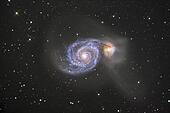
The calendar is right about several things.  The Earth finishes its precession, its 26,000-year wobble in its orbit.  The sun is aligned with the center of the Milky Way Galaxy.  The winter solstice takes place.  Earth is a part of the alignment with the sun and center of the Milky Way.  The sun will appear brighter to objects around it in the galaxy because it will appear inside a dark rift.  Perhaps, all this alignment foretells the end of an epoch.  If so, it is supposed to end drastically, disastrously.  Anything is possible.

If the end happens, I know what will be on my mind on the way out.  I will be calling up episodes from my own personal epoch, one that carries a voice, a face, lots of cheer and laughter and happiness.  I am grateful to have those visuals in my mind, and they'll be replaying themselves tomorrow.  In the event that I live beyond the 21st of this month, I want the next epoch (even though it is not accounted for in the Mayan calendar) to replace the former visuals with reality.  Anything is possible.

Wednesday, December 19, 2012

Differences in time


The Earth is the same, and so are the people on it. But, when the people 5000 years ago looked at the sky, they couldn't envision what I do today. They saw only blue sky in the daytime and starlit sky at night. The Earth was the center of their existence. The sun literally rose in the east, set in the west, so it must have been on the move around the Earth. Nature had spirits that controlled it. There was the spirit of the forest, of the ocean, of the hills or mountains, of the river, of the sun, etc. Somehow the mysterious spirits were linked to the mystery of the skies above since people looked up when they thought of powers greater than themselves.

I look up and see distances between Earth and moon, Mars and Earth, Earth and Venus because we've been there. I have pictures in my mind of their surfaces. I know what all the planets look like. They're not mere twinkles against a black background. Travel to the moon for vacations begins in 2020 for those with the money to make the round trip. I know the names of some of the other suns that are close to our own.  The number of suns besides our own is around a billion in just the Milky Way alone. I know the shape and name of the galaxy of these billion suns. I can see the the neighboring galaxies that make up the cluster the Milky Way is in.


The moon controls the tides on Earth to an extent. The tilt of the Earth on its axis determines the length of the day. The position of the Earth in its revolution around the sun determines the season of the year. Solar winds can affect the magnetism and electrical charges on the Earth because of the solar winds during the 11-year peak of the sun's own cycle. Spirits of earth, wind, and fire don't apparently have any connection to any of the mysteries that exist today.

Only a cupful of time, 5000 years, has yielded a comletely, 100% different view of the sky between a viewer in 3000 BCE and the viewer in 2000 ACE. And that's how I feel from where I stand now in life and where I began my journey not that many years ago. My view of life is as radically different now from my early college years as the viewers of the sky 5000 years apart.

Most importantly, I know what moments in life are the ones worth keeping alive in both memory and in faith that they will repeat. I know the value to put on someone who brings cheer, laughter, optimism, vitality, determination, and stamina. I know the premium of someone who makes me better, creates synergy when together. I die a little each day without that one.

I don't look up at the sky and wonder what is out there. And I don't look at life and wonder who and what is important. There's a 5000 year difference, a lifetime of difference. And, it feeds my faith that I will one day create synergy with the one who makes me better.

Tuesday, December 18, 2012

December warmth

Let me check... yes, there are orange and red leaves blowing down the street, collected against the curb and strewn across the front yard.  Good to know.  Judging from the near 80 degrees outside, it seems like an earlier month. 

Quick check... The calendar still shows month 12.

What a mild second half of autumn.  Twice in the last 2 weeks a record warm temperature has entered the books.  November was the fifth warmest since temperatures have been kept for over 100 years.  December is already working on being the hottest one ever during the same time period.  It is certainly not the norm.

I hope that this December in my life will be the hottest one on record .  I have too many memories of frigid air pervading the month's weather.

How I wish...

Thursday, December 13, 2012

Shift in analysis

The elliptical phrase is something I learned in high school.  She is taller than I is an example.  My sophomore and senior English teachers helped me to understand the concept.  She is taller than I is the sentence and (am tall) is the portion of the sentence that is left out, or ellipsed.  Thus, She is taller than I (am tall) is the way to understand the sentence.  Some people actually say, She is taller than I am, and only leave out the word tall.  So, the elliptical conclusion made sense to me.

This knowledge lasted about 20 years, but then I noticed that people under the age of 40 prefer a different sentence, She is taller than me.  That begs a different analysis.  These people heard the taller than I part and didn't think it matched the construction of the language they spoke.  They thought the word than acted more like a preposition, which is followed by an object, rather than a comparative adjective followed by a connector to an elliptical (invisible) phrase.  So, very logically, they placed the object form of the first person singular pronoun after the preposition than.  That makes good sense to me.

The shift in analysis shows a couple of truths about language.  First, speakers of a language can change the language at any time they choose.  (A couple of other examples of this truth is found with the words hart and ye.  Hart fell into disfavor and disappeared from the language altogether, and the second person singular pronoun ye was not liked after the 1700s, so it dropped and people substituted its popular twin you.) Second, what makes sense to one generation of speakers doesn't make sense at all to a following generation, so they change the analysis to use a form that does make sense.  (An additional example comes from the fact that so many speakers have decidedly not accepted the split infinitive rule as a sensible analysis.  People will say to not like (something) in preference to not to like (something) over and over again.  They don't agree that to should not be separated with another word from its verb .)

I find that in areas of life that don't make sense, I will inevitably "fix" the problem.  I will analyze a situation and drop or change the part that doesn't fit for something more sensible.  That explains a few shifts in thinking I have experienced lately.  Not only am I comfortable in making the changes, I enjoy life more since those changes fit a more suitable paradigm.

Saturday, December 08, 2012

Override


I was raised in such an austere, rule-saturated environment that when I was in my 20s, I remember wondering why there was such a thing as desire if one had to always trump the heart with the reasoning of the head - self-control my parents had called it. 

As I experienced more of life, I followed what I had been taught, but I still wondered what the role of desire was when it came to a duel of heart and head.  I realize now that responses need to be measured in most instances, but measured doesn't mean that reason always prevails.  There is a purpose for having a heart.

The heart and the head were made to decide things together.  Reason doesn't always prevail.  It analyzes and suggests.  The heart tells what is desirous.  They, together, come to an agreement.  When the heart wants a stronger say, it wins, as it should.  The head merely guides it down its desired path so that it doesn't steer completely off the road.

I have trained myself for so long to override my heart that occasionally I do so even when my heart is racing with desire and should take the decision away from head.  One of those occasions recently occurred.  How stupid it was to succumb to reasoning in light of every fiber in my body telling me to do otherwise.  Stupid doesn't even get close to describing how poor a decision I made.  I should have acted with reckless abandon and shown the content of the desires of my heart.

I realize that it is a bit unusual for circumstances to recur, but if this one ever does, I know exactly what to do... and it starts with repressing every thought related to reason that I might have... and it ends with expressing every thought stored in my heart... in the same way a star explodes brilliantly against a night sky!


Thursday, December 06, 2012

Breath of life

Understanding words' origins sometimes helps one to appreciate a word's meaning.  Aspire and inspire are two such examples.  They are very close in meaning.  Aspire means to desire something of high value. Inspire means to influence someone to be better than that person would normally be.  Both words use the root spire, a derivation of Latin, to build on.

A quick look back in time shows the word spirare was used by Romans to mean breathe.  So, spirare was a really important word.  If a person stopped "spiring," then he or she would no longer exist.  When the word was used in the offspring language of French, it still meant breathe.  But the French introduced spire to the English after 1066, who began to augment the word with a couple of notable Latin prefixes.

At first in+spire meant simply "to breathe in" (inhale), but the English began using it to mean to breathe into oneself, and thus, to make one better than he or she normally is.  Aspire's history paralleled inspire's in both time and type of development.  The English added the Latin prefix a to spire to make a new word:  to breathe upon or toward.  And, of course, no one would breathe toward something unless he or she was desiring it.   And, who would desire something that was not of great value.
 
The English did one other thing - they retained the Romans' idea of "life-giving" or "spirited" with the word spire.  The Romans had another word for simply the intake of air.  Its history took a different route into English.  So, inspire and aspire took on a life-giving quality, or at least an increase of spirit, for its base meaning.

I'm glad to know this story about "breathing."  Life is easy to bog down in and to quit "spiring," so in order to rise above the bog and continue to "spire," one has to turn to someone who will give him life... someone who will breathe toward him... someone who will breathe into him... make him better, and alive... one of high value to be desired.  So, I am turning to catch that one's breath.

Sunday, December 02, 2012

Satiation


Euphoria  (eu=well, pherein=to bear, > to bring to a well feeling) was a word coined using two Greek words to help doctors describe one becoming healthy after being sick.  As the years have passed, it has come to also mean a state of complete happiness without a hint of sadness.  I can't imagine that one could experience anything other than euphoria if a drought in his life has been been broken and his parched soul is soaked with rain from the one who gives him life.  I guess the meaning of the originally coined term applies too.  But, what the word has come to mean is the reason for the smile on my lips.  I am sooo very thankful.

Friday, November 30, 2012

Falling

The saying is, "Into every life some rain must fall."

Occasionally the rain is cold, in the form of snow, and it envelops you, soaks the hat you're wearing, lands on your face and nose, and slickens your hands making you lose your grip.  And, when you think you have slipped on ice for the last time and can't get back up, something beautiful happens...

because of faith.


Thursday, November 29, 2012

A little proof

Today, while watching TV, I saw a commercial for Dragon software, a program that allows one to speak into a microphone for it to translate the spoken sounds into written words.  A grandmother wanted to help her grandson's written expression in school, so she bought the program for him.  The grandson then gave a testimonial.  He said that having to use pencil and paper distracted his thought process to the point that he couldn't focus on what to say.  Speaking words helped him to bring the process of thinking and "writing" (in this case, seeing the spoken words in written form as feedback) together again.  He could write without distraction.  [This is a commercial so even though the writing process has been grossly oversimplified, the bottom line is often true.]

This is the most apparent evidence yet that writing first, and then reading soon after, are in their dying throes.  One of the most asked questions when I make such statements is, "What will take their places?"  The statistics of the growth of YouTube illustrate phenomenal growth.  People use YouTube for everything from watching music videos to presenting concepts as a teacher would in a classroom.  Recently, my brother's daughter wanted to send a heartfelt message to my family, so she videoed herself playing a song she had played and sung on the piano and emailed a message and a URL so that we could watch her song.  So, I would suggest that the new format already exists for what the future holds in the place of writing and reading.

As far as format goes, perhaps the National Geographic Channel's series of programs presenting how the different land features were formed on the Earth is the new model.  The series was called How the Earth Was Made.  I reference here the episode called America's Gold.  In this 43-minute video, you meet several experts, you see actual mining taking place, you see explanatory graphics, you hear an easy, but very organized narration of how gold was formed in America, and you hear a recap of the important information at the end.

No one knows what format the ultimate form will take to replace the pen and page, but it seems to me that the visual is already on the screen (a parody of the writing is already on wall, ha).  All kinds of opportunities exist with this format.

I am so ready to welcome the easier-to-make and much-better-remembered formats of YouTube and NGC as the first wave of presentation.  And, I'm even more ready to say goodbye to the painful, time-consuming art of writing.  See ya runes. Good to see you pics.  You couldn't come soon enough.

Tuesday, November 27, 2012

A relative world

Growing up, I leaned that honesty was the best policy.  But, that value is only relative to what people want others to think of themselves.  "Honesty will get you nowhere" seems to be the active rule of the day.  It is the one people really live by.  If I have nothing someone wants, I am treated a little deceitfully until the person wants something, then I get a little honesty out of him/her.


I'm not saying it's the best way to be.  I'm just reporting what I see most of the time  Nearly every value is relative to the person's desire in a situation.  Yes, it's a relative world... relative values, relative truth. 

Monday, November 26, 2012

Almost there

There are, of course, the notable examples.

Alexander Solzhenitsyn, the great Russian writer and dissenter, was sent to a number of different labor camps from 1946 to 1956 for his crime of writing about Stalin in a less than admirable light and writing about the labor camp system in general.  He was stalked by the KGB for the next 13 years.  They seized most of his manuscripts during this time and discredited him whenever he wanted to publish something. The writer's union in Russia never approved his writings and expelled him in 1969.  He remembers thinking that his works would never see the light of day.  Life was utterly miserable for Solzhenitsyn.

No one knew that in 1970 life would change for Solzhenitsyn.  He was awarded the Nobel prize in literature for copies of his works that had been partially published in the West or had been smuggled out of the Soviet Union.  Influential political figures in the West put immense pressure to release him from his internal exile.  Finally, in 1974 Russia deported the world renowned dissident.

In 1974 on the eve of his release, unaware of any attempts by the West to gain his release, Alexander tells of thinking of trying to escape.  He felt like he would have been killed since he didn't have a real plan.  But, a person he didn't know came to him to talk, thus thwarting his plan.  A day later he was released, and his life totally changed for the better.

Nelson Mandela, the South African president, wasn't always liked.  At age 44 he was arrested for his activities against the British government.  He spent the next 27 years in a tiny prison cell off the coast of South Africa.  Unbeknownst to Mandela the world changed while he was locked away.  Dynamics between blacks and whites shifted.  Finally, immense pressure was brought by the U.S. and other countries to end the Apartheid policies of whites against blacks.  Mandela became the symbol of the end of the Apartheid because of his dissenting activity at age 42.  But, he didn't know any of this as he lay in prison.

He didn't know when he lay his head down to sleep on February 10, 1990, at age 71, he would be released from prison the next day.  Three years later he would receive the Nobel Peace Prize and a year later be elected president of South Africa.  Mandela later would talk of the mind games he played in order to remain alive to get him to February 11th.  On February 10th, he was a miserable, failure of a human being.  A day later his whole life changed.

There are, of course, the unnotable examples, people in every town who have stories of success by waiting for their their lives to be fulfilled or to be changed.  They don't win prizes or have positions of prominence, but they wait.  And one day, without notice, their path radically changes.

The two notable examples are inspiring stories for people who are not in the position they want to be.  No one knows really what will happen in the future.  But, for some, it is the day before their release.  They won't know it until tomorrow.  They lay their heads down tonight as failures.  But the message from the two notable men (and from the unnoted ones) is to have faith.  Release is imminent.  Wait just a tad longer... life will change in the morning.

Saturday, November 24, 2012

A special case

I love anomalies.  They are nature's way of letting humans know that things aren't always neat and tidy.  Life has ragged edges.  Information has outliers.  Daily events aren't always consistent.  And, explanations for all of this untidiness are not always apparent.

Particularly, I love the anomalies of the English language because they stump and frustrate those who feel a sense of arrogance in knowing all the classifications.  They're those patches of word stickers that defy the class.  Verbal particles are one such patch.  Traditional grammarians say that verbs always follow the rules assigned to their category and are easily identifiable.  One such rule is that the last word of a verb must be one of its four principal parts.  The verb never ends with any other word.  Auxiliaries and principal parts are the only possible word categories permissible.  Even if a verb ends a sentence, the last word word of the verb is a principal part, not, say a preposition.  Sentences can't end with a preposition.  Traditional grammarians don't even recognize the term verbal particle because to do so would be to acknowledge that something doesn't really abide by the descriptions that they have spent years learning and feeling so knowledgeable about. 

Oops, what about that last sentence?  "About" is one of those apparent prepositions.  But, is the sentence not a natively formed spoken grammatical structure?  Of course it is.  But the grammarian is quick to point out that the sentence is a bastard sentence, a sub-par sentence, a non-standard sentence.   It has an easy fix: ...descriptions about which they have spent years learning and feeling so knowledgeable.  Oh, ok.  That change would follow the rules all right for both verbs and prepositions although nearly all Americans would be "wrong" when saying it their more intuitive way.

But then, there are those instances that don't have the "fix" available.  "I want you to shut up," is such an example.  "Up" is normally an adverb, but in this case, "up" doesn't tell how, when, or where to shut anything.  Sometimes adverbs double as prepositions (as in "the climbers went up the mountain").  However, changing to "up which to shut" is not a possibility.  The infinitive form is "to shut up" not "to shut" plus an adverb or "to shut" plus a preposition with a relative pronoun preceding the infinitive.  Now, there's your anomaly.

And how about "behavior you don't have to put up with?"  Is the grammarian going to tell you to fix it by saying, "behavior up with which you will not put?"  Not even they would be so foolish.  The infinitive of the verb is "to put up with," not "to put" plus an answer to how, when, or where, or a transformation of "with" to the beginning of a prepositional phrase ("with which you will put up" still strands "up" as a part of the verb).  Ludicrous!

And then there's the phrase, "rules to go by."  This is a synonymous expression to "rules to follow," right?  Well, if you take the traditional fix, "rules by which to go," then the synonymity vanishes because "to follow" does not mean "to go."   Instead, "to follow" means "to go by."  And how about "to do (something) over."  Is that the same as "over which to do?"  Never in a million years!  Is it the same as "to do" something and then answer the adverb question when? Over.  Perhaps, except that the native speakers have coined a noun to name the action (which occurs frequently, such as "to brand" becoming the noun "brand" or "to try" becoming the noun "try").  Natives speak of "do-overs" as a single word, a noun.  That suggests they see the term "over" as a part of the action.

All of the above is to reiterate that when anomalies occur, their explanations are meaningful and explicable even when not apparent.  One of my most cherished times is an anomaly on the landscape of my life.  It defies normal classification. Oh, an explication exists, just as there is an explication for words after verbs - a new way of thinking about verbs - a particle (part of another category) that attaches itself in a way that doesn't include the whole category.  The explanation is, though, special-ized, making the anomaly on my landscape special-ized as well.


Friday, November 23, 2012

A note about value

I have read a number of books and articles that explain the underlying theory of how the brain developed over time into what we have now.  The theory states that the brain developed in a way so as to help humans survive long enough to reproduce and ensure the survival of the species.  Such a view places great emphasis on environment, but even more emphasis on what is encoded into the DNA for the next generation.

So, in order for the brain to develop to another stage it has to know what is important as opposed to what merely happens and is routine or unimportant.  That means the brain also assigns value.  What is the value of anything that happens?  Is the event tagged with a rank order number, or is the value assigned according to a binary system of "This is important/This is not important."  If the former, then what is tagged with something less than most important has a probability of entering into a decision that is made for survival or reproduction at less than 100% (and could be as low as a single digit percentage).  If the latter, then everything deemed important is relative to survival or reproduction, but for the moment only.  Otherwise it has no value.  Each decision is relative to the event and the circumstances surrounding it.

That's when I begin thinking of our reason for education, and more to the point, education of the masses.  The curriculum does not relate to survival and reproduction by either type of value system.  Do children see that what they learn as having anything to do with survival of the species?  No.  Which means that they assign a low value number to the educational events in their lives (according to the rank order idea) as it relates to their survival.  Or worse, it means that they assign no value to the educational events in their lives (according to the binary system) as it relates to their survival.

School is supposed to prepare one for success.  First and foremost is the success as it relates to survival of the species.  So, curriculum will die (albeit a rather slow death) on its own because it is not related to the way the brain is constructed, or the species will shrink because survival didn't hold its a priori place.
Well... I am trying to do my part to pass on to posterity what puts bread on the table.  That's the universal bottom line.

(Or the theory could be wrong, of course, in which case our schools are performing magnificently since the curriculum now is better than it ever has been).

Thursday, November 22, 2012

Why this time

Tomorrow will be a day of great activity.  Family will gather.  Conversations around a meal will keep everyone updated and informed.  It will be a great time, a ritual well worth the time and effort each member of the family who comes gives and.makes.  I look forward to it.

Right now, though, it is very quiet.  It's the time of day that I draw strength from because it allows me to rejuvenate my inner being.  I have time to go deep inside the caverns of my mind where laughter from previous great times are still echoing, where past happiness continues to resonate and bleed through into the present, and where unfaded writing of those recorded memorable events still graces its walls.

The silence of the deep night pours the new foundation for what tomorrow will build on it.  And, now I am ready for the ritual well worth the time.

Wednesday, November 21, 2012

Parallel tracks

Masquerade.  It's a verb and a noun.  Sometimes it's a way of hiding behind something; sometimes it's a way of showing off something.  Sometimes it's an event for all to participate in; sometimes it's an event in which just one person reveals.  I see the behaviors and know the events.  I loathe both, but can't cast the first stone.  Who can?

Manifest.  Wow.  A verb and a noun too.  Sometimes it hides one among many; sometimes it brings to light the several, the many.  Sometimes it's a record of participation; sometimes a mass in which one name is buried.  I know its uses and places.  I appreciate both, but won't brag that I always make the list.  Who could?