Search This Blog

Thursday, October 30, 2014

Hasta la vista, bebe!

The commercial shows a man telling the viewers he’s looking for a car.  He speaks of an easy way to shop for one these days.  You guessed it – by internet.  He tells people to go to TrueCar.com.  He wants people to see how easy it is, so he takes a picture of the car he has found that he wants, uploads it to TrueCar.com.  The website IDs the car and gives the price he should pay for it.  “It’s that easy,” he says.  

The man didn’t type anything into any fields on the internet site.  He didn’t write an email of a car description.  He didn’t have to type a conversation with someone from online chat.  For sure, picture identification has been around for a few years already, but new applications like this one will begin popping up more and more.

If I start connecting dots, a picture begins to emerge.  Apps become available to make paying for everything and anything with your phone… money becomes unnecessary.  Online banking, direct deposit, bill pay… money becomes unnecessary.  Apps identify music and give artist, publisher, and name of tune without typing any words… typing (writing) becomes unnecessary.   Stories are told by film, thus film as literature will increasingly become the accepted mode as 3-D films increase in number and morph into holographic film when the time comes… reading becomes unnecessary…  Apps on phones, TVs, and even restaurant menus custom-design the world we want to create for ourselves.  Apps are picture-driven, even on menus for restaurants.  The last time I ordered at Chili’s, I ordered and paid from the table from an electronic tablet.  The server only brought the food… money and writing were unnecessary, including a signature.

Yes, yes, yes.  Apps are the new literacy.  Easily the world will go to coding to be able to move around in it using apps for daily routines.  Control the code, control the environment you want.  The landscape for 2017 has begun to take shape.  I love it, and it will greatly depend on the ability of the young people in the US to stay on the forefront of technology to take us into the coming environment.

Ask anyone what the environment was like in 1964.  Has it changed?  And that was a mere 50 years ago.  10-year-olds today will have a quite different world as well and it will happen before they turn 30.  50 is cut to 25 or 30, a half-life.  That's major change in one generation.
 
One theory of why the dinosaurs didn’t make it is because they developed in an environment that couldn’t support them if that environment changed even a little.  But, a meteorite hit and changed their world more than a little.  Drought happened worldwide, forest fires ran rampant across North America from the intense heat of the meteorite, darkness cloaked most of the Earth and destroyed plant life.  And, of course, the effects of the blast itself devastated about a fourth of the world in the arcs around the meteorite's diameter– destructive shock waves, tremendously forceful tsunamis, and intense heat in the immediate area.
 
I’m thinking that there are parallel conditions here for those who don’t see the emerging picture in just a few very short years and change.  My word of the day for them… Adios!

Sunday, October 26, 2014

A dragon's beating


I’m reflecting on a dream I had once, many, many years ago.  I was 31 at the time.  It was more than a nightmare to me.  It had seemed real, so much so that when I had woken from my dream, I had felt very exasperated and physically tired. 

I began wrestling with a dragon, the typical dragon – long tail, spike-fins up the backbone, Tyrannosaurus Rex-style dragon.  It was about four times my height.  I don’t recall how the dream started, but fairly immediately I fell into the dragon’s grasp.  It toyed with me at first, then grabbed me in one of his claw-hands and began slinging me around.  Suddenly he started banging my body against the ground.  That hurt, of course.  

I saw no end to this slinging and banging and hurting.  I cried out to the night sky (or at least the sky was dark), begging anyone who could hear to help me.  No one heard.  I kept calling, begging the dragon to stop.  I remember thinking, “How long? How long?”  I thought I would die in the next instant if the dragon didn’t stop.


Then I woke up.  It wasn’t a startling call to consciousness, but a slow and groggy swim back to the reality that the dream had ended.  Or was it a dream?  I couldn’t tell at first.  It seemed so real.  I was exhausted from the fight.  I still felt the pain of the slinging and banging and hurting.  Distinctly, I remember thinking that if no one helped the man, he would certainly die from the beating.
After a few minutes of slowly realizing that the episode was a dream, I tried to think that the dream applied to someone.  I immediately thought of my brother.  A little later in the day, I called him to see if something horrific had happened or if he could see that something was about to happen.  No, he said.  So, I relegated the dream to the back of my mind, thinking that if I recognized that this allegorical dream matched someone I knew, then I would tell them.

I never met anyone that matched this dream at that time.  But, as I grew older, I realized that the dream would apply to a lot of different people, including me, because it was one of those universal allegories.  Most dreams represent jumbled thoughts and become scenes in a dream in order to work through situations, so it probably was something I needed to work through.


A number of years have passed since that dream occurred, but I still remember it vividly.  It could apply to a number of situations I’ve had through the years if the dream was meant to be predictive in any way.  Likely it was not.  But I certainly have had a number of symbolic beatings in my life when I thought I would certainly suffer to the point of death.  The 13 months my son had cancer and his subsequent death tops the list of a very black time in my life.   The brilliant sun of another period in my life has set in the west and night has set in.  Other times could be represented by the dream as well.

And what about that man?  Did he certainly die?  He’s still kicking, as they say, but the dragon’s beating has taken its toll.  He’s not so much reeling from the blows now because he knows the answer to the sentiment, “Will anybody help this man?  He will die if no one helps him!”

Wednesday, October 22, 2014

Ours to conquer

In the year 2000, when it was mentioned that reading and writing will disappear sooner than later, the reaction was not just one of disbelief, but one of ridicule.  Here it is 14 years later.  Now the reaction is one of sorrow, usually, that reading and writing will apparently be replaced.  A lot sure can happen in a short time.  Who would have thought that at the start of the 10 year battle for supremacy between reading and writing and that quantum leap to the visual, virtual world that an assault so powerful could have unseated two core values such as reading and writing.  Well, I'll tell you what - a whole generation of digital natives, virtual world inhabitants, have taken over the invention circuit and changed the entire landscape right under the baby boomers' noses.

In case there is a non-believer or two left in the crowd, here is an article from today's news.


Well, what do you know!  A bookless library!  Click here.

Yeah, reading and writing  are being replaced.  With what you ask?  Something that will lead us to a world a quantum leap away from this one now.  How so?  Click here.


And in case you think women are the ones who are bemoaning the switch from reading and writing to the visual virtual world, think again.  Click here.


Yep! By the time 3 more years go by - the end of that 10 year war to replace reading and writing - I suspect that coding will be the new writing, that libraries will contain the machinery to deliver a much more responsible and much more robust type of learning, and that women and men alike will partake in the world that has all along been theirs to conquer.

Saturday, October 18, 2014

Intertwining paths

The strongest case that I know of for the idea of destiny and fate is Sophocles' Oedipus the King.  It's fiction from a really long time ago, but it lays out the case nicely for how life weaves events beyond one's control and knowing, then brings the strands together in a way that Oedipus could not do anything different than what he did.  He had a date with destiny that swamped his boat.  The event didn't kill him, but it certainly changed everything possible about his life in a tragic way.


A modern and less deterministic treatment for the idea of destiny is depicted in the film from 2001, Serendipity.  The two main characters, Jonathan and Sara lived in two different countries, and after a chance meeting in NYC, they parted again, hoping that destiny would lead them back together again.  Just when it didn't appear that a reunion would happen, their shared token of a symbol of their love resurfaces and leads them to actively pursue finding the other person again.  This fiction story had a fairy tale ending, unlike Oedipus the King.


The new movie, The Best of Me, put a bit of new twist to the old theme of destiny.  It allowed the two main characters, who had been estranged for 20 years, to appear in the other's dreams, as a foreshadowing of good things to come for them both.  Their "chance" meeting after 20 years apart healed their old wounds.  It fulfilled their dreams and their unrequited love.  The best of each of the two main characters was only seen as the two were led to a brief healing/cleansing/blending moment in time together.  The plot was not a gushing love story, but a story laced with reality and the irony of  thwarted love happening simultaneous to the greatest fulfillment of love.  The moment in which both of those ideas met happened without either of the character's planning before or after the healing/cleansing/blending moment because destiny had led them to that moment.

I have personally resisted the idea of destiny and fate, but every time there has been an intersection of my life with someone else's, I have wondered why our paths crossed.  If there really is an answer to that question, then I should stop resisting the idea.  But I have usually seen the intersection of my life with someone else's as happenstance.

I do have, however, one exception to that view, but only one.  In that single instance, I have never identified the path that led to the intersection. The point of intersection was clearly understood, but the path leading away from that intersecting point never yielded the reason for the separation of paths leaving it as unclear as the path leading in.


 However, I would say that that one intersection has altered my view because I am so much more..

Friday, October 17, 2014

Beauty exemplified


Once in a while, something comes along that is truly rewarding. Not monetarily, of course.  Just from someone who truly appreciates what has happened.  I got to witness this moment a day ago.

The woman described her childhood.  It had been traumatic.  It had a number of players and was spread across two different countries.  It robbed her of her childhood, which included her schooling.  The woman had dropped out after her 8th grade year.

As an adult the woman did what adults do - she married, bore children, and eeked out a living to survive.  But life was rough still.  A traumatic childhood turned into a nightmarish adulthood.  Finally, she divorced and continued to provide for her children.

Deep inside of her was a growing hunger.  Every passing year she understood more fully that she had missed out on an education.  It had stymied chances she had for getting a good job because in her eyes the worst thing had happened.  She couldn't mask her lack of education because she had no spelling skills at all.  She had blacked out the little bit of learning she remembered from her devastating childhood.  Not being able to spell was a notice to the world that she was marked as being ignorant, even "special ed."

She went on a 20 year odyssey trying to find a remedy for this handicap.  She tried teaching herself to read, going to her middle child's junior high teachers for help, even presenting herself to a university's education department to get suggestions for her great hunger, the hole in her heart, her badge of ignorance.  The junior high teachers referred her to a dyslexia teacher and a special education teacher to learn some techniques for spelling such as spelling in the air and in sand.  The university told her she missed third grade level material, so she bought those books to make it up.  None of these efforts led to her success.

To her great credit, the woman never gave up.  She was determined beyond normal hunger to fill the void in her life, to erase the signs that she couldn't make it in life like everyone else.


So, imagine the moment after an hour in counseling and another hour working with a basic phonic technique.  Suddenly, like a film being removed from a blind person's eyes, the woman, now 52 years old, was taking dictated words and spelling each of them correctly... on her own... with no preparation.  It was beyond rewarding.  That moment released 45 years of developing and pent up emotion.  Tears flowed freely down her cheeks in disbelief that she had just spelled 40 words on her own, flawlessly.  Remarkable.  Incredible,   Breathtaking.  There were just no words at that moment - just raw reward - for teacher and student alike.

Tuesday, October 14, 2014

Rolling through


I was sitting on my back porch the night before last.  It was dark of course, but the reason I was on the porch was to watch a storm as it rolled through the area.  It was late, about 11:30, cool, in the 60s, and the storms were coming in about 3 hours earlier than the predicted 3 A.M.  It had begun to rain some, though not heavily.
The skies weren't pitch black like normal.  Lightning bursts lit up the sky about every 2 seconds. The lightning didn't streak, but flashed brilliantly in the clouds.  I usually see these type of flashes above the clouds and in the distance, but not this night.  It was up close and personal.  About every 2 minutes or so, thunder rumbled deeply not far away.  I was mesmerized and sat, just watching and listening to the wind, rain, thunder, lightning and water flowing  in a nearby creek.

I didn't time how long I sat there, but it seemed like it was around 15 minutes. I was wearing a t-shirt, so the cool air finally got to me and I went back inside.  It was so refreshing.  I don't always have the time to enjoy a storm as it happens.  I get out in one if I am driving somewhere, or I catch snapshots of one if I look intermittently out a window, but to enjoy the show as one rolls across my area, is invigorating.  It restores the environment.  

Symbolically, it restores hope that all is well with the world... at least for the 15 minutes I enjoyed it... and helps me walk back in the house with the idea that I will sleep deeply for the night. And I can't help but think of some of my memories that are flashes of refreshment whenever they come to mind...  Snapshots of what has been and anticipation of what is to hopefully come.

I was asleep when the storm finally left the area, peacefully, awaiting the brightness of the morning.


Wednesday, October 08, 2014

An eye toward the moronic

Language behavior has been studied for thousands of years.  I would say, however, that most of the ancient people who commented on language did so notionally.  I am reminded of the Egyptian pharaoh who wanted to know what the first word spoken by a human was.  He isolated a baby who had not talked and waited until the baby spoke its first word.  The sounds were close to the Egyptian word for bread, so the pharaoh concluded that bread was the first word ever spoken.

Of course, that is an atrocious method to study language by.  But, it did spotlight people's need to know more about language.  After the advent of the scientific method, language study has improved greatly.  It still is a little sloppy sometimes, however.  I think of a study I read in graduate school of three couples who supposedly recorded all of their interactions with each other.  The point of the study was to see if men or women interrupted the other more often and why the interruptions occurred.  The study was published at a time when little was known about gender and language, so it was among the first studies in the field.  That accounts for the study being published in an edited volume by a scholar.  Still, IF one trusted that the couples didn't turn recorders off and on, IF one trusted that the 3 couples represented all couples, and IF the interactions represented all spoken interactions, then the results that men interrupted women almost exclusively for control reasons should be accepted.  Bah humbug that that study was representative of interrupting behavior by either sex.  Sloppy, sloppy research.

Language behavior can be scientifically examined, of course, and the results should dispel the notions  people try to perpetuate about such behavior.  There is a lot of merit to discourse studies, both written and spoken.  These studies patchworked together give an emerging picture of how language is really used by people.  And when the behavior is to present deception, there are methods that detect that behavior.

I am always amazed by unschooled people who think they know language well enough to practice deception.  Their notions are usually like the pharoah's and the researcher's mentioned above - sloppy.  Deceptive people's arrogance has negative consequences, though, because it keeps them from realizing how terribly transparent they are.  Fools are born every minute.  As the saying goes for these people: Better to be silent and thought a fool than to open your mouth and remove all doubt.


Tuesday, October 07, 2014

Monday, October 06, 2014

The perfect bed


My granddaughter likes to pick rose pedals from one of the three rose bushes in the front of our house.  She has been doing this for about 2 weeks now.  From the beginning she wanted to bring the pedals to the entryway of our house.  And the stack of roses in the picture was only the start.  She continued to add pedals until I couldn't see any concrete below the little bed.  I sure didn't mind since the fragrance is sweet-smelling. What better way to enter the house than to have the handiwork of my granddaughter welcoming me home! 

It brings to mind a certain sentiment that I have expressed before.  Rose pedals are so soft, so fragrant, that to lie down on them would be the zenith of comfort and relaxation and desire.  I don't like all the lyrics that accompany the chorus of Bon Jovi's song, but the words in the chorus and a few others immediately before the chorus do represent the sentiment I have had.  What better way to enter a day or end a day than to have this handiwork welcoming me in each chamber of my heart!


Friday, October 03, 2014

Being true

Hemingway's The Old Man and the Sea has a number of lessons in it.  It's the story about a fisherman who always dreamed of catching "the big one."  One day, late in his life, he went far into the sea and finally caught the fish of his dreams.  He hooked the fish to his boat and began his long trip back to shore.


This point in the story is where all the lessons begin.  As the man returns, the fish begins to be eaten by other larger predators in the sea.  By the time the fisherman reaches shore, he is only dragging the skeleton of the big fish of his dreams.

The most obvious theme of the book is that dreams achieved are not all they are cracked up to be.  But a number of other lessons exist.  One could be about the loss of idealism as a person matures from his/her teens to late life.  Another could be about the myth of catching the big one.  Even if you think that you have, life mitigates and diminishes the experience until you know your dream wasn't worth it or that your dream didn't ever really exist in the form you thought it did.

Other details in the story that aren't included here also bear on some of the lessons learned from the story, but the overall lessons are the most important ones.  One interpretation of the events lends itself to echoing the Socratic wisdom of "being true to yourself."  The old man couldn't let the fish go even though he knew the fish was being eaten.  He had to be true to himself (his dream represents who the man really is).  People should always be true to themselves or they can't help but be themselves.


None of the lessons really deal with happiness or happy endings.  To use this last lesson above, I suppose life is really a series of events that tell us who we are.  At every stage, our characteristics (our true colors) always show through.  But I wonder, also, what it says about us if we try to hide our true feelings.  I guess, sooner or later, the fish gets eaten.

Thursday, October 02, 2014

Sunny and warm


The day started sunny, warm, and muggy.  The predicted high was about 10 degrees above average for this day.  I was braced for a much hotter than normal day.  Then, also as predicted, clouds began to assemble.  They turned from white to gray.  The temperature dropped; the wind picked up.  Rain followed.  The reprieve of the rain was very welcome.

We live pretty predictable lives.  The book Passages by Gail Sheehy outlines the stages of predictable life as one moves from one decade to another.  As it turns out, life is a lot like the weather: it has seasons and average temperatures.  The book tells about the characteristics each decade holds in Bell Curve fashion.  It's an enlightening read and is not laden with psychological jargon and statistics.

So, when the changes come, as they inevitably will, in our lives, they also come at predictable periods.  The famous 7-year itch and mid-life crisis are two of these periods.  The 30s represent the most ambitious periods of life for both sexes.  The book has many examples.

The book is, of course, reporting on generalities, and life happens rather unpredictably on occasion. These unpredictabilities are of two varieties: pleasant ones and disastrous ones.  I have experienced some of these as well.  Two represent these polar extremes.  Death of a child is the most intense negative experience, forcing one onto a dark, dark path for a period of time.  Finding true joy is the opposite experience, allowing one to enter a period of daily sunshine.

I know I have lived out the a lot of the characteristic routines of Passages.  But the reprieve from the predictable by the possibility of bright daily sunshine is so very welcome.

Tuesday, September 30, 2014

Thin air and leaving trails

I love mountain trails.  I could actually live in the mountains with no regrets.  The air is thin, granted. But that forces me to be in better physical condition than I otherwise would be.  The people are just as thin (in population), but that forces me to choose the thinking habits in my own mind better.  I can see all around me from the mountain peaks, even the shorter peaks.  Getting there requires going through some thickly forested areas, but the view from the top is stunning and clear.  I can see the whole picture.  In the forests it seems like there are some patterns, but they break off - the trail bends behind the trees - and the patterns have to be guessed at.

Beyond this, there is not a road for the masses of cars to come to the peaks.  Just little trails.  There aren't that many that want to breathe thin air, and be guessing in the forests up to the peak.  Usually, the trail is wider at the foot of the mountain and narrows the closer to the peak it gets. 

I wish I could talk to educators who deal with the masses, who make plans for the masses, who teach ideas that could define people, but that are handled in such uniform ways as to dilute the information for the youth they care so much for.  Could we teach some basics that allow the ability to walk and then turn people loose on the trails they seek?  People like to find trails that lead to peaks.  It's just that many peaks exist, and some like to travel to far peaks, others to closer peaks, still others who hang around the closest peaks.

Teachers don't have the knowledge of all the trails to all the peaks, but they do have the knowledge of the survival skills, the fundamentals, needed.  However, these skills are not learned passively but actively.  Youth need to be given information, yes, but more importantly, they need practice at gathering actual wood and starting actual fires.  They should hunt actual animals, snakes, fish, and pick berries to put in their actual stomachs so they will know what the trails are like that lead to the peaks around them.  They have to sit around fires and sleep under the actual stars at night.  They have to get used to actual distances in order to build stamina on the trails that lead to thin air at the peaks.

I love mountain trails.  And while all of the above is true, there is one kind of mountain peak that requires people to find their own ways to get to the top.  The best, but the most difficult trails of all are the ones that people leave behind them, the ones they forge.  I'm thinking that there might be a few more people like Bill Gates, Steve Jobs, Mark Zuckerburg, and Elon Musk if the practice for survival skills were more in abundance.  It would be easier to follow small trails that disappear, and so leave the opportunity to leave one behind, if the survival skill to follow trails were taught before people left for going on their journeys.

I look forward to the day when Muriel Strode's statement is commonplace:

 Do not go where the path may lead, go instead where there is no path and leave a trail

(from her poem, "Wind-wafted Wild Flowers," 1903)

Wednesday, September 24, 2014

Lacking the last word

I can describe the setting - I was there - didn't want to be there, but there nonetheless.  As it turned out, I was actually thankful I was there
.

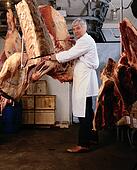
It was a normal day.  I had gone to school and come to work for the evening.  My first job that evening at the little mom and pop grocery store was to stack the 1 lb. blocks of butter in the corner of the freezer.  The freezer wasn't that big, probably 20 feet by 15 feet.  Sides of beef hung from the meat hooks that lined the length of it.  At the time four or five sides were hanging on the 8 hooks available.  Sundry other items were in the freezer also like frozen dinners and ice cream.

So, I was stacking...  Unexpectedly, the freezer door opened.  I heard someone say something outside the door.  Then, I saw the cashier from the front of the store being pushed into the freezer.  Also at her back was the barrel of a sawed-off shotgun.  As soon as the door shut, she put her forefinger to her lips to tell me not to make any noise.  The door opened again, then the butcher was shoved inside.  I knew there was one more person in the store, the head cashier.


About a minute later, he came stumbling in because they pushed him very hard with the barrel of the gun after pistol-whipping him.  We all heard something like an ice pick being put through the handle of the door so that we couldn't open it from the inside.  The cashier told us all that we were supposed to wait 10 minutes before trying to get out.  I guess, the thieves didn't trust us since they secured the door from the outside.

That was the second time I had feared for my life.  I don't think the thieves knew I was there since I had been working in the freezer, but I really thought that after they had pushed the head cashier into the vault, they would step in and mow us all down.  I experienced mortal fear at that moment.

A few times in my life I have been minding my own business, doing what I was supposed to be doing.  All of a sudden, I didn't want to be there, but I was nonetheless.  For the times that I now know what the ending of the situation was, I can say, as it has turned out, that I am glad I was there.


But, there are those times... the ones where I don't have the last word of how things will turn out... that make me uneasy...  I fear the outcome will not be what I want it to be...


Monday, September 22, 2014

Matter of orientation

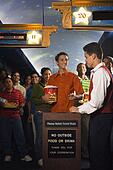
The young man took my tickets to see the movie and said, "Thank you.  Theater 2 is on the right."  I migrated to the snack counter, ordered popcorn and a drink, then turned to my right.  Theaters 9-14 were on the right.

Didn't he just say the theater was on the right? I thought to myself.

Then I realized that we were facing each other as I handed him the tickets.  The young man's right was my left.  Yes, indeed, the theater was on his right, my left.

Perspective is one of those very important realizations in living.  Orientation is probably a synonym to perspective, though not always.  In this case, it is.  I forget sometimes that I am not the only one on this Earth.  Some people are facing a different and, sometimes, opposite direction.  Talking to my sister the other day, I told her that some political view we were discussing was a view of rabid Tea Party members.  She replied, "Don't be too harsh.  I am one of those Tea Party people."


I can't help but trace my actions as I look at my personal history.  Yes, I have changed my orientation almost completely from the one I had when I graduated college.  Life's experiences were in front of me then.  Now they're not.  The theater room used to be on my right.  Now, after treading through life, the theater room is on my left.  I'm not disoriented.  I reversed my orientation. 

At the theater, I ended up in the right theater when I changed my original orientation from when I faced the ticket taker.  I think the outcome will be the same when I finally make my way to life's destination.

Tuesday, September 16, 2014

A crystal ball view


I would love to gaze into a crystal ball and catch a glimpse of my life 10 years from now.  I hope I would see a great quality of life - traveling to various regions of the U.S., enjoying my progeny, engaging in meaningful and productive projects.  I hope I wouldn't see a pain-wracked body - stuck at home, unable to visit the homes of children and grandchildren, aloof from the society surrounding me.

In ten years, technology will be farther down the road.  Communication should be one of the easiest endeavors on the Earth.  Videos will dominate the type of communication being sent.  Television will be much more interactive than it is now and will only be watched through apps that stream the programming one wants to see.  Transportation for personal needs will be almost fully electric.  Smart houses will represent about 40-50% of the housing market.

Ten years will bring great innovations in medicine as well.  Genetic manipulation will begin creeping into treatments for diseases that originate from gene order.  Diseases that are generated by cellular proliferation will be controlled.  Diabetes and heart disease will begin to disappear because nutrition and complications from lack of nutrition will have an almost 0 balance, meaning that diet and habitual unhealthy intake will offset each other.

And yes, dreams once held will have been realized.  That will be worth experiencing on the way through the ten-year period.  I should be one happy man a decade from now.

Sunday, September 14, 2014

Work away

I whipped around the corner from the main street of the housing addition onto my own street.  It was clear of cars on the curb.  Every car was in its driveway.  The air carried no noise from any of the yards facing the street and no sight of human movement from the lawns, in front or back of the houses.  Late Sunday afternoons don't represent a great hub of activity in the neighborhood.

I was glad, though, for all of the inaction.  I needed to relax after a full day's work.  At least it was a good tired, relief after successful effort.  Good food and favorite drink topped off the beginning to an evening that rejuvenated depleted energy.

I won't say that these days are ones of stepping in high cotton, but but are days of momentary relaxation, pockets of rejuvenation.  I'll take them.


Thursday, September 11, 2014

Charting life


Establishing a baseline is a necessity in charting progress.  Baselines help in  finding averages, deviations, anomalies, and outliers.  All four of these yield useful information.

As I evaluate my life, I find all four of these in the decades I have lived.  I find behavior that is average.  That helps people know how I will act in given situations.  Deviations, anomalies, and outliers are also present.  Usually, I see them as I enter a new phase in my life.  They are outlying points at first, but then those points become the new normal.

But there is one example of a deviation (at about the 4th standard deviation level) that is my one wish in life since it appeared.  I have highlighted it because the time represents such life-filled vitality and enjoyment, watching it, hoping it will slide down the deviation scale into the field of normal.  I have faith!

Wednesday, September 10, 2014

All I can say

This is about what you would expect from the academic establishment.

In July, Anne Mangen of Stravanger University in Norway published, along with her research team, a study of people reading a fictional story from a paperback book and from a kindle.  Her results were that the group using paperback books remembered less about sequence of plot than the people using Kindles.  She performed a similar experiment last year with 10th graders who read from an iPad and from a .pdf document.  The .pdf readers scored higher on a test.

Manger was at least a true scholar in offering conclusions by saying the studies "suggest" that paper or the imitation of paper, in the study using .pdf documents, help people perform better on tests and provide a better mental framework for remembering sequence in particular.

This is an attempt to try to reverse what is happening in reality.  Manger acknowledges that other studies show a tremendous decline in the number of people reading books.  She is trying to stem the tide of this trend.

It's not going to happen!

Here's reality.  The new world requires interactivity.  Reality is not answering questions on a test.  It's interacting with your environment as you learn.  Disney learned this several years ago.  They launched ABCmouse.com and have young children ages 2-5 learning on an iPad all kinds of things because they interact with the tablet.  Learning is not compartmentalized, i.e. read something first, then write answers over what is read.  Children in STEM schools know this too.  Project based learning allows the brain to more lastingly learn (to form synapses along dendrites for long term organization and storage, to use technical jargon) even if the amount of time to "learn" or register understanding takes longer.  Learning is integrated into projects and interactive with the environment.

A study like Menger's also ignores what has recently occurred and what is about to occur.  The Apple watch is just the beginning of something huge.  Icons and apps on your wrist to give you real time interaction in a format handier than your cell phone, quicker than your cell phone, and with improved Siri speaking your results to you will make both books and Kindles archaic almost immediately.  The next wave of technology using 3D holographic information delivery will seal the coffins for paperbacks and Kindles alike.  After that comes artificial intelligence.  At that time, nothing resembling paperbacks will be the way to learn information or enjoy a story.


I knew the academic world would have a contingency of die-hards wanting to stem the tide to a world that is a quantum leap from the world they lived in most of their lives.


All I can say is, "Prepare your coffins."

Monday, September 08, 2014

The gift of expression

The experiment went like this.

You will have someone to teach who doesn't know your language.  Your job is to teach him your language, 1 on 1.  You will be with this person one time a week for five weeks for two hour sessions. Make a prediction of how much English this person will know.

OK.  I will be able to talk to the person in much the same way as I would talk to a child who has had one year of formal schooling.  (S)he should be able to take directions, find his or her way around the environment, and tell someone else what is happening to him or her. 

Really? 10 hours and the langauge capability of a 2nd grader?  People say you are amibitious or arrogant to think you could give a person the same skill in communication as someone who has been raised with a language for 7 years.

We'll see.  How can anyone give the gift of language to someone so easily?  Of course, it's really not so easy.  The ability to give language quickly would have been years and years in the making.

OK.  T-10 sessions and counting.  Time's a wasting.

Sunday, September 07, 2014

Flip off that switch


There I was, sitting on a 20-year-old couch.  All the lights in the house were turned off.  They were only turned on after the sun had completely set, then turned off around 10:00 PM so that the other person could get 8 hours of sleep.  The air conditioner was set on 82 so that it wouldn’t turn on unless it was needed.  82 degrees was the point where it was needed.   A ceiling fan overhead spun with a clicking noise.  The only phone in use in the house was a land line.  Portable phones like the ones popular in the 1980s were placed at 3 locations in the house.

A TV was in the room, but turned on only for an hour in the morning to catch the news for the day.  For the rest of the day until evening, the TV was set on a symphonic music station.  In the evening we watched the news again and 2 hours worth of Waltons reruns on the Hallmark station.  Occasionally the channel was turned to the Inspire channel for a movie.  Together we watched one of those on Labor Day.  The story happened immediately following World War II where the storyline traced a woman who had to find her fiancé because of amnesia.  The love story was in black and white.


 There was enough conversation to make the day pass without feeling lonesome, but there were many pockets of silence also.   Computer use to accomplish work, banking, or any other online function was out of the question since no internet existed in the house or anywhere nearby.  My cell phone, luckily, did bring me the internet, but typing and banking took twice as long because of the tiny screen.

Everything in the setting was a result of a rigid belief in extreme frugality and extreme adherence to routine and religious piety.  No television programs could be watched that had the remotest possibility of “cursing” being used in it.  Only 3 channels were watched as a result of that belief.  Outside, the weather was bright, sunny, and 95 degrees.  Inside, only light filtering through window blinds lighted the areas of the living room.   Lights in the kitchen were permitted during cooking times, but not before or after.  Bathroom lights shone only while the room was in use.  The same was true for bedrooms. If I left a light on behind me as I left a hallway or room, I was reminded within two steps of leaving the area that I needed to turn back to flip off the switch.


One’s religious values were scrutinized in this place.  A couple of times I was chastised for some of my interpretations of the Bible.  Once I was told that I wasn’t following the example practiced by Christians in the Bible.  Another time I was questioned about whether or not I was reading the Bible.  I was probed to see if I still used the particular phrases of my childhood religious denomination.  I failed this test miserably because I refused to use them even though I knew what they are.
 
Yes, I had to check the date several times a day to make sure I had not become a time traveler and landed in the era of the austerity of the 1950s or 1960s.  No, it was 2014.  My only word for this experience is unbelievable.

I sat on that 20-year-old couch for a little over a week.  The shrouded, insular existence created by the other person was a result of nostalgia, mistrust of people and modern technology, selective memory of events from the good ol’ days, and a rabid belief in the divine inspiration and literal interpretation of the Bible.  Just unbelievable.  I will definitely buy a t-shirt that says I survived this environment. on the back I will have printed, " Unbelievable!!!"