Search This Blog

Tuesday, March 22, 2016

Word spinning

I have seen attorneys try to lead a witness without leading the witness according to examination rules. Unexpectant people play along unwittingly, and those who ultimately play along know that something is really wrong with line of questioning going on.

Usually, the attorney asks a few warmup questions to get the witness loose.  Then (s)he begins with "Would you agree that... ?"  No witness should answer yes or no to such a statement.  A witness should always say, "I would say..." and proceed to give her or his own version of what the attorney is referring to.  Sometimes a lawyer will try, "Would you characterize the situation as...?"  Again, the witness should give the answer, "I would characterize the situation as... " and proceed to recount his or her own characterization.

The most damaging kind of leading comes when an attorney phrases a question and asks for a simple yes or no answer.  There are two lines of response to follow if that happens.  The attorney wants to highlight the answer of course and not the context.  The first response should be to say something like, "Yes, I could answer yes or no, but the context is indelibly connected to the answer. "  Then begin with providing the context.  The attorney will probably interrupt the context to demand a yes or no answer.  The second response should be to say, "Because (the event) happened (a certain way), then yes (or no)."  If the attorney moves to strike the comment because it doesn't answer the question, or if the attorney reduces your second answer to a yes or no, then the second line of response is the only one left open - pleading the 5th amendment.

Reducing testimony to yes or no is really not the best way for an attorney to pin down a witness.  Establishing context is important, so an attorney needs to help the witness establish the context.  The jury hearing the testimony is just as likely to think less of the attorney pushing a witness to a fifth amendment answer as it is to think less of the witness.

One other advantage of allowing a witness to speak of characterizations or facts is that the words can be charted according to known linguistic methods of detecting deception.  Exploiting those areas then becomes much more factual and much less dependent on how an opposing attorney wants to cast a case.



Sunday, March 20, 2016

What we know

One habit that detectives and attorneys have that leaves them blind to the truth is to ignore a very obvious principle.  Everyone knows that people speak more about matters they know than matters they don't know.  Duh, right?

But detectives and attorneys fail to ask for comments on all relevant topics.  As a result. matters a person knows versus matters a person doesn't know goes unknown.  That unknown information could prove to be damaging.  If a suspect or witness doesn't know much about something, then the topic is harmless. It would be the topics most known that need exploring and probing.  That will be where deception is taking place.

More generally, people new to a relationship should adopt the same philosophy.  A partner is less likely to exploit what he or she doesn't know, more likely to exploit what he or she knows a great deal about.  Being aware of the areas of someone else's knowledge base makes one aware not to open up without trusting the person or situation.  That limits the amount of damage a malicious soul (or uncaring) can inflict.


In legal matters, areas of knowledge are like enemies.  And as Michael Corleone has said, "Keep your friends close and your enemies closer," (Godfather, Part II, 1974).  Areas of great knowledge unprobed are very dangerous.  A lot of truths, half-truths, hedges, and deception can take place in such vast unexplored areas.  It should always be the case for attorneys in depositions, voir dire, case presentation, and witness examination to explore all the areas of strength an individual has.  Therein lies the truth (and his or her deception) about a matter.

Saturday, March 19, 2016

Glib talk

Glib talk can be innocent.  It happens all around and all the time.  People just say what comes to mind and it is mere chatting, many times to extend a friendly conversation.


But, I know some people that talk glibly as a matter of style and as a matter of business.  In this case, the glib talking is to lead people to believe something that could never be delivered on.  Many people are trusting and they are disappointed when the action promised is not delivered.

When glibness is a matter of style, I know to stay as far away from that person as I can.  They tend to be charismatic in personality, which complements their glib style.  So, recognizing this style is easy.  Most of the time their business is too good to be true.  That's a second flag in recognizing the glib talker.  This person doesn't see his or her talk as deceptive since he or she does it so often.

But, glib business style is deceptive.  And hurtful.  Very disappointing.  It wastes people's time.  Fortunately, these people also shrivel quickly when confronted.  Those who don't, need to beware.  Glib talk is the easiest kind of talk to analyze and illustrate how truth never resides in its words.


Wednesday, March 16, 2016

Hide and go seek

People hedge when they don't really want to give the heart of a story or set of events.  There are many reasons for hedging.  Sometimes, people are just private people and don't like others to know their business, such as their salary, their weight, their religious preferences or beliefs, their middle name, where they were born, and a host of other details about them.  They're just private.  They're not really hiding things.


Most of the time people are hiding things, though.  People hide when they have made a faux pas, when they have embarrassed themselves in some way, when they have seen or heard something they weren't supposed to see or hear, or when the timing of a happening is not to their advantage.  People hide things from everyone except certain people close to them sometimes.  But, people definitely hide things they have done that are wrong, either morally for them or illegally.

Psychologists, detectives, agents in espionage, and attorneys are groups of professionals that have studied how to crack the code on people who hide things.  They have developed techniques to try to bring out the event that is hidden.  Torture is the oldest technique, but a person doesn't ever really know if what is given up in torture is really the hidden event.  People give up hidden things merely to escape pain.

Three very popular techniques that have been around for decades and are still used are polygraph testing, reading gestures and eye movement, and highlighting hedges.  The first two are accurate to a small degree when used on people who haven't been subjected to them.  However, they are easily defeated by practiced people who hide events.  Hedges, on the other hand, take much more rehearsal for people to free themselves from because speech habits are hard to break.


The best known hedging word is the word well.  What follows that word is a thought carefully worded.  The utterance uh with a pause of .5 seconds or more is also a widely used feature of hiding something.  Other characteristic speech habits signaling a hedge are use of fillers like you know, I mean, you know what I mean, that was something, right, I'm telling you, so... (when drawn out or lengthened past normal timing of the following words).    Most of the time people use hedges to word something to follow that will divert attention or tell an innocuous portion of the event they are hiding. Hedges come in other forms as well.

It doesn't necessarily take an alert listener to hear or recognize a hedge.  But, it does take an astute person to know how to explore and probe the ideas, stories, or event hidden by the hedge.  The fun is just beginning for the forensic linguist or other intuitive professional or person who loves sliding back the curtain a little at a time after a hedge is used.  What is hidden is soon to be revealed.


Monday, March 14, 2016

Watching injustice

Last week I found myself in a courtroom for jury duty.  After they randomized my number for the jury pool I was to be in, I knew I was too far away from the number of jurors they needed even after the strikes and most likely after the people still trying to get excused.  So, I decided to mainly observe the lawyers during the voir dire.


The lawyer for the prosecution was a man of middle age.  His client was suing for damages for negligence.  The questions the attorney asked were the standard questions and aimed at the jurors who had had the experience asked for in the question.  That particular method is a gross waste of time, and doesn't really get anything to surface that he needed to hear.  People don't volunteer information if they think they want to be home in 2 hours and raising their hands prolongs their stay just that much longer.  The defense lawyer's method was efficient with time, but didn't garner the information she needed.  She used whole group questions, only receiving answers from a few prospective jurors who wanted to volunteer only enough information to salve their consciences.  Most of the time, she had to call jurors by name to get any answer at all.

The two lawyers' mannerisms were really predictable.  That doesn't garner a high degree of cooperation nor respect for the system everyone in the room was supposed to be upholding as a great way to judge others.  The defense lawyer unnecessarily broke the rules a couple of times, mustering an objection from the defense.  She showed a lot of inexperience in trying to break her way of thinking in redirecting questions to fit the rules.

The prospective jurors were also pretty typical in their responses.  Three of the pool decided they wanted to talk a lot.  There are different reasons for this, but mainly these prospects wanted to impress the defense attorney in particular how well qualified they were to judge this type of case.  6 others were factual in their responses.  That usually signals cooperation but the terseness of the facts really showed the opposite.  Then there were the 4 utterly silent ones.  Two of them paid attention to the proceedings, but two didn't.  Two of these people were picked as jurors on the case, which is a real mistake on the attorney's part.  It should be an attorney's rule never to have a person on his jury panel that he didn't make contact with during voir dire except in Federal court where the rules for voir dire are a little different than state rules.


Of course, I was dismissed after the voir dire.  I didn't follow up on the proceedings.  But, I could see how it was going to go.  50% of the jurors picked had actively identified with the plaintiff's attorney.  One more had reacted against the defense attorney.  One of the prospects that had not answered a question was one who had not been attentive during voir dire.  The other silent one had paid attention, but had seemed less involved with the defense attorney.  I would imagine it was a verdict for the plaintiff.

I am always brought back to some sobering news after reporting to jury selection duty.  People observe how we react even if we don't know they are watching.  That's not new news for me.  But it is always sobering news to me.  I need that reminder to keep me from becoming stagnant and complacent.

Monday, February 29, 2016

Today is for time lapse


I won't get to write a blog on this day for another four years.  This is that special day of a leap year that makes the year a leap year.  It's the key ingredient for extending the year by 24 hours.

It's a bit funny sometimes how ideas linger much past their time.  I hear people, for instance, still saying "roll up the window," when modern cars press a button to raise and lower it.  But the "roll" action lingers.  Admittedly, it's used a little more by older people than younger people like "icebox" for refrigerator is.  The two older terms will soon die out, probably in another 20 years or so.

The keepers of the stock market were rather stubborn as well.  It was the 21st century, April 9, 2001 to be exact, before Wall Street changed from using fractions to using decimals.  That could have happened easily a decade prior to the change, maybe even two.  But, it's the result of conditioning people receive.

So, when it comes to Leap Year, it's time for an update.  We've just been conditioned to think in terms of a leap year.  We have the capacity to think a little differently about a true year, and we certainly have the technology to calculate it accurately.  Everything would work out without a leap year if our days were extended by .9856262833675 of a minute each day.  How hard would that be?  Simple.


And who would notice the extension.  Clocks wouldn't have to change anything.  There are already 1440 minutes in a day.  It would take nothing to have 1440.9883321894303 minutes in a day.  Only the timing mechanisms would have to adjust by 59.299 seconds every day to make the change.  Then, there would be no need for leap years at all.  I'm really all for this change.

We could change the calendar too while we're changing things about time.  Who needs to have short and long months?  We have the technology to precisely and accurately change to having our days completely equal.  Every month would be the same length every year, year in and year out.  That would much better mirror what is happening with the Earth's revolution around the sun.  We could even adjust for the Earth's slight movement closer to the sun and account for a new revolution time in nanoseconds as well.  I guess that is a discussion for another day.

Today's blog is in honor of Leap Day for Leap Year.  I hope people become reconditioned soon and that timing of years changes post haste.  But, until then... Happy Leap Day 2016.

Saturday, February 27, 2016

Brought to light


Nuances are the little things that change or add to the usual meaning of something.  Nuance can be applied to almost any situation.  A person can refer to nuance of color, taste, texture, art, photography, lighting, culture, and word meanings.  It's a flexible word in its application.

It's also a rather modern word, historically speaking.  It was nearly 1800 before the word broke onto the scene.  The French had used the word nue for a long time because it had derived from Latin.  The French had dropped a b from the word.  The Romans had used the word nube, but the French used a glottal stop for the letter b, so b dropped from its spelling.

The Romans were very superstitious about things that happened in the sky.  Clouds were a part of the sky and the presence or absence of clouds usually meant something.  The color of the clouds also changed the meanings of things.  The French made the same application and added an r to the word to make it a verb (nuer).  The French could cloud or shade things like situations or pictures when they painted them.  The term felt natural to use for a British man, then, to adopt the root of the word nu, take off the er verb ending of the French word and put a noun ending in its place, ance.


One of the greatest tools in detecting deception is to analyze something according to the nuances of a person's regular speech. Nuances of definition are important, so synonyms for adjectives, adverbs, and nouns become important in spotting lies.  Nuances in verbs also change the type of action that was used, so their meaning in particular is important.  And nuances can apply to sentence length and topic change as well.

Those who weave their dangerous webs in words love to shade the meanings of the things they say.  It's easy to spot, however, when the listener is paying attention to the meanings of words.  And if a person is able to read the words of what has been said and can compare to other words being used, then the web of dangerous words can be spotted and brought to light for what it really conveys.  Nuances play the role of cameras in catching all that people deny.

Wednesday, February 24, 2016

Life's procedures

Yesterday I was listening to a medical doctor as she was speaking to my daughter.  She was trying to recommend a follow-up treatment, but she seemed a little uncertain.  She mentioned that there were a couple of different protocols for the follow-up as a reason for her uncertainty.  She had to review for a moment or two the two different treatments, then she recommended one.


Many fields follow protocols.  Medicine is one of the most protocol-driven fields there is, but that is due to the high stakes of life-altering substances and techniques for conditions and due to resulting lawsuits.  The military is a protocol-driven field as well.  That's because order and danger from weaponry are paramount to life and death.  Psychology is a field full of protocols because of the various detrimental results that could happen from influencing or conditioning the way people think.  The field of education doesn't call their procedures protocols, but the procedures to follow come as a result of standardized curriculum and testing over that curriculum.  So, yes, they are protocols.

It would be nice if life adhered to protocols, but it doesn't.  There is no set system of procedures through life that yield "best results."  Religion would have people believe that there is a procedure for best results in life, but many times I hear double-speak because it also advises of the struggles of life even if following the procedures in place.  Countries like to legislate procedures for best results, but people are so different from each other that the morality arising from such legislation yields mixed results at best.

All of the fields mentioned above are in interim stages of development right now.  There really should be just expert training in known procedures and let the experts piece together other combinations for advancement than to have protocols established.  Protocol only produces status quo and mediocrity.  It has been nice for the interim as we have advanced.  But we're past that stage of development.  And it isn't a reflection of how life works anyway.

We really go through life with our best guess at how it should be lived.  If we follow the crowd's best guesses at life, we usually don't bother to distinguish ourselves from them in any way.  If we march to the tune of our own drummer or take less traveled paths, then we find ourselves going it alone in a lot of cases without support or trust.  It's more than a little difficult to navigate through life with any assurance that everything works out nicely at the end.

In fact, life is ragged, curved, back and forth, repetitive, harsh, and dilemma-presented.  Sometimes we find others who make their best guess in the same fashion that we do.  That's a beautiful thing when that happens.  And it's so beautiful because it happens so infrequently.  I recognize those infrequent beauties much better now.  But, there are so many that fight our best guesses, and they're hard to rid from our lives or from their influence on our life experiences.

By the end, I don't think I will say so much that I have figured life out.  There's really nothing to figure out since life happens rather randomly.  And I really don't want to say that I followed all the standard procedures.  I hope to say to those whose best guess was very close to mine, "I really enjoyed our walk together!"


Tuesday, February 23, 2016

All day rain affair

It's been an all day rain affair, a soaker.  It's a soft rain, pepper and salt style.  As always, it brings its refreshing aroma.


There's nothing to spoil it.  I have been sitting in front of a window watching it, and doing a few other things like writing this blog, as it peppers the cars passing by or parked outside this nicely tucked-away Starbucks in a new and beautiful section of town.

I don't frequent this area, but it's nice whenever I have to come to it.  New shops, new buildings, new cars and car dealerships.  The people here are early career to mid-career people, ambitious to have the best of the American Dream, hopeful that they will accomplish their goals and desires.  The two wealthiest areas are many miles to the north of this place, but in 20 years these people might achieve that status.

Rain brings with it hope.  I have felt that since the rain started last night and have thought about it the last two hours looking through the front window of Starbucks.  I like to deal in hope.  Like the rain, it leaves a refreshing aroma.  And, I like dealing with people who bring hope to my life.  They provide  a materialism to the soul like new shops and buildings do for people achieving their dreams.  They make life so worth the living.

Monday, February 22, 2016

Captivated


"Space - the final frontier."

Thus starts the introduction to one of television's most lasting and famous programs, Star Trek.

Of course, it's not the final frontier.  Space as we now know it consists of so much more than just a trip to the closest star or star cluster.  In fact, the Milky Way itself is thought to contain a couple of hundred thousand stars.  We hadn't really been able to look much farther than that when Star Trek first came out.

Now we know so much more.  Space is still fascinating.  There's just a whole lot more to it than just a fascinating frontier.  It conjures images to mind that we can only sketch out as an artist's representation at present.  It's fascinating, beautiful, inviting, full of splendor, and sacred ("set apart" from Earth views).

If I really think about it, I realize I have something like space in my own mind.  It's the place I can go to over and over and still enjoy and explore.  I can think of new frontiers or I can go to those really familiar places.  My favorite is a safely guarded memory that I conjure to mind.  It, too, is fascinating, inviting, and sacred.  It's familiar but it contains unexplored territory because I can think of what happened after that memory or what could have happened as a result of it.  I have it captured in the chambers of my heart and mind so that I can explore its uncharted areas at will.  Whenever I recall it, it is beautiful and full of splendor.  That particular stored image flashed before me today, unexpectedly.  I was captivated again by it, just like space.

The final frontier seems far away, as do memories for that matter.  But, I get excited thinking of exploring the ice oceans of certain moons, the volcanoes of others, the remnants of life from dried up oceans, and the energy producing craters of others.  I get equally excited seeing the familiar red dirt and strewn rocks of Mars and the ice patches of Pluto.  And, it's just as sensational to explore again the representation from that sacred chamber of my heart.  I just love what that exploration brings.

Thursday, February 18, 2016

That's cool, Gramps


One of the most interesting research studies I have been a part of was the study of intergenerational conversations.  Before that involvement, I hadn't really thought too much about how conversations happen exactly between younger and older generations.  But, the study  revealed a definite process.

Astoundingly, to me (but I admit to being a little naive on the subject), conversational skills are not learned much from parent to child.  The parent-child conversational model is one of question and answer or rhetorical questioning mostly.  Sometimes instructional conversation takes place, but not a lot of skill building for regular conversations happens.  Children see their parents model the skill by observation of their parents in conversation with their friends, but not so much from parent to child.


Thus, teenagers learn their conversational skills from their peer group.  That model of learning how to speak conversationally sets up real problems related to dating and marriage, but it is the model currently followed in the U.S. today.  But, it also sets up the need for a learning process in the laboratory of real life speaking occasions.  Teenagers, generally, expose themselves to other teenagers by choice and to people older than they are by force or by necessity.  They learn from their own, but have to learn how to talk to people outside their age group by experience.

Often, teenagers have to find by trial and error how much of their conversational patterns and vocabulary are acceptable in a more adult world.  This makes them tentative when talking to older people.  The more they talk to older people, the more they find out about vocabulary acceptance, attitudes toward certain expressions, turn-taking, and amount and types of information to give and receive.  They find that many times the experience of intergenerational conversation is a little bit taxing on their ability to communicate.  So, they have to learn to converse little by little.


My favorite conversation illustrating the truth of the process was a conversation between a grandmother and granddaughter.  The granddaughter mainly listened, at first, then the grandmother had to involve her granddaughter with leading questions.  Finally, the granddaughter began commenting on her own.  It was the consummate tutorial on intergenerational conversation.

I suppose this happens in general in life in a lot of different areas, but to actually see the evidence for what happens under the surface of conscious awareness, was a great exercise in awareness for me.  It should make me much more of a tolerant person.  I'm not sure that is the case, but it should be.

Tuesday, February 16, 2016

Spot on

My cousin put a picture up on Facebook not long ago depicting the river and surrounding land where our dads grew up.  It was a beautiful shot of a wide river at the point where it bends across a two-mile spread of land.   The bend is appropriately named for the most common animal in the area in the days when the bend in the lake was only a bend in a river.  Many of my cousins still live in that area today.
The picture conjured up a feeling of serenity in me.  It took me to some of the memories my father had told me about when he and his brother used to roam the hills barefooted, killing possum and squirrel to eat, camping on the bluffs overlooking the lake, and spending the night cooking their supper and resting for the next day's adventures.


On one of those bluffs rests a nice get-away place for weekends or a spot to rest for a week during a vacation.  At one point in my life I used it as a refuge from a place I lived during hostile times.  It just represents good times with relatives, good memories of being an ascetic for a while, and an ongoing place to rest my head for shelter from a storm or for kicking around having a good time.

It's just a "spot" on the Earth, but it's an important spot for me.  Heritage and very pleasant memories are bound up in that spot.  Hopefully, everyone has a "spot" somewhere, even if it's not land or houses that he or she owns.  People just need a spot to go to physically and mentally to make it through the insanity of life when it rears its ugly head.  And people need a spot to constantly create the next memory for the times when life goes from good to bad.

I'm headed there at the crack of Spring this year, and again as it Spring closes out.  It's my refuge.  "Spot on," I tell myself when I go.  It's spot on for a lot of reasons.


Saturday, February 13, 2016

Others' decisions


The story made local news first, then regional, then state.  I read it first on USA Today, a national news agency.  What could be such a big story?

The article was about a school district that was going to have a four-day student week for instruction.  The article was a lengthy one by news standards.  It didn't really deal with the impact of that decision or the academic reasons specifically for causing the decision.  There were two reasons given for the change and nothing about the future impact.  One reason was that too many students needed individualized instruction from tutoring services because of failing test scores.  The second reason was that the four-day week could attract more people to live in the town.

That drove me to want to find more out about the town.  What town would have so many students using tutoring services that it would alter the school calendar?  What town needed to move to a four-day school week for attraction of denizens?  So, I looked up Olfen, Texas.

The 175 people or so that live there don't even comprise an incorporated town.  The number of students in the district is 28.  The median income is $11,000 less than the national median income.  The average house costs $92,000, about $30,00 less than the national average.  

Everything about the community is less than.  Who really would be wooed by such a place to live there even if they had a one-day school week?  I don't know what kind of number for required tutoring services out of 29 students was "too many," thus triggering a change in schedule, but even if tutoring was 100%, what is hard about accommodating that number of people?

I thought there might be something of interest in a news title about a four-day instructional week, but no, there's not.  I'm not sure why the story became a story of national interest.  I'm really not interested in reading about a less than town having any influence at all on how to handle education, so far for them, in a less than manner.


And, yet there's something that resonates here.  We do let people with a lot of values, money, talent, ambition, or connections less than us, dictate how we should think or live.  We shouldn't.  Fortunately, we as humans, get better at living and limiting undue influence on us to control or even slightly alter our lives.  We get better at employing our talents, our values and money, and at focusing our ambitions and connections to further the cause that makes us productive and happy.  We don't let the Olfens, the less thans, dictate what we become.

Wednesday, February 10, 2016

Effects of "out there"


The more one studies and observes the solar system, from the vantage point of other planets and probes filming them, the more one is painfully aware that time, location, and space is all relative. Speeds on Earth, for example, are negligible on other celestial bodies.  Gravity is different on those planets, so travel with vehicles is also different.  When people have been on the moon, they usually walk to different places.  They did have a wheeled vehicle available, but it had limited use since fuel and traction were problems.  The same has been true for the wheeled vehicles on Mars.  Atmospheric conditions and chemical make-up also alter the way movement happens on a planet.

So, as we humans go about our daily activities all bound up with schedules and apps that tell us time estimates on freeways to get places, events that are coming up, sleep times, heart rates, calories burned, and amount of water consumed on our wrists, we should know that our routines and outlooks are relative to our position in an orbit around the sun.
  

If we lived on Mars, Europa, or Titan, or if we lived outside of this solar system, what would our perspectives be?  I have to believe they would be much different.  They would be relative to our location in the time and space of that planet.  The films Interstellar and the Martian have helped us see a different perspective since they had characters that lived outside of the Earth's location in time and space.  They helped us see the relativity, the fragility, and the minor importance of existence here on Earth.

I consider that from time to time.  Whenever I do, my mind usually releases the stresses that have built up.  I treat people better.  I feel less ambitious and more apt to act out of a sense of what the long-term benefits are rather than the shorter ones.  And I cherish my memories more because it could have been extremely different if I had been born in another time and in another place "out there."

Monday, February 08, 2016

From a jack to a king

The year was 2014.  He had been fired at the end of 2013.  He was used to working 80 hours a week.  Now he was on the couch on Sundays watching NFL afternoon football games.  He had made good money, so he wasn't too worried about running out.  But, still it was a difficult mind game to play.


People knew of him and his abilities.  He didn't have a low profile.  But, in 2014, 25 times he was passed over for a job.  His resume was not a slouchy one.  It included two stints as a head coach and a number of assistant coaching and coordinator jobs.  Still, 2014 was a very silent year for him.  

I don't know what kind of resolution he made for January 1, 2015, but it could have been to enjoy retirement.  Then the end of January happened.  The Denver broncos' coach called.  It was his boss from 2013.  They had been fired together in that year.  But, now in 2015, his boss wanted to rewrite their story together.

And rewrite the story they did!  Denver won gracefully with aplomb and command last night in the nation's largest sporting event.  The game was not a fantastical performance by a spectacular aerial bombardment.  Quite the opposite.  The points scored for Denver were the work of the defense.  You could have guessed that though.  This defense was the number one defense in the NFL this year and has often been compared to a few of the other history-making defenses.  Denver won because of a coach who recognized players' abilities and meshed eleven talents to form an ironclad defense.  The result was holding the NFL's highest scoring offense this season to 10 points.


There were some other media-catching stories in the game and after.  Everyone saw those stories.  But, this story of Wade Phillips wasn't touted.  It was mentioned during the game, but in a small 8 seconds of time.  It deserved much more than that.  Wade Phillips, you inspire us!  You embodied the attitude of never giving up, and even more so, the attitude of being the best with what we've got.  Here's my grandest "THANK YOU!" for leaving us this picture of yourself.

Tuesday, February 02, 2016

Headshake


What happens in language is generally what happens in people's attitudes toward life.  Here's a great example using English.  A noun is a person, place, object, or idea.  We learn that definition in elementary school.  A noun functions in two places, first as subjects of to a verb and second as an object of various constructions such as, object in a verb phrase, object in a prepositional phrase, and object in a verbal phrase.  It also answers the question "Who?" or "What?" in all of its functions.  Easy enough, right?

It's easy to cite an example for each sentence above.

Subject - The volcano erupted.   (What erupted?)
Object of verb - The tourist saw the monuments.   (Tourists saw what?)
Object of preposition - All of us talked for an hour.   (for an what?)
Object of a verbal - The principal called a meeting to give us our assignments.   (to give what?)

Still easy enough.  It's simple application and recognition.  Then a grammarian steps in.  "What about the following?" they say.  "The secretary is right.  What is right?"

I reply, "Easy. The secretary is 'what?'  Right.  Right is a noun."

"Oh, no," the grammarian says.  "The verb is isn't a normal verb.  It's a verb that shows existence or state, not action.  It's different.  So all the rules change for what follows it."

"What?" I say.  "The secretary is 'what,' doesn't make sense to you?"

"Not in this case," the grammarian answers.  "Because is shows a state, then the word right tells that the secretary exists in a condition of being right.  So, right is an adjective.  Right also answers the question 'What kind of,' which is an adjective question.  What kind of secretary? A right secretary."

"Wow," I say.  "I suppose you are going to tell me that in the sentence, 'The toast tastes good,' that the word good also tells a state for the toast, so it also is an adjective?"

"Exactly.  Now you have it!" the grammarian exclaims.

"But the toast tastes what?  Good!" I retort.  By way of concession, and to confuse the issue, I add, "Maybe the toast tastes 'how,' but certainly the toast doesn't taste 'what kind of.'"

The grammarian never misses a beat.  "No, the verbs for the senses like feel, taste, look, smell, and so on, function as verbs of being like is.  So adjectives follow them.  Good in this case is an adjective.  It asks, 'What kind of toast?'"

Seriously?!!!  I don't know what planet grammarians get their training on, but it's not on the planet I live on.  This is exactly the kind of conversation you would have with them if you ever engaged them in matters of grammar.  And it's the kind of rationalization that people use when they solve problems for themselves in real life.  People say, "The rules are this.  And it may look like I'm breaking the rules but really I'm doing it for the right reason, so the rules don't apply."

Rules by the government or corporations are just as bad.  If a company checks your credit score, it will receive one, but tomorrow when you check your credit score for yourself, the score is lower because the company checked it the day before.  What?  Or the IRS has a standard deduction for each person - unless you're married.  Then, the deduction is different.  What?  People make money for their time all the same, whether time in McDonalds or time in Goldman Sachs.  But, the tax tables say the McDonalds employee is taxed at one rate and the Goldman Sachs employee is taxed at a different rate.  What?  I work hard to increase my value for a rate of service and the government says its value also increases commensurately with mine?  What?????


I'm telling you - Watch out for life's little magic tricks.  They're everywhere from the language you speak to the money you owe to the score that buys you a car.  Are you just shaking your head like me?

Sunday, January 31, 2016

It could be WAY different

Facebook is not the only source for English as it is used in a social setting, nor is it a source showing the "average" American speaker's usage of English.  It also is not the only way to judge language trends in English.  But, it is certainly one source to use, and with a plethora of examples of anything that is trending on it.

One such trend that has increased over the last two years of Facebook use is the number of "stickers" used, usually at the end, but sometimes in the middle, of a post.  In addition, more people are  "commenting" on other people's posts with pictures of their own rather than typing a response.  Both of these trends show that people are increasingly tired of using words when something else is available to them to represent ideas.


I don't think this bodes well for those interested in keeping the old ways of keeping English around in print.  Handwriting is very much a pain to anyone anymore.  People are resistant to handwriting since they can just as easily type something into a notes app or paste and copy much more efficiently than ever before.  Typing, not handwriting, is taught in lower grade levels in most schools that try to "keep up" with technology advances.  But, even that is not where the Facebook trends seem to be stopping.  Emoticons, mojis, stickers, and pics have sharply affected how people want to respond to others.  Even in advertising used on Facebook, outside of people's posting, the marketing experts have instilled into everyone to use pictures when possible and words only to give essential information like a slogan or product highlights.

I think it is easy to connect dots from the present to the future at this point.  But, I still see people who hang on to the idea that using words, usually formal words, shows how educated (and by association) how respected one is.  Maybe that's true if I use sources from other sectors of English language use.  But, if I think Facebook is a good indicator of things to come, I am betting on a really different kind of future for English.

At present English is a lingua franca, but if the nature of English changes, what happens to the lingua franca?  Next year, it is estimated that more speakers of English will be spoken by people in and from China than by any other country.  That also will affect the nature of English in the realms of the spoken language.


I'm not at all worried about the future of English since I am not an elitist of the language.  I just think it will be WAY different than what people are seeing at the moment... say in 10 years.

Thursday, January 28, 2016

Working with the brain

One of the most noticeable features of brain operation is how efficient it is.  The functions it controls are well organized and hierarchically organized.  So, in the portions of the brain that capture electrical impulses and change them to information, the collection and interpretation points automatically log the information into the storage areas of other related ideas.  When the impulse carries information that already has been set up in storage, the collection point for it interprets the semantic domains for the information and again sends it to the storage areas.  Some storage areas receive repeated information a lot and some not so much, depending on the semantics for each piece of related information.  It's how the brain determines importance and priority because it is an extremely efficient manager of information.  If information comes to the brain that doesn't have a storage area, it is temporarily stored in an area for one to make a conscious decision to keep it or not.  If no attention is paid to consciously categorizing it, it stays in the temporary area until it is bumped out as the area refills with more temporary information.

Efficient, swift, easy, continuous, and effortless.  That's the brain at its best.  And although the brain contains millions upon millions of storage areas for information, when a storage area is not tapped by the memory in a really long time, the information is also released to the temporary storage area for one to decide to re-store it or let it go.

Just knowing this much about the brain should change the way learning happens, and it should shape how learning should occur as the virtual world continues to grow and take on the function of educating people 16 and older.  Before age 16, two great pruning periods occur automatically around 10 months of age and again between 14 and 16years of age.  For infants and youth, then, a slightly different process happens.  Learning among these two groups should take into account the differences.

Those businesses who train employees and educational institutions, physical and virtual, should really use methods of learning compatible with how the brain naturally works.  The brain will do what it does best with or without compatible learning methods, but those who work with the brain will achieve learning in a much more efficient manner because that's what the brain does - work efficiently.  A method that doesn't work with the brain will find a lot of resistance among students.


Tuesday, January 26, 2016

Applauding what's implied


USA Today carried a story with the following headline:

New analysis of math, reading scores 'very disconcerting'

The article mentioned that over the last decade the scores in US population centers have declined, but that the new scores are rock bottom enough to be disastrous - lower than ever.  Educators are so worried that they wanted to give these miserable results their due misery, so they changed the way the percentages were reported.  In all of Detroit, the article said, only 120 African American students would be considered proficient.  They presented results in the same way for several major cities, the number of students in a city who would be proficient.  Another example is that only 40 Hispanic students would score proficient or better in all of Atlanta.

That should get people's attention all right.  Yes it should... but for a very different reason.

The scores are not lying, of course.  But, they are telling us that reading and math (the way it is taught, at least, with discrete skills) are not relevant any longer.  Of course, educators don't want to hear that.  Reading and math (the way it is taught) are definitely in peril.  Educators ignored the reasons for the decline, and scrambling to fix scores now is futile.   Reading and math (the way it is taught) scores are irretrievably in peril.  Why?  Reading is dying.   A decline has happened over the last ten years because there was a war with technology, and technology won.  Visual presentation has replaced it.  Math taught as a series discrete skills is dying.  Operations are not the end game any longer.  An environment for those skills has replaced them.  The new environments are algorithms, coding, and math syntax.

I'm sure there will be other articles of gloom and doom to follow this one.  They will decry the poor scores.  They will try to use the smoke and mirrors of how the poor and minority children are way behind.  They will continue reporting on tests that measure reading and discrete math skills.  But, if those in charge of education were to test the skills for the new world, the world people really wake up in every day, they might see an increase in scores for disciplines that actually count, disciplines that are the building blocks of the world now, and increasingly, the coming world.  Test basic computer programming.  Test video presentation of ideas.  Test the construction of meaningful algorithms.  See if those scores show proficiency.  Tout the increase of web page organization and use.  Applaud the widespread use of photo presentation that yield interpretation of real world events.

Reading and math skills are not going to improve.  But, who cares!  Let's be done with measuring skills from the 20th century.  Let's construct tests that measure what students are really learning, what they absolutely should learn to survive in a global economy.  I think people would be proud of the results, not "disconcerted" with them.

Sunday, January 24, 2016

Speaking has a diminishing role, thankfully


I'm a little bit picky about the public speakers I want to hear.  I'm really not inclined to waste my time if the speaker doesn't follow certain criteria.  It's a little hard to take instruction from him or her if his or her speech is sprinkled with ain'ts and she don'ts, for instance.  And, if a disconnect happens between what is proposed and what is real, I'm out.  The two reference points are too different from each other.  If I hear too many You ought tos, then my mind checks out for sure.  The number one criterion for me is not to ask me to raise my hand for any reason.  Speakers think that is a point of engagement with the audience, a type of participation that keeps the audience listening to him or her.  I won't raise my hand for any reason in an audience.  The speaker either has my attention or (s)he doesn't.  Raising my hand doesn't show that I am engaging with the speaker.  I have been known to walk out if speakers do that too much.

If I am listening to a speaker, first and foremost, I am there to be informed in some way.  So, inform me.  If the information is something I need, then I'm all ears.  Another reason I might attend a public speaker is to listen to substance.  Wasting my time with fluffy stories that bear little relevance to the substance I am there for is inconsiderate.  Most of the time informing me using substance is enough for me to act in a certain way if I deem it necessary.  So, the practical part I respond to is if the speaker gives a variety of ways for the substance to happen in, not with inexperiential or poorly thought through methods of implementation.

In this day of video presentation, public speakers are few and far between for me.  Increasingly, I choose ones that present using media.  A droning voice can get old after about 20 minutes.  Needless to say, I don't go very often to see a speaker.

Saturday, January 23, 2016

What's the effect?

Education is not preparation for life.  Education is life itself.
- John Dewey

        Image result for tornado damage    

I normally wouldn't put stock in a saying like this one because the people who say such things are generally not among those who are educated.  That to me means they are speaking about something they haven't experienced, so they don't know if their words are true or not.  But the quotation above is from one of the pioneers of modern education, a premier educational reformer.  He would know the truth of his words.

One of the stated missions for many school districts across the U.S. is to prepare students for life.  If Dewey is right, the school should have no such mission.  I had a great discussion with two people last night, one from Honduras, the other from Mexico, over this idea.  Both of them didn't have much formal education and thought that formal training would have changed things for them.  I could see their point of view since I have espoused the idea of preparation for life before.

But really, Dewey is right.  Society is set up to provide jobs that require "training" in order to enhance performance.  But part of "life itself" that Dewey speaks of is experiencing life as it happens, solving problems as they happen, overcoming difficulties as they happen.  The experience itself is what allows success or failure.  There's no grade given for one's performance.  Your experience worked for you or it didn't.

It is true that researching how to do something is part of any experience, but life happening to a person is not artificial like most people's education.  Life happening to a person isn't artificial.  It has tangible, real, long or short term effects. 

And how should one attempt to duplicate the experience of life happening.  In Dewey's day, one attempt was the Motessori approach to education.  Discovery learning it has been called.  Many approaches have come and gone since that time.  But, the mission of preparation for life has prevailed throughout all the attempts.


I hope that today's educators would see the truth of Dewey's statement.  We need education to give life experiences that have effects for those engage in it.  Education should not be simply periods of learning subject facts.  It should include a broader scope of experience that has tangible, real, long and short term results.

Imagine an 18-year-old who knows that life has effects and tries to take on life by competently, deliberately solving problems and overcoming difficulties.  It shouldn't be imagination!


Thursday, January 21, 2016

Argument lost

Today I was at a university.  It didn't at all look like a university. The building that housed the university was a new building on a major highway in a major city, very modern looking.  The university took up only the 8th floor of the building.  All offices had full length windows to the outside and were divided from each other by glass walls.  There were areas where tables existed in front of large white screens/smartboards, but a person could easily see there were no classrooms, no brick and mortar buildings making up a campus, and no library, the heart and center of traditional universities.  The people that worked in the glass offices had almost nothing on their desks, certainly not paper.  Computers were on the desks, but there were no wires as eyesores snaking along the floor to a hole in the wall or across desktops or down the sides of the desks.  The monitors were sleek and curved convexly.  In the first days of computers, this environment would have been called sterile, but today the word is efficient.

Where were the students carrying all their books or sitting around tables in the midst of library stacks of books?  Where were the teachers speaking in front of their students?  Where was the student center, usually a hub of activity?

Of course, you know the answers to those questions.  It's 2016.  Next year is the end of a 10 year war between technology and books.  The war between reading, writing, and arithmetic and the world of coding, algorithms, and applications.  The university I was in today is a perfect example of who has won that war.

Right now, the university is a sign of a growing trend, but my three-year-old granddaughter will call it mainstream and traditional, not cutting-edge at all.  There are so many students preparing for the wrong world that it hurts to look around.  So sad when it could have been otherwise.


Tuesday, January 19, 2016

Choosing mediocrity

I have heard that students at school tend toward mediocrity in their academic subjects.  I have heard that students ostracize smart people or befriend them only to cheat from them.  I have heard that no one really wants to be one of the smart ones, so a student "dumbs himself down" in order to have a less than smart reputation.

I have not seen a correlation between academic competence and competence level later in life in one's job.  But, I have seen the same behavior from people not in a particular career field judging unquestionable competence by someone outstanding in another career field.  They get jealous; they find excuses why they can't be as outstanding in their own career field; they disparage the exhibited competence every chance they get; they attribute traits such as "arrogance" in order to villainize the outstanding person's achievements.

Don't believe me?  I'll show you an example.


That's what I thought.  Oh, he's a cheater you say.  Really?  Cheating his way to 7345 passing yards in playoff games?  Well, he's so arrogant you say?  Six categories that no one else in history has done before might just give a person a little confidence, a little swagger in his walk.  There have been other great quarterbacks and you can't compare apples to oranges you say.  Hmm.  Records have been kept for all the great quarterbacks.  So, "most in NFL history" is a standard that includes the great quarterbacks.

I have my favorite greats - Joe Montana, Roger Stabuach, Brett Favre, Fran Tarkenton, Joe Namath.  All of them have some qualities I like more than Brady's.   But those qualities don't confuse me with the facts.  There are many reasons that Brady is the most efficient, most renowned, most competent quarterback in NFL history.

In many ways the school world is merely a microcosm of the larger adult world.  Recognizing competence, expecting competence, challenging the people around you to have competence is not highly valued in the world around us.  It's no surprise at all that the smaller world of school would reflect what is seen in the adult world - mediocrity.  So, I have a hard time putting any credibility in the complaint that students are coming out with mediocre grades and performance even if it is true.  It's the trait they see in the larger world reflecting in their own.

We should be asking Brady how he does it, so that we can copy some of that competence.  If we did, we would hear him say, "Just do your job, improve, and be the best you can be."  That's what he has said on numerous occasions.  We all can do that.  It's just something we choose not to do, not to hear.


Monday, January 18, 2016

Again - and again


The way you recover affects the way you play.

That's the saying used on a recent Gatorade commercial.  It shows two pro football players in a hot tub drinking Gatorade soothing their aches and pains after a game.   At the end, the two players are silent and the narrator gives the saying.

It's true in football.  A person has to learn to mend the right way or the muscles, tendons, and organs keep giving way in game situations.  That's why proper protocols and regimens are followed.

It's true in everyday living, too.  A person has to learn so many lessons on their journey that a person has to develop strategies for setbacks.  Sometimes credit gets destroyed.  Sometimes marriages fail.  For some, dreams for education get tabled.  For others, disease strikes.  Many reasons exist such as job loss, death, family censorship, bad business relationships, bad friendships, bad economy, arrogance, sabotage, and many other life situations.  Therefore, the strategy for bouncing back becomes paramount.

No bounce-back, no quality of life.  Rising from
the ashes, great respect from yourself and others around you.


Tuesday, January 12, 2016

Megaquakes that drive, shake, and test

One thing is for sure.  I will die.  Everyone does.  However, the unexpected death of someone close is really difficult because I share time and space with that person.  And sharing time and space is the definition for me of being close.  When suddenly I have time to spare because that person is not with me, or when I am not sharing the same space to hear laughs and cries, to see smiles and piercing eyes, I more than miss that person.


Soon, a person uses replacement therapy in order to move on.  That helps for one to see that productivity is still the number one way to refocus the missing time and place.  It works, but the memories of the time and space shared with another continues in the quiet, tranquil, and reflective moments.

Three times in my life I have experienced missing time and space with someone of great importance to me... once when I was in college, another time when my son had just finished high school, and again when I changed a steady job for a consulting job.  Those three times registered the megaquakes in my life that defined who I was and am now.  The first loss drove me to define the parameters of religion in my life.  The second shook my world view until the replacement for it changed radically.  I had to learn that acceptance was much more valuable than control.  The third loss was not a physical death.  But, the definition was the same.  It tested my lesson of acceptance, and I have never been the same.


The three megaquakes in my life, the unexpected deaths, have taught me, ironically, how to live.  I am grateful to them for that.  So, when that one sure thing happens to me, I will be a great deal different from when I first started and hope my death will have that same irony for someone else.

Sunday, January 10, 2016

Ignoring the obvious

I read the list today in USA Today of retailers that are going to have difficulty staying afloat during the coming years.  Surprisingly, Macy's was number one on the list.  They have plans to save money and try to make it, though.  They're laying off a great number of employees and closing stores to save almost half a billion dollars.  Four other retailers are in the same boat including Sears, Nordstrom's and Aeropostale.

Part of the problem these companies had was that they didn't count on this winter being a warm winter.  So, thousands and thousands of cold weather articles and implements are sitting in inventory and on shelves unsold.  But the news story also said part of the problem was that these retailers didn't keep up with current marketing trends.  All of the mentioned retailers had plans to make their online presence much more visible than it is now.


Can you imagine miscalculating online business?  This is 2016.  Black Friday has been followed by Cyber Monday for at least 5 years.  Well, that's what happens when a company is on coast and ignores a sizable portion of their client base moving in a different direction.  They get into trouble and have a chance of going completely under - depending on the client base's actions, which they have ignored to get into their condition in the first place.

Dinosaurs seem to be everywhere among us, those who live in the present without a thought for the immediate future.  Creatures who graze the land without looking to the sky.  Then they see a flash in the sky, feel the earth rumble under their feet, and die in their tracks from shockwave and fire from a descending, massive meteorite.  

I can live without any of the stores mentioned.  I never shop at them anyway.  I'm part of the client base that's moved on.  Boxes come to my door almost weekly from the stores online that I shop at.


Wednesday, January 06, 2016

You can't fix stupid

Incompetence seems to be so prevalent in my dealings with the marketplace.  

Scenario:

A single mother works at a job, shows up every day and pays her bills timely.  She has a customer who befriended her who makes so much money he will not spend it all in his lifetime.  They talk one day, and the single mom mentions that her 11-year-old car is in need of repairs (again) and she needs to buy a new car.  They talk a little more, and the rich customer told her he would make a call to a dealership that he's bought 7 cars from in the last 4 years.  He said he would tell them to put her in a car.

The mother was naturally excited.  She went to the dealership and talked to the salesman.  The salesman decided he wanted to talk finances before even showing her a car.  Then he asked her to find a co-signer because she had not built up any credit.  The mom has paid cash for everything to this point, so does not have credit built up.  So, the mom tells the salesman she cannot find a co-signer and the salesman loses the deal.


Now I'm thinking what an idiot this salesman is that he would be asked by someone who has bought 7 cars from his dealership and who can take his business anywhere in town and then not fulfill a simple request.  The salesman didn't think this one through very well.  He wants to screen the single mom's finances and then tell the rich customer he can't help her.  That's bad business for a number of reasons:  a dissatisfied frequent and rich customer foremost, insensitive treatment to the single mom, a high stakes gamble if he makes the rich guy mad, and a single mom whose situation will probably improve but who will never return to this particular dealership when it does.  What an idiot!

A car salesman has a number of avenues at his disposal to put someone in a car if he wants to.  His action just shows his haughty and condescending attitude toward others.  He needs to be trained in a hurry by the sales manager before his ineptness costs the dealership a bad reputation among the residents it is in business to serve.  What a complete and total idiot!

Even if the rich guy is not bothered too much by the actions of the salesman, all the observers of this situation will know not to deal with the dealership because of this incident.  I know of 8 people that this situation has affected already.  I don't know how many others, but there are more because people talk to their friends.

Is there a way to eliminate stupid people from a business?!


Tuesday, January 05, 2016

Everyone's story has a "bottom"

This morning as I was driving a song came on the radio.  Just with the opening chords of the piano, I recognized the singer, the title, the main line from the chorus, and a time period in my own life.  All of that just as the song began.  It seemed like I was there again frozen in a time period that had already come and gone in my life.

Mainly, it was the time period in my life that my mind recalled as I was driving.  The song was not particularly memorable.  In fact, if I ever think of songs from that era, this one never comes to mind.  But there I was driving down the road in a trance, stuck in 1986.  1986 was the lowest point in my life - still is.  Most everything I had expected, dreamed of, and worked for was totally shattered.  I was working part of 1986 in a job I had never done before and wasn't related to anything I liked or had trained for.  I wasn't living at the time with my wife and son.  The job after I quit the one just mentioned was in a field I had trained for, but was below even the entry level, a hack job.  I had gone not just 3 steps backward, but more like 20 steps backward.


Popular in 1986 was the song, That's Just the Way It Is, by Bruce Hornsby.  The opening line speaks of people lined up in a welfare line with someone driving by to mock those in the line by shouting to them, "Get a job!"  The chorus reverberated in my reasoning.  I identified.

That's just the way it is,
Some things'll never change,
That's just the way it is...

Yep, it was a very low time in my life.  I remember the distinct thought, if I ever get out of this situation, then I will appreciate everything from that point on.

At the same time, Bruce Hornsby made another song popular, Mandolin Rain. That song was about a sour relationship.  The lines of the chorus:

Listen to the banjo wind,
Sad song drifting low,
Listen to the tears as they roll,
Down my face as she turns to go,

actually brought tears to my eyes whenever I heard the song since I was living almost 6 hours from my wife and two-year-old son.  It made my nights very, very long because I was alone.


So, as I was driving, scenes of those two jobs floated in front of my eyes.  Mistakes I had made, moves I wanted to make (that also would have spiraled me further downward), particular people I had come into contact with, and just the sensation of perfect misery flooded my thinking.  I missed the laughter of my little boy and his journey of discovering life without me.

It's not 1986 now.  We're in the third decade removed from that time.  It's amazing how powerful a song can be to be able to put you in a certain time and circumstance far removed from the present.  But, it happened today.

Fortunately, the chorus of The Way It Is, ends with a more optimistic line and is repeated after the first two verses (even though the song ends on the pessimistic note of "That's just the way it is."  But there is encouragement in the song.  The ending line of the chorus reads, "Ah-h-h but don't you believe them."  That's what I had to believe, too, in my miserable condition long ago.  And I didn't.  Today the story is a far cry different from the days of 1986.  Occasionally, I

Listen to the Mandolin rain,
Listen to the music on the lake,
Listen to my heart beat...

But the words that come next are not "tears rolling down my face," but satisfaction with particular accomplishments in life that 20+ years later have given me something to at least smile about and rest in.  I have learned that the things that never change are not for me.  Don't believe them.  Listen to the Mandolin Rain, all right, but, see yourself engaging in

A cool evening dance,
Listen to the bluegrass band,
It takes the chill from the air,
As they play the last song...

Let the music on the lake soothe your soul.


Thursday, December 31, 2015

The art of the deal... finally.

I remember the first car I bought when I was in my mid 20s, a Datsun B210.  I was nervous in the salesman's office making the deal.  All the terms were new to me, and I didn't really know where the leverage points were as we were dealing.  I was nervous about the financing too.  I didn't really know anything about credit and how it worked.  I had to leave the dealership for about 3 days in a row with no deal in order to check with others on whether I had missed anything about the deal.  I just didn't know.


After many years and a whole string of cars, I found myself again at a car dealer at the end of this year.  Through those years, I made some bad decisions and some really good ones.  Some cars I was proud of and drove for a long time, while others were just doomed cars - one that sat in front of my house that a 17-year-old hit the day after I brought it home from the lot.  (That was the same car for which the dealer failed to make the pay-off of my trade-in.  After I received notice of past due payment three weeks after the deal and made three calls to the general manager, they finally paid off the car.)  Each car brought more experience to me about all of the ways car salesmen and dealers make their money.


All of those years had made me much better with the art of the deal.  This time I wasn't nervous at all.  I knew all the leverage points (including time of year) and shady practices of the dealers and salesmen.  It was actually kind of a pleasure this time to sit down and see how the salesman was approaching the various points of the deal.  Sitting across the desk from the business manager didn't raise the stress levels either.  As he rapidly went through the numbers so that I wouldn't notice the leverage point numbers he had put in, it was kind of amusing.  We would talk about each of those numbers, and he would change them to some lesser negotiated number.


So, this time at the end of the deal, I didn't walk away wondering how I got screwed this time.  I left with a smile on my face from a really good deal for a really nice car.  And that's the best way to leave one year in the dust and drive right into the next one... in the driver's seat with a smile on my face.  Viva 2016!


Wednesday, December 30, 2015

Eloquence in tragedy

The Big Short is one of the best movies to show how human nature works.  It illustrates in four parallel planes how corrupt people really are at the top of an organization, how oblivious and unaware most people are to something that doesn't affect their moment-to-moment living, how nauseating/sobering enlightenment is of the human condition, and how short people's memories are when something very intense leaves the radar screen.

Many books and movies have this theme.  But this movie is about a very recent and real time period only a short 8 years ago.  But, times are better and different now.  People have already forgotten how sharp the pain was and how much "bleeding" happened during that time.  It's truly amazing and incredible the depths to which human nature can sink and the extreme shortsightedness that occurs after an event is over.

It's not a pleasant theme.  But, it's a good reminder of the parallel planes of existence we all live in.  And one great, great lesson is that terrible times are opportunities for people with the right vision.  And there is a second great, great lesson in that for every gain some people have, many others experience tragedy - yin and yang.  It is sure worth the money to see this wonderfully structured, eloquently depicted film of human nature.


Monday, December 28, 2015

Arbitrary restrictions

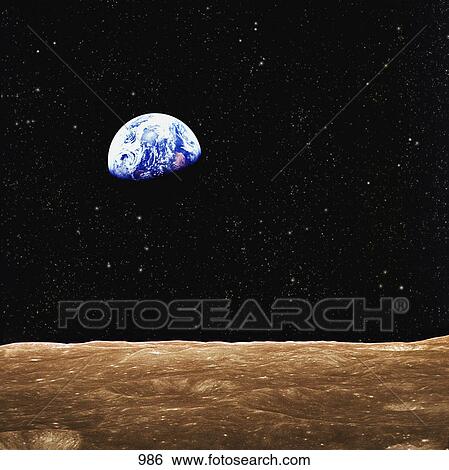
Every once in a while I see the famous photograph of the Earth called "The Blue Marble."  It's a photo of Earth taken from the moon.  It certainly is a beautiful shot, and it calls to mind how suspended we are in space.  It shows how real it is that the Earth is not attached to anything as it makes its way around the sun.

Also from time to time I see the Earth from the surface of Mars from the Curiosity rover.  It's not as close, of course, as the shot of the Earth from the moon, but it puts in perspective that Earth is only one of the planets making it journey around the sun.  One becomes aware of the rotation of the Earth as it travels on its path of revolution.

This year everyone got to see some close-up photos of Pluto for the first time in human history.  That certainly lets everyone see that many planets exist other than the one we all live on.  It has its own path around the sun, and one that is different from the other 8 planets in front of it.  That photo recalls a few facts about the planet, in particular, that one day on Pluto is 6.39 days on Earth.  And, one year on Pluto is 247.92 years on Earth.

That illustrates how arbitrary time is once a person is able to break out of thinking like one who can only see things from an Earthly point of view.  That tells me that holidays that come once a year are so very man-made.  Even the weekly rituals, like those of a religious nature who like to strap their thinking to 3 prayers at certain times of the day or the first day of the week (or sabbath day), seem so regimented on Earth, but so unnecessary from any other perspective.  Once humans begin to travel in space, we will find how utterly arbitrary are the rituals and customs of the days of our lives.


Although I like the holidays observed in the U.S., both religious and secular, I do understand that one rotation of the Earth is like all the other rotations of the Earth.  One rotation is not any more special than another.  One revolution of the Earth is merely that and doesn't match the revolution of any other planet, so marking a new year with a lot of pomp and circumstance is a little unnecessary.  It's just that we want to do it.  The same day has happened with and without humans, with and without celebration.

Thinking in an off-Earth  manner helps to keep my thinking open and not bound by clutter that would otherwise make life so very restrictive.  I just can't handle limited living any longer and refuse to be bound by thinking that arbitrarily binds one to customs and traditions as if that thinking was the only game in town.

Saturday, December 26, 2015

Hardly pedictable

I hear a siren moving down the road in the distance at this moment.  At the same time the television is on to storm coverage in the area.  A newsman is interviewing a woman whose house had been hit by a tornado.  Across the street from her is a house that was completely gutted by a tornado.  5 people are reported dead in one suburb and two in another.  11 tornadoes have been reported.  In the town where the first tornado hit, two church buildings have been leveled and their membership had gathered on the property already cleaning up.  One of the towns had a tornado touchdown on its interstate highway and threw 10 cars off an overpass as it passed through the area.  Rain is pounding my house as I write and it's about the 7th or 8th wave of such heavy rain, lightning, and thunder.


It has been  a rather historical day.  Not just the fact of a tornado on this date in history.  There have been two others.  One in 1984 killing one person, and one in 1957 killing none but damaging a big area of the western part of the city.  But never 11 tornadoes and never more than one person killed on this date as a result.  Christmas was a historical day for warm temperature also. 

The year is almost over.  It has been a record setting year for weather from the day January started until the close of the year.  Rain records were set.  Number of days without rain was set.  Drought started the year.  A spring of flooding ended the drought.  The heat of the summer produced a string of days without rain bringing back the drought that records rains had corrected.  Now it's wet again.

Not only the world of weather can be have cycles of craziness, but humans also can have the same crazy cycles.  Just when one problem gets fixed another problem begins.  When that situation has passed, then the old problem resurfaces.

As I finish the blog tonight, rain has completely stopped but only for the moment.  More can be seen coming on the radar.  The wettest year on record just got a little wetter.  The tornadoes ended the year in spectacularly destructive fashion.  In life terms, one of the craziest years is also coming to a close.  I have had 3 major plan changes during the year.  Other issues have been roller coaster rides as well.

Whatever.  Life goes on despite the calamity-related weather and despite calamity-related life-situations.  Who wants to live a predictable, placid life anyway.  I am glad to bring it to an end though.  Each year is different.  I am entirely grateful for that.