I remember the first car I bought when I was in my mid 20s, a Datsun B210. I was nervous in the salesman's office making the deal. All the terms were new to me, and I didn't really know where the leverage points were as we were dealing. I was nervous about the financing too. I didn't really know anything about credit and how it worked. I had to leave the dealership for about 3 days in a row with no deal in order to check with others on whether I had missed anything about the deal. I just didn't know.
After many years and a whole string of cars, I found myself again at a car dealer at the end of this year. Through those years, I made some bad decisions and some really good ones. Some cars I was proud of and drove for a long time, while others were just doomed cars - one that sat in front of my house that a 17-year-old hit the day after I brought it home from the lot. (That was the same car for which the dealer failed to make the pay-off of my trade-in. After I received notice of past due payment three weeks after the deal and made three calls to the general manager, they finally paid off the car.) Each car brought more experience to me about all of the ways car salesmen and dealers make their money.
All of those years had made me much better with the art of the deal. This time I wasn't nervous at all. I knew all the leverage points (including time of year) and shady practices of the dealers and salesmen. It was actually kind of a pleasure this time to sit down and see how the salesman was approaching the various points of the deal. Sitting across the desk from the business manager didn't raise the stress levels either. As he rapidly went through the numbers so that I wouldn't notice the leverage point numbers he had put in, it was kind of amusing. We would talk about each of those numbers, and he would change them to some lesser negotiated number.
So, this time at the end of the deal, I didn't walk away wondering how I got screwed this time. I left with a smile on my face from a really good deal for a really nice car. And that's the best way to leave one year in the dust and drive right into the next one... in the driver's seat with a smile on my face. Viva 2016!
The Big Short is one of the best movies to show how human nature works. It illustrates in four parallel planes how corrupt people really are at the top of an organization, how oblivious and unaware most people are to something that doesn't affect their moment-to-moment living, how nauseating/sobering enlightenment is of the human condition, and how short people's memories are when something very intense leaves the radar screen.
Many books and movies have this theme. But this movie is about a very recent and real time period only a short 8 years ago. But, times are better and different now. People have already forgotten how sharp the pain was and how much "bleeding" happened during that time. It's truly amazing and incredible the depths to which human nature can sink and the extreme shortsightedness that occurs after an event is over.
It's not a pleasant theme. But, it's a good reminder of the parallel planes of existence we all live in. And one great, great lesson is that terrible times are opportunities for people with the right vision. And there is a second great, great lesson in that for every gain some people have, many others experience tragedy - yin and yang. It is sure worth the money to see this wonderfully structured, eloquently depicted film of human nature.
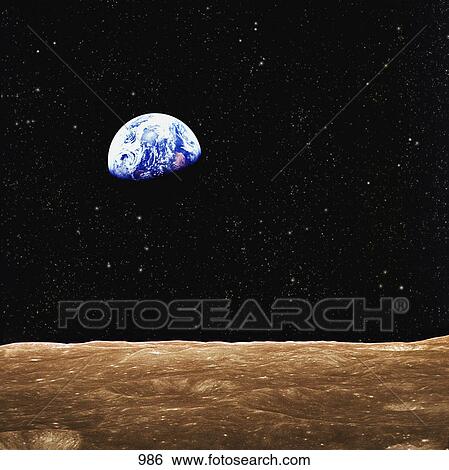
Every once in a while I see the famous photograph of the Earth called "The Blue Marble." It's a photo of Earth taken from the moon. It certainly is a beautiful shot, and it calls to mind how suspended we are in space. It shows how real it is that the Earth is not attached to anything as it makes its way around the sun.
Also from time to time I see the Earth from the surface of Mars from the Curiosity rover. It's not as close, of course, as the shot of the Earth from the moon, but it puts in perspective that Earth is only one of the planets making it journey around the sun. One becomes aware of the rotation of the Earth as it travels on its path of revolution.
This year everyone got to see some close-up photos of Pluto for the first time in human history. That certainly lets everyone see that many planets exist other than the one we all live on. It has its own path around the sun, and one that is different from the other 8 planets in front of it. That photo recalls a few facts about the planet, in particular, that one day on Pluto is 6.39 days on Earth. And, one year on Pluto is 247.92 years on Earth.
That illustrates how arbitrary time is once a person is able to break out of thinking like one who can only see things from an Earthly point of view. That tells me that holidays that come once a year are so very man-made. Even the weekly rituals, like those of a religious nature who like to strap their thinking to 3 prayers at certain times of the day or the first day of the week (or sabbath day), seem so regimented on Earth, but so unnecessary from any other perspective. Once humans begin to travel in space, we will find how utterly arbitrary are the rituals and customs of the days of our lives.
Although I like the holidays observed in the U.S., both religious and secular, I do understand that one rotation of the Earth is like all the other rotations of the Earth. One rotation is not any more special than another. One revolution of the Earth is merely that and doesn't match the revolution of any other planet, so marking a new year with a lot of pomp and circumstance is a little unnecessary. It's just that we want to do it. The same day has happened with and without humans, with and without celebration.
Thinking in an off-Earth manner helps to keep my thinking open and not bound by clutter that would otherwise make life so very restrictive. I just can't handle limited living any longer and refuse to be bound by thinking that arbitrarily binds one to customs and traditions as if that thinking was the only game in town.
I hear a siren moving down the road in the distance at this moment. At the same time the television is on to storm coverage in the area. A newsman is interviewing a woman whose house had been hit by a tornado. Across the street from her is a house that was completely gutted by a tornado. 5 people are reported dead in one suburb and two in another. 11 tornadoes have been reported. In the town where the first tornado hit, two church buildings have been leveled and their membership had gathered on the property already cleaning up. One of the towns had a tornado touchdown on its interstate highway and threw 10 cars off an overpass as it passed through the area. Rain is pounding my house as I write and it's about the 7th or 8th wave of such heavy rain, lightning, and thunder.
It has been a rather historical day. Not just the fact of a tornado on this date in history. There have been two others. One in 1984 killing one person, and one in 1957 killing none but damaging a big area of the western part of the city. But never 11 tornadoes and never more than one person killed on this date as a result. Christmas was a historical day for warm temperature also.
The year is almost over. It has been a record setting year for weather from the day January started until the close of the year. Rain records were set. Number of days without rain was set. Drought started the year. A spring of flooding ended the drought. The heat of the summer produced a string of days without rain bringing back the drought that records rains had corrected. Now it's wet again.
Not only the world of weather can be have cycles of craziness, but humans also can have the same crazy cycles. Just when one problem gets fixed another problem begins. When that situation has passed, then the old problem resurfaces.
As I finish the blog tonight, rain has completely stopped but only for the moment. More can be seen coming on the radar. The wettest year on record just got a little wetter. The tornadoes ended the year in spectacularly destructive fashion. In life terms, one of the craziest years is also coming to a close. I have had 3 major plan changes during the year. Other issues have been roller coaster rides as well.
Whatever. Life goes on despite the calamity-related weather and despite calamity-related life-situations. Who wants to live a predictable, placid life anyway. I am glad to bring it to an end though. Each year is different. I am entirely grateful for that.
The band The Who is one of those ageless bands. They stayed together for who knows what reason, creating music for a couple of decades. Then, they toured the next two decades playing all of their songs. I have really liked their music over the years, even attending a live concert myself in one of their first two-decade glory years. And, I have always liked their signature song "Won't Get Fooled Again." It represents both in lyric and instrumentation the spirit of freedom, reckless abandon, determination, and lack of gullability. I have two anthems from the first two decades of my own life: "Stairway to Heaven" and "Won't Get Fooled Again." This first video merely represents my memory of such a great song. It's taken from a 1971 performance in England and shows the short, energetic, enthusiastic version of a young band enjoying their fame.
Earlier this year, The Who decided to perform a 50 years together tour around Europe and the U.S. They capped off their performances in England in Glastonbury on June 28th. Above is their same signature song 44 years later than the first video in this blog. All I can say is "What a difference!"
The band is old now. But, their mastery of music, particularly their own music is mere pleasure to watch and hear. The signature song above illustrates the difference. The song itself is 3 times the length of the original song that they played in 1971. The two leaders of the band know each other's moves intricately. They enjoy each other and they enjoy performing on stage. That is not so apparent in 1971. They have learned to manipulate their music as well. It's not just a song they're playing. It's something alive that their paying customers want to enjoy. So, the band energizes the song with miniature modern minuets and interludes at various places in the song. They allow the audience to participate in the song. The band knows that the event spotlights them, but is not really about them. It's about customers and band alike becoming one with the music produced.
The Who didn't just show this understanding of music and audience in Glastonbury. Their entire 50 year anniversary tour including Houston, Nashville, Miami, New York, London, Paris, and Amsterdam shows this great band playing their hearts out for sheer love of music with and for their fans. The 100,000 people that gathered at Hyde Park in London depicts them living in the moment with smiles on their faces. The above video clip in Hyde Park is of their signature song once again in the heart of the country they lived in all their lives.
I can't help but notice that the principle is true in more than music. That is, if a person practices and performs (s)he learns to enjoy the thing of his or her passion. (S)He learns to manipulate it, wringing out every drop of joy it brings. It's a pleasure to witness and participate with the person. I have found that whatever I am passionate about, immersed in, and otherwise busy about improving, gets better and better with age, with practice, and with performance. It happens without fail... every time... for everyone. It's a true work of beauty and splendor for all who indulge.
An article appeared in USA Today talking about the last 4 generations. It started with saying that the Baby Boomer generation wasn't at all pleased with or proud of their children's generation. The children's generation didn't have very good morals, thought they were entitled to a better life, and didn't have a good work ethic.
Funny how things work. Tom Brokaw wrote a book back before the turn of the millennium talking about what the Great Generation thought of their children. The Great generation was the generation that survived the Great Depression and World War II. They thought their hippie children didn't have good morals, had life too easy, were being brainwashed by television, and would have a hard time becoming responsible in a harsh world.
That's really funny. Woodrow Wilson was supposed to be the model person of his generation and often was reported as being their spokesperson. He is quoted as saying that his generation who fought the war to end all wars (WWI) and gave women the right to vote looked upon their children as losing touch with what counts in life, that they were letting inventions like the car make them soft people instead of harder people who still rode horses.
It's ironic how that generational perspective works. Plato said the same thing about the youth of his generation and is quoted as saying Socrates didn't have a high opinion of them either. Even farther back in history by 5 centuries, Hesiod, a Greek poet, speaks of the slothfulness of youth.
Maturity is very often left out of the picture by those who would judge young adults. Of course, adolescents are erratic and irresponsible at the beginning of the maturity process. Development is ragged around the edges. The phase after adolescence is characterized by myopic self-centeredness. People in their 30s are typified by their ambitions in becoming whatever floats their boats. And so the story goes.
Maturity simply takes experience, which is indelibly related to the passage of time. That process yields snapshot perspectives on life. Maturity is a snapshot. These snapshots assembled make for great stories. Everyone has a great story - the story of their maturity. It's a shame that people can't connect dots in early snapshots to know what they will yield in later years, but then, that is the human condition.
(In the library of the third most expensive school in the 4th
largest metropolitan area in the U.S.)
“Do you like math?” I asked. “Yes,” came the answer.“So Chemistry is no problem for me.” “OK. Let’s work on finding the net charge of an atom in a particular element.Can you show me how to do that?” “No.I don’t know
what to do with the numbers.I don’t
know how to work the negative numbers.” --------------------------------------- (Same library, different day)
“Do you speak other languages?” she asked me.
“Yes. Do you?” I answered. “I’m in my third year of Spanish,” she said. “¿Bueno, como estás hoy?” I asked. “Could you repeat that? I didn’t understand what you said.” -----------------------------------------
These students’ grades were better than average, but their abilities
were not well developed for the level of math/chemistry and language they were in. It bears out that testing and grade-giving are masks to
ability.What should be taught in classes
across this country is practice in real world abilities.What is taught is a lot of theory, rules,
artificial, and simplistic situations.A
student’s world is artificial enough.The real world has to become incorporated at some point.Otherwise, if I ask a third year student
in another language what her family is doing for Christmas, I won’t get an
answer.Or if I ask why Toyota's new
hydrogen-powered engine is an improvement over electric and gasoline engines, I won’t get the most general
of answers or "I don't know."
There’s one shot at life. Experts in the field of education need to sound off in journals, in leadership for reforming the direction, in voicing an objection to political interference in curriculum, and in laying out a plan to directing a new flow to learning. The new federal law, Every Student Succeeds Act is a good place to start because it ends the federal cookie cutter model of creating average students and lowering the level of the average. If experts refuse to speak out, keeping the artificial world of the classroom cripples students until they figure it out on their
own.By that time, how many years have
been wasted in an artificial world that can’t connect to a real world?Some figure it out early and refuse to be
crippled.Others lose about 10 years
before they figure it out.Still others
find it out too late to do anything about it.
Wouldn’t it be nice if students had a training so that they
wouldn’t have to figure it out.They
just have to get better at seeing what the real world brings to the table and
working with it to make it become a worn shoe that fits their feet very comfortably. Then they can manipulate to their heart's content and be able to see new horizons, new angles with greater ease (and frequency, probably).
Just saying… just hoping… just shaking my head in the
meantime... just applauding each reform that draws upon productive learning... just noticing those who lead young minds from darkness to light.
What does that mean - to see a fully formed rose in the middle of December? Better yet, what does it mean to have this rose on a knock-off bush on which no fully formed roses ever bloom? Still one better, why did the rose form in the center of the bush and last for a week in beautiful form, then begin to wither? Two weeks later it is still fully formed on the branch although in a slightly lesss vibrant state. The 4 or 5 roses on the bush that bloomed with this fully formed one had a couple or three petals, lasted for 3 or 4 days, then vanished in the wind.
I'm sure there is a scientific explanation for it. The climate is affected by the strongest El Nino on record this year. That translates to warmer temperatures and wetter than average weather. The leaves on my porch potted flowers are still on their stems even though there have been two freezes already. The warmer, wetter weather allows for plants to bloom later, last longer, or have an extra blooming period.
Right. But, of the three rose bushes in my yard, only one produced a fully formed rose in mid-December. Only one. I'm hoping it will be representative of what roses symbolize. Something special is due to happen soon. I couldn't tell from what quarter something special would come because I see nothing on the horizon that would blossom into anything big and exciting and special. If it happens it would definitely be as surprising as the rose in mid-December.
Today, the skies are perfectly blue, not a cloud in them. It's warmer by 10 degrees than it was last year at this time, which was above average even then. If something extraordinary does happen, I will look to this week of the rose, this day of crystal clear skies and warm temps, and be thankful for the symbol that allowed me the hope of better things to come.
Earlier this week I pulled out of my driveway as I usually do, not really looking at things around me, with my head turned backward making sure that nothing was behind me. When I whipped my head around to see that the garage door was closing, I thought I saw something unexpected on the edge of the driveway where rose bushes are. At this time of year a few leaves dangle on the thin branches in the wind, but not many. I inched the car up a little to double-check what had flashed in my peripheral vision.
Yep, embedded near the center of the tree, appeared a beautiful, fully-formed rose. I know - that's what rose bushes do, produce roses. Well, it's mid-December. Leaves barely adorn the tree to show that it's alive. The tree is settling into latency for winter. I hardly could believe my eyes. I sat there staring at it to impress on my mind that what I was seeing was real.
On my return trip, I went over to the tree to inspect the rose, to touch it, to savor this most unusual moment in the middle of December.
I don't know why the rose was out to kiss my morning and send me on my way with a hearty, "Welcome to your great day!" In fact, the day was a really good one. Life's little anomalies are so pleasurable sometimes. They're reminders that in the tedium of daily routines the best surprises jump into our day from the least expected quarters and tell us to enjoy life and the people in it, past present and future.
The rose is almost ready to drop its leaves now, but what eye candy came my way to give me an extra spring in my step. Besides making my day, it brought to mind a time when no leaves appeared in my life. I am eternally grateful for the beauty in the mid-December of my life you brought.
I think everyone who has ever lived could tell a story of the heart and a story of the head. I am thinking of a Greek myth at this point, the story of Hero (the female lover) and Leander (the male lover). One lived on the European side of the Hellespont, the other on the Asian side. Four miles of ocean lay between the two points.
It's an old story. Two lovers are separated by some giant obstacle. They collaborate and try to defy the odds. For some the separation is with the family acceptance. For some it is a class difference in the society. For others it is season of life. For still others it is just distance and proximity. There are literally hundreds of variations on this theme in literature. One very smart man, Edward DeVere, authored a great number of plays, at least 7 of his 37 plays, under the pseudonym Shakespeare, putting lines in his characters' mouths about the story of Hero and Leander. In the Two Gentlemen of Verona, Valentine refers to the myth as his love-book. Many, many others have referred to this myth in one way or another.
The story of the head here is that Leander knew how dangerous it was to swim the Hellespont every night to meet with the woman he loved. He knew that it was an impossible way of thinking to continue night after night, braving the waters and wind and current to spend a short pocket of early morning hours in the arms of the one who gave his being warmth. On the other hand, he felt so good, so comfortable, so much more when in the presence of the one presented to him as beautiful, attractive, and otherwise ravishing.
The head and the heart. Life is harsh, isn't it?! In the myth, Leander swims one night in a very boisterous sea, loses his way, can't see the nightly torch in Hero's tower window because the wind blew it out, and drowns in the undertow. In The Fiddler on the Roof, the main character's third daughter has such a love in life, but he can't handle the religious difference and ends up disowning his daughter. In the recent movie Rock the Kabash, the daughter of an Afghani breaks her stereotype for women and ends up having to leave her country for lack of acceptance.
Life seems to have a preference for the head. The heart swamps your boat.
It's interesting to see how people remember what is said long enough to follow a lecture or an extended answer to a question. Psychologists have tried to follow this "train" of thinking by hooking electrodes to people's heads. And, although they can follow the path and judge the strength of such a signal, it's still impossible to watch the smallest particles carrying information to all of the synapses that receive them and subsequently categorize and store them.
That would be helpful in helping people stay focused long enough to retain, even for a short term, what was said long enough to pass a test or repeat, analyze, or summarize needed data. In working with a college graduate recently, I discovered that she could not retain new information if it was given to her more than about 15 seconds after starting its delivery. She revealed how friends had had to help her in college in recording and notetaking. Mainly, they took the notes and she reviewed them. She also relied on her books because they had the printed information. But, listening to teachers in class was something she couldn't do.
In one experiment, the woman was to listen to a report in which the pictures changed approximately every 3 seconds. If a picture of a person was presented for that length of time, and prior to the picture's appearance the name of the person was given, she couldn't remember that the name was ever given. In fact, if the picture was not in color, she couldn't remember details like whether or not the person wore glasses or was dressed formally or informally. Topics were important as well. If the topic was not of interest or was not something she had been previously exposed to, then she could remember only the barest of information. Most people hear and reduce new information or uninteresting information to gist. This woman could not perform that task except on rare occasions.
While there are examples of people who have absolutely no short term memory, this was not the case with this woman. She had great memory of experiences, people that were important to her for some reason, environments that she had grown up in and around, overall impressions of various experiences, and things of impact.
It's just further proof to me that the brain's default is to forget information unless it is memorable. Everyone designs criteria as the basis for remembering. That makes memory personal. That's not a bad thing for the routines of life. But, it affects job performance sometimes, or new opportunities that we could have taken advantage of if we had designed a little broader range for our basis or if we redesigned part of it to include more than our comfortable routines. It's perilous to leave us to the care of our own brains.
Semiotics is the study of symbols that communicate as loudly as any words. Sometimes they are gestures or icons, such as the international symbol for no smoking, but sometimes they are colors, a general topic, or an unusual acronym. When someone deals in semiotics, words are distracters to the real message being communicated.
Consider the president's speech last night. The first element to notice was the reason he was giving the speech. He was assuring the people he was president for that everything was under control. In order to make that believable, he would have to have a certain amount of energy when delivering the statement. If the delivery is devoid of emotion, which was the case last night, the signal is different, subliminal, encrypted. It's a contraindicator of some other message. It could be something simple like he was forced to give the people some kind of sign that the government cared about what had happened in a terrorist attack, don't make the Democrats look bad in an election year, or it could be something deliberate and dark like whoever the message was for could discern from the lack of energy that the message was opposite from the words being delivered. In this case, the opposite would be to notify the terrorists that the incident at San Bernadino and the rhetoric of the speech were for the American people only, not business as usual regarding his mid-eastern policy.
The second element to consider was the acronym the president used to refer to the main terrorist group. The modern reference continues to be Islamic State of Iraq and Syria. However, the word translated Syria is al Sham (still an S for the acronym), a reference to an area of Islamic control used before the advent of all the modern states divided into their current idiosyncratic ideologies for running their separate countries. So under the guise of giving a better translation for al Sham, the president has translated the words as the Levant, also an older term used for the mid-eastern region before Israel was in the after World War II. On the surface, it would appear that one is just a better literal translation than the other. But if semiotic analysis is used, the Levant is used to assure the Islamic states that Israel is not being recognized and, perhaps, to continue with their plans of harassment in the area.
The third element for analysis is found in the objects of the setting. Behind the president, on either side of him was a flag. On the left side, as a viewer would see the president speak was the American flag. That would be expected. He is giving a speech for Americans to rally around. On the left side was the president's official flag. The flag has an official design which would include the colors to be used for it. The color blue is supposed to be the color of the field upon which the president's emblem superimposed. Last night the color of the flag's field was a dark blue, but the lighting was so dark many times the field looked black. Considering other elements of the speech, the lighting was significant. Black (perceived or real) would match the color of the field of the flag that I.S.I.S. uses. In addition, black is one of the featured stripes in the flags of Syria, Palestine, Jordan, Egypt, Afhanistan, and Iraq. It would be a show of solidarity to match an American flag to the Islamic state(s).
Finally, the topic the president used to gain a platform for a speech on national television was one of comfort to the families of the fallen and assurance to Americans of unfailing vigilance against terrorism. However, in the midst of such a topic, the president decided to give a defense of Islam as a peaceful religion. That is so far afield from comfort and reassurance that to insert that defense in such a speech would have no other purpose than to fan the flame of hostility within his country and to assure the Islamic countries that nothing is really changing even though the rhetoric was different in other portions of the speech. The defense wasn't a mere mentioning of Islam in general, it was placed in two different parts of the speech to be a contraindicator in those two sections.
It doesn't go without notice that the speech was delivered the day before Pearl Harbor Day. How much more reassuring could a president be than to talk of the San Bernadino massacre in the context of attacks by America's enemies. It was not an error that the president didn't want to categorize this shooting in that context since he didn't want any mid-eastern states to construe his remarks to mean that they were Amercia's enemies. So, separate the two speeches he was to give - one for America's enemies on Pearl Harbor Day and one for the "workplace attack" in San Bernadino. Careful scheduling matches all the other elements about the message conveyed on television last night.
Smoke and mirrors. It was the ole trick, "Hey, look over there!" while I steal your valuables right under your nose. It's a common ruse. That's why semiotic communication has invaluable use. And it's why semiotic analysis exists at all. The speech contained comfort and assurance, but for more than the American people. I'm thinking people know all of this about the president already. This is not the first time he has played his hand. But, it certainly corroborates what people are thinking.
One of the great reasons that earthquakes occur is that the Earth has faults in it. When the stress becomes too great at the fault zone, quakes happen. Some are minor quakes, but larger ones occur on a regular basis. It's just a fact. Where there are faults, stress causes quakes.
One of the great reasons in life that people radically change is that people are made with faults. When the stress becomes great in the places where people's faults lie, change happens. Sometimes, the changes are minor, but radical changes happen too. It's just a fact. Where there are faults, stress changes people.
Rather recently, I learned from my mother that she had one regret in life. She had asked my dad to quit doing the job he most loved to do. He was never the same after that. As I pieced together the events that took my dad's life, I was able to see what had happened more easily after hearing my mother's news. He had returned to college to get further training so that he could change careers. Then he changed, but he worked part time at the job he loved. Eventually, he had a heart attack. Although he recovered, he changed some in his personality and in his stamina. He had a series of TIAs over the next 15 years that caused mild cognitive dementia to set in. It cost him probably 10 years of his life and certainly limited his quality of life in his last 3 years.
It's not only in health that people change, though. It's in values and beliefs too. I have learned I need to take notice of the fault zones I have. If I'm not careful, they'll show stress lines. I really don't need an earthquake to occur.
The lost island of Hybrasil is a modern enigma. It was a circular island off the coast of Ireland that appeared on maps as far back as 1325. Today it doesn't exist as an island although shallow waters exist in the ocean where its location is supposed to have been.
It was reported to have been a beautiful island, one that contained magical inhabitants and a lot of gold. One explorer who visited said that he received gold from the inhabitants to take home with him. It's a myth today since no one has been able to find the island, but it presents the idea of trusting people who have been to a place moderns only hear about.
Experience is much like Hybrasil. We go through things often creating memories of them, but when we move on with life, the memories get discarded or fade. That's a science all its own, and loss of memory of experiences is quite common. But, it's those memories like Hybrasil that create the interest in our lives. We have pictures of them, we remember the facts about them, but they have ceased to exist in our present lives.
We still have the maps drawn by the people who visited Hybrasil. We still have their writings and stories. But we have no islands today. I like this myth because I like good mysteries of the past. But, I also know that I share this experience. My most magical memories of particular places with a particular face are mapped into my mind's wiring for recall whenever I wish. But, in my current world, I can't see or touch what then existed.
I believe in the majestic tales of this enchanted, once beautiful island because I believe in my own enchanted, once beautiful time and place. The island was reportedly the center of an advanced civilization that made life around it so wonderful. And that is my true story as well of an advanced time in my life that touched me wonderfully. Long live enchanted isles.
It's really amazing the lengths that people go to in order to make themselves feel better. I heard some remarks made yesterday in a family setting that showed a high degree of haughtiness. A sister and her husband were staying a couple of nights with another sister and her husband. The husband of the sister who was a guest at her sister's house wanted to say something complimentary to his brother-in-law and sister-in-law who were hosting him.
"You have a nice, little house here. It's got 4 bedrooms and a nice living area. You don't have any formal rooms. I like it; it's comfortable."
On the surface that sounds like a compliment. Except that the brother-in-law is a man of means and the host brother-in-law is not. "A nice, little house" emphasizes the word little and the word nice is used before it to mask or distract from true intent. The words "not formal, and comfortable" were to signify that his house was better than a mere informal place to live. The brother-in-law of means condescended to his host sister-in-law and brother-in-law merely to bolster his ego and to establish power in case he needed to rely on it. It also was to have it out on the table in case there was a reverse area of inequality in status. He wanted to warn the other couple not to go there since he had an area of inequality leveraged against them. Not that the topic would arise - he just wanted to have said something in advance that indicated he could play that card.
It's really amazing the lengths people go to in order to make themselves feel better.
Competence takes a long time to develop. It usually is crafted after many times of developing this part or that. It is born of fire. It becomes talent when the level of competence is wholly manipulated.
I find that many people opt out to early when trying to develop their crafts. They plateau at a lower level because of trade-offs they make in life. Some people try very hard to work only 6-8 hours a day, not longer. Some people decide not to continue their training or their education. They are satisfied with a particular level and call it done. And still others follow their mini-ambitions. They follow a path of desire, but bail out when things turn bad for them.
Competence at its highest level is a thing of splendor to see whether it is financial, knowledge, service, or art. I made some trade-offs in life in order to reach a level a little higher than what I had originally considered coming out of high school. I wanted people to see my craft and see how a thing can be manipulated easily. I wanted them to see me and have total trust in what I had to offer.
I don't think I have achieved that level from my enemies. But, some people trust my work. Others respect it. I do wish my enemies would have the same level of trust and respect, but that is something that I have left to accomplish. If I die today, I am satisfied. If I die tomorrow, I have something yet to achieve. I like it like that. It keeps me honest and on my toes. It keeps me in good company and keeps me living in the current world. It mainly lets me die peacefully when that time unexpectedly occurs.
I saw something tonight that takes the word beautiful to a whole different level. At halftime of the Green Bay/Chicago football game, the home team Packers were retiring Brett Favre's number 4. The stadium was full. As Brett was introduced the whole stadium erupted into applause that lasted for longer than a full minute. Brett spoke a few words, his jersey was retired, and I was expecting nothing else.
The weather was cold. A TV viewer could see the people's breath hanging in the air. All were bundled in coats. Rain was falling; umbrellas were out; people's faces were glistening from wet drops that had reached their cheeks. It was a nice, short, but meaningful ceremony.
Then the camera panned around the center of the stadium where all of the names and numbers were of other people who had had their jerseys retired. The lens came to rest on the number 15, Bart Starr. Simultaneously, from the entry tunnel to the field rolled in a cart carrying two people. Bart Starr and his wife. He was not in the best of health, but he came rolling out to the roar of the crowd.
That was beautiful. Then the next level happened. Bart thought so much of Brett that the cart came to midfield where Brett was standing, and on this rainy, cold night in ill health, Bart got out of his cart into the rain to hug #4 to give him due tribute. The camera froze on the scene as did everyone else's eyes. Two of the greatest quarterbacks in the NFL's storied history, from different eras embracing on the field in the midst of rain and blowing cold air. It struck me that Brett should be honoring the great Bart Starr, but here was a legend in bad health and in bad weather showing honor to the youngster.
Touching. Honor to whom honor is due. I want to be so gracious. Bart Starr was an unexpected model of the spirit of Thanksgiving. I thank him for that.
This song is beautiful in its construction. The beginning verse starts with love hurting us. Who hasn't been there?! And verse two changes the image to love healing us. Hopefully, everyone has experienced that too. The contrasts show the two sides of love well enough, but the balance is not even. The memories were made by two people and the photograph shows the two people never closing their eyes, never breaking the other's heart, and staying in love forever. Beautiful.
The rhythm is very steady. The drumbeat is a continuous beating of the toms, so by the time the main line comes, everyone is expecting it - Wait for me to come home. That's a contrast in itself - continuous beating, then the word "Wait." And without a doubt the drum beat represents the heart beat. Explicitly the song states that the photograph should be kept next to the heartbeat where it (the beat of hearts and the emotional connection of one heart to another) resonates deep within the soul of the person.
And then there's the icing on the cake. There is the promise never to let go accompanied by a remembered kiss, a whisper through the phone, and the words, "Wait for me to come home" accentuated by the silence that follows. The silence is for effect. It symbolizes that there is an eternity afterwards. But, it is an eternity where love is, where the heartbeat is, where the soul is. The eternity is with the person whose voice was on the phone.
I have this photograph. On this Thanksgiving, I am grateful... into eternity.
This morning my granddaughter was insistent on taking a walk in the neighborhood. She's three, so she doesn't really have timetables in her mind nor the exact plan on what she wants to do when she takes walks. Many times she likes to go to the creek that runs through the neighborhood in the natural area about 50 yards from our house. But, not today.
Today, she wanted to walk on the streets and sidewalks. It's a quiet neighborhood on a cul-de-sac street, so passing cars are not a problem. She had a small plastic bucket with her. She collects rocks and acorns usually, but not today. At first, she wasn't collecting anything, so I suggested she collect the different colored leaves lying on the ground. She started collecting all sorts of colored leaves, all sizes and shapes of leaves too. She would fill her bucket, then dump out the leaves and collect more leaves. We probably went through 4 buckets full of leaves.
Finally, we came inside to get out of the cold. She had to show her mother and grandmother her leaf collection. Her grandmother made a little, temporary Thanksgiving scene on the kitchen table so that my granddaughter could be proud of what she did on her morning walk.
I contemplated our actions of the morning. She didn't set out to collect leaves when we left the house. She had no plan. But, she took my suggestion and had a lot of fun doing something a little different from the norm. Someone else took what she collected and made a really nice seasonal design for all of us to enjoy over the next several days.
And that meditation this morning was a comforting and warm thought this cold day. There are periods in the season of our lives in which there is no plan. We're comfortable where we are and don't want to necessarily do anything different. Either circumstances or a person suggest(s) that we do something a little different with our days. When we try that, it turns out that someone else can take what we have done and make something really enjoyable and nice from it. These are good moments in life. And we enjoying seeing smiles all around in our world.
I asked 8 people to make a list of the three individuals that inspired them and rank the list in order of importance. For the first of three follow-up activities, the same people were asked to explain why the person ranked number one was in that ranking. The results were interesting.
The group consisted of 3 women and 5 men. The three women responded with remarks showing that they had to overcome hardships stacked against them. The men responded with answers about succeeding in the world. These were the general themes, but their stories were different.
Woman 1 admired the life of a woman who taught her to be strong against the turbulent circumstances of life. The woman had many problems with her husband and supervisors at work. Both groups demanded more from her than she was able/willing to give. So, she taught woman 1 how to survive the storms that come against a person. Woman 2 admired a doctor she bonded with who taught her to always be prepared. Preparing herself in this case meant education and training, even abroad. Woman 3 was inspired by a woman who taught her to recognize her abilities so that she could use those to leverage her ambitions into a successful life.
The men fell into two groups. The 3 men of Group 1 pointed to a mentor in their lives who showed them how to develop a craft or what to expect from life given certain behaviors. They all admired the advice they received from these male mentors. The 2 men of Group 2 followed the philosophy of marching to the beat of one's own drummer. However, both of them mentioned that they had had someone, briefly in both cases, who believed in them. This was the catalyst they had needed to believe in themselves.
All the individuals were adults ranging in age from 20 to 42. The mean was 27. The participants were explicitly prohibited from using parents in an attempt to eliminate sentimentalism that could have clouded the picture. Parents are influential without a doubt, but children feel obligated to mention parents many times in place of influential others that had actually set the participant on their paths through adulthood. Psychologically, people choose someone to listen to or be inspired by due to a need in their lives. I have known, but ever so much more now, that youth need a voice in their heads as a source for their actions. People, of course, move beyond the voices of mentors as they grow older and flourish in their fields of interest. But, the seed for what young people end up flourishing in is a voice instilled in youth.
There is a great lesson here for parents. Children no doubt hear parents' voices. But, societies exist because individuals don't have enough impact within their own power. There is strength in numbers. Personalities between parents and children are many times too different to allow for influence, only support. So, the best support a parent can give to their children is to expose their children to voices that serve as mentors or catalysts. An adult working contentedly, competently in the field of her or his choice is a beautiful thing to see and be around.
Many of the sayings in American society center around hard work, such as "Hard work pays dividends." While that is true to a great extent and is a safeguard against laziness, "Allow children to hear voices," is a much better saying and subsumes the idea of hard work. I watch my daughter and granddaughter closely so that I can put them in places to hear the voices, specifically tailored to their needs and personalities, that will set them on a path to flourish the further down the adult path they travel.