What I want people to remember about me is that I was in the game till the very end. Not till I folded, but till the game ended. I want Jesus' comment to Simon about the woman who brought her expensive perfume bottle, broke it open at his feet and then bathed his feet in it, to be true about me, Simon thought, "What a waste." Jesus said, "The thing she had, she did."
Saturday, May 30, 2015
Bringing it till the end
When the chips are down has an obvious derivation from the world of gambling. But, the analogy is a good one. When a poker player doesn't have but a few chips, what does he do - continue to play or fold his cards and walk away from the table?
What I want people to remember about me is that I was in the game till the very end. Not till I folded, but till the game ended. I want Jesus' comment to Simon about the woman who brought her expensive perfume bottle, broke it open at his feet and then bathed his feet in it, to be true about me, Simon thought, "What a waste." Jesus said, "The thing she had, she did."
What I want people to remember about me is that I was in the game till the very end. Not till I folded, but till the game ended. I want Jesus' comment to Simon about the woman who brought her expensive perfume bottle, broke it open at his feet and then bathed his feet in it, to be true about me, Simon thought, "What a waste." Jesus said, "The thing she had, she did."


When will this end?

Myths get started sometimes, and they seem so true that they stay around. Popular notions, usually unsubstantiated, are very hard to change because of the sheer number of people that perceive it as truth. One such notion is that men don't talk to their spouses (surveys of women's remarks saying husbands were uncommunicative) because they can't express their feelings very well.
I believe some of the fodder for such a notion came from the psychology sector. In the 1980s and 1990s, some psychologists, particularly "Christian" psychologists, made an attempt to "fix" marriages according to the model of communication through expression of personal feelings. The research behind this model turns out to be flawed because the studies were almost all qualitative in nature and many were designed to yield the evidence to support the model. Subsequent linguistic studies, more quantitative in nature, produced different results presenting a much more complex picture of cross-sex communication.
In the 2000s, the idea of mapping communication ties (in fact, mapping of many ideas such as Facebook connections to track advertising in order to personalize it and mapping the effects of nerve trigger points to detect warning signs for various diseases) showed that communication is affected by a host of influences not merely by personal feelings. It also showed that a person's method of expression is not influenced soley by sex, but by influences of region, teen networks while growing up, behavioral modification trends during childhood, and many, many other forces.
So, in the movie Aloha, when one of the supporting male characters had trouble in his marriage due to non-communication with his spouse, I was non-plussed to say the least. It definitely showed how stereotypes are built on unsubstantiated, antiquated ideas and popular notions leading to years and years of erroneous thinking before discarding them. The general plot of the movie was entertaining, but ignoring the terrible weakness of one of the characters dampened the enjoyment of good entertainment.
The movie trailer at 1:14-1:28 shows one of the 4 episodes in which the minor character is uncommunicative. I get it. The character is an exaggeration (for humor's sake) of the type of man that doesn't communicate with anyone much less his wife. The bad thing is that the movie is a reflection of a society that tries to denigrate men's ability to express themselves adequately in intimate relationships by perpetuating the misguided notion that expression of personal feelings with one's partner is the only, or at least the principal, currency of good, sustainable marriages. That's simply not true. The world of cross-sex communication will be better off as soon as this ill-founded whim dies.
Thursday, May 28, 2015
Looking to the skies
It was an average work day in 1977 for Walter Alvarez. He is an American geologist who was chiseling rock in Italy one very ordinary day, just trying to read the rock record of the Earth. Scientists had noticed for years that fossils and bones appeared everywhere in the Cretaceous strata of the Earth, but the number of bones and fossils diminish by about 75% in the Tertiary layer above the Cretaceous and change in type as well. How curious, Alvarez thought, so he had gone to these two geologic strata in Italy to investigate.
He did his usual chiseling and collecting and then sent off samples to the lab and awaited the results hoping there would be a clue to this apparent period of dying off on the Earth. He didn't know that his average work day in 1977 was his lucky day. It was the beginning of evidence that rewrote the world's history. It challenged the crux of Darwinism because of the amount of time evolution has to have in order to produce multiple forms of life. It challenged the geological theory of uniformitarianism because of the abrupt and fairly immediate effects that could be seen around the globe after a catastrophic event. It challenged religious ideas of creation because of the proof it offered of an event that predated written history, in fact all of human history.
What he discovered on this very ordinary day was something quite extraordinary, a layer of iridium in quantities that can only come from space and the layer in the Earth was evenly distributed, meaning that something had happened at this place in Italy and everywhere else on Earth, not merely in one place. Now, nearly all scientists believe or give credence to the extinction event that killed the dinosaurs and 75% of all the species of life on the Earth. Over the last 37 years, the meteor crater has been located that verifies the event and corollary theories of the impact's aftermath have shown more exactly why there is a change in the fossil record.
It was just a normal reporting day for Marco Cava as he combed through technology stories to bring to USA Today. He was merely reporting on the recent coding conference. But, this day he decided to report on a Google device that would really change the whole way information is brought to the average person. It was premiered as the Oculus Rift. And what a change to the world it promises to deliver.
Everyone has heard of and experimented with virtual technology. Sometimes the term virtual reality is used, but mostly only the word virtual is used, rightly so. Virtual reality is something that actually happens in real time, and people interact with the transmission because it is in 3D and people see each other as if they were in the same physical location. Holograms are the nearest description we have to virtual reality. The Oculus Rift will change all of that. Subsequent generations of this invention will allow things to happen from anywhere in 3D reality.
In a parallel story, Edward Baig reports from the same tech conference that GoPro will have on the market a type of camera that will take spherical pictures. It can also be mounted on the growing market of drones that is projected to be as commonplace as computers in the next 10 years.
Now, I'm thinking that if spherical pictures meet Oculus Rift, then... our world will be VERY different, to say the least. 2D screens will suddenly be 3D globes and resemble the 3D spherical planet we live on already.
This is the technology side of things. The education that exists today will be part of the 75% of life forms that will not survive this technological impact. There's a meteor coming that will change our lifestyle radically, as radically as the K-T boundary. Education will survive, but not anywhere close to its current form. Banking and currency will survive, just not as we know it today. Business will survive, but it will be completely changed in how it employs people.
Change usually occurs slowly and over time. Sixty-five million years ago the dinosaurs went to sleep one night, along with other species, thinking that they would exist another million years into the future. Little did they know the next day was their personal last and the last for their entire species. Tonight is an average night for us as well, but those who don't follow the tech world will find themselves in the same position that many 80-year-olds are in today. They don't know how to work a smart phone; they don't use email or other electronic message delivery systems; they don't trust Facebook because the government uses it to spy on people; they have no clue how to order from Ebay or Amazon (so they still go shopping, believe it or not); and they think the idea of a virtual world is ludicrous because it is detrimental to "real communication." Their fossils will not be a part of the geologic record of any year past 2030.
We ourselves could also wake up tomorrow (figuratively speaking, but not by much) and wonder what the big booming noise is, what the fires everywhere on the Earth are from, why the Earth is shaking, and what the reason for the tsunamis is as we drown in the crash of their waves, burn alive, or are blown to smitherines by the tremendous force of shock waves.
But if we look to the skies to see what is coming...
Tuesday, May 26, 2015
You just can't see them
The science channel today was showing a special about the universe we live in. The topic of the show was finding other planets like Earth. As a part of the show, the commentator read that most stars in our universe are classified as red dwarves. That means they have a lower level of light than our sun, and they can't be seen in the night sky. Only stars as bright as our sun or brighter can be seen with the naked eye.
At that point, the picture showed the night sky as we see it with our own eyes. The commentator went on to say that the stars we see were in a 1:2 ratio with the stars that can't be seen, the red dwarves. Then, the screen changed to show the night sky as it would be seen if one could see the red dwarves. The number of stars tripled in the sky. It was a good visual for indicating how much of the universe goes unseen.
I'm thinking so much of what we do and think in a day's time goes without being seen. Sometimes it is a very good thing that what we think is not enacted, thus goes unseen. But, it's also lamentable that the good intentions that we have, the good actions - usually the little things - go unnoticed. I think if we could see the unnoticed actions and thoughts the ratio by which others could benefit and at least judge us by would triple. I suppose we just need to be a little more communicative, more revealing, so that people can know that we are good at our core.
Monday, May 25, 2015
Records
I like being around for weather records There was something special about 1981. It was one of those extreme season years. In the summer of that year there were 70 days of 100 degrees or more. It was a pain to work outside in such heat. Fortunately, my main job was inside in that year. In 2011, 30 years later, I was lucky enough to be in the same area and when the summer posted 71 days of intense heat above 100 degrees. Who would have thought lightning would strike twice on that record. I remember both summers very well.
Last August was the wettest August on record out of 120 years' worth of record keeping. That was the precursor to a couple of other extremes this year. January was the second coldest month on average for cold temperatures (second to a 1929 record) and the wettest January ever. April was the wettest April, and May is on track to be the same. There have been 42 tornadoes this year, double that of last year, but only half as much as the record year, 1994, thankfully.
I like being around when history is made. It means you were there in the hardest (at least the most extreme) of times and survived, which makes one special in some way. These records in weather mirror the way life works. Seasons of life cycle around and some of them are really extreme, both highs and lows. I remember them. They are special because they make me a survivor. And they give character that speaks volumes about who I am.
Sunday, May 24, 2015
A little blurry
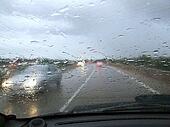
I was thinking, as the rain would collect on the windshield, that it wasn't so hard to see through the rain before it was wiped clean. But, I couldn't turn the wipers completely off because about every 30 seconds or so the windshield was too blurry to see through.
That's about right. Not enough to merit the wipers on even the lowest intermittent setting, but too much to turn them off completely. And how like life that principle is when it comes to irritations, limitations, false starts, and failed plans... the rains of life. Not enough of them for them to impede completely because you can always see through them, but just enough where you can't ignore them because they cause accidents if your sight gets too blurry. There should be a proverb to this effect - something like, when rain begins to lighten, always have your wipers on low intermittent so you can avoid the accident that could easily happen as the heavier rains clear.
I absolutely hate the feeling when "smoke clears." If I could have at least had my wipers on low intermittent, I could have seen the water on the road that made me skid off of it. Ravishing was my word a few years ago, smoke is A Thousand Horses' word for the one who makes you better than your normal best.
"Accidents happen," people say. But not if your wipers are at least on low intermittent.
Wednesday, May 20, 2015
There will come a day
The movie Contact (from 1997) was so very good for several reasons. First, it was good entertainment. It certainly helped you escape from the day-to-day grind. Second, it had merit literarily. One of the more uncommon ways to write character development is to have a "crossover effect between two characters. The scientist and the man of the cloth in this film certainly followed lines of development that made their points of view trade places during the course of the movie. The conflict developed in the plot occurred with different characters, not just the two main characters. So, it was a more complex plot than merely having two characters or two forces that merely had many obstacles to overcome before one force beat the other or one character won over the other. Third, The climax was both the culmination and the catalyst for change at the same time. That is a really difficult feat. The culmination of the plot was the catalyst for two characters to completely change their points of view. Job well done. Other reasons exist to like this movie. It"s very symbolic of life, for one, and contains a good starting point to discuss religion versus science, for another.
The one scene that captures the essence of two principles close to my heart is the scene in which Jody Foster's character finally hears the signal from space she has constructed her whole professional work around. She had gone to great lengths to set up arrays of satellite dishes to listen to signals from space hoping against hope to be the first one to capture a message from extraterrestrial life. All of her efforts had failed. Immediately before the video begins, she is lying on the hood of her car at sunset with her earphones on, as she had done on hundreds of other occasions, listening to static while falling asleep.
This clip represents so much. First and foremost, it represents what our parents told us about our dreams, what Churchill is often quoted as saying to the British on some of their darkest days - never, never, never give up. That is one of life's greatest lessons. Second, it symbolizes what our preparation does for us in our chosen fields. We prepare, but often cannot use all of our preparation in our daily affairs. However, there will come a day - a moment in time when we realize that we have to summon our array of knowledge to accomplish a goal, to rise to an occasion, or like the main character here, swing into action to bring all of our training to bear on the moment we have been waiting for all of our lives.
It's a beautiful thing when such a moment happens in our lives. More than beautiful, really. It's magnificent and monumental. It's what we live for.
Wednesday, May 13, 2015
Rains of the new year
Back in December I began driving over one of the area lakes going to work. I remember seeing how low the lake was at the time. The piers were totally out of the water as were the boat lifts. Around the banks, a person could see where the water lines had once been, about 8-10 feet above the water level at that time.
I still drive that route to work, but these days the rains of the new year have dumped more than the average rainfall for this time of year. Half of the year's rainfall has fallen ahead of schedule this spring, so the lake levels are back to normal. Piers stick out of the water only about 3 feet. Boat slips actually raise the boat a couple of feet out of the water like they are designed to do. Water lines no longer ring the banks, but water is lapping the shores creating new water lines.
It's good to see. Everyone was very tired of the 5 year drought that had dominated the area lakes. It's part of the cycle of the Earth, seasons of drought followed by seasons of flood and rain. I see that principle as part of the cycle of life as well. I'm thinking it might be time to end that 5-year drought, too. Something refreshing, more than average would be really nice.
Saturday, May 09, 2015
Sky and mind
Last night, tonight, and every day next week I am going to have the symphony of the storm to sleep to. Something about the big show of lightning, thunder, and wind make you sleep soundly, relaxed. It also helps to focus one. Often I use it to remember the tracks along my journey. So tonight, in about 30 more minutes, I will be enjoying the big show in the clouds to the south. The motherlode of rain will arrive in the morning as I wake. Yeah, I'll be relaxed, and I'll be thinking of tracks, some of joy, some of sorrow. But, either way, I'll be enjoying the show in the skies and in my mind's eye.
Thursday, May 07, 2015
Really not kidding
Already people would rather watch a video any day than pick up something to read. The world went this way starting with MySpace and YouTube. Google has been pushing for a decade to make everything functional from a phone rather than a computer. Facebook made public declarations to that effect beginning 3 years ago and made it one of their main goals when it decided to go public and sell shares in the company through the stock exchange.
Easily a person can see the trend away from writing and reading and toward viewing and presenting through video. Evidence of this is everywhere, but for about a year, people have been answering or "commenting" on Facebook by placing emoticons or pictures in the comment space rather than words.
I'm not kidding about the next step in the evolution of how people will give and receive information. The holographic transmission and storage of files will transform the form, format, and length of what gets passed around and learned. I'm really not kidding. (Click here for the article.) There's a KT boundary here. I don't think anyone really wants to be a life form that doesn't make it through the boundary, the event that was so impacting that about 75% of all species didn't make it from one side of the boundary to the other. But, a lot of people are not believers in what is coming.
Beginning at 5:30 of this video, you won't believe what is about to be available with Microsoft Windows 10 even on mobile devices.
Tuesday, May 05, 2015
Anyone, anyone!
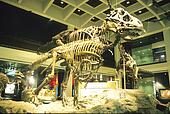
I met a dinosaur last Wednesday. Well, I didn't actually get to meet him in person, but I did see the work of his mind and the effect it had on a young man.
The young man labored, not looked at, reviewed, studied, or tried hard (although all of these are true descriptions), but LABORED over a set of study questions for a History test. "Tell me about the test," I had asked the young man. "It's 50 questions, multiple choice, short answer, and matching," he replied.
That's not just a method used last decade, that's a method used half a century ago when I was in school, and a method used in the 1800s, the 1700s, just keep going back. I understated my true thoughts of a string of expletives a mile long by saying, "Holy mackeral," and shaking my head.
History is important to some people especially those like this teacher who excelled in it and received his Ph.D. in it. But for others it is more of a boredom thing. Especially, is it mind-dulling to learn the names of treaties, alliances, and small events when they have already happened and their impact on the world has already passed into oblivion.
There are not enough words in all the languages of the world to express how dull it makes a person to remember trivial information for only the blank on a test. The young man told me yesterday that he was pretty sure he failed the test. I'm pretty sure that he did and that whoever took the time to memorize the set of restrictions put in place in Germany in the 1930s called Kristallnacht will not know what that information is the day his or her summer vacation begins.
Somewhere between this man's learning and awesome knowledge and the kind of teaching that affects and inspires people to reach for the stars is a total lack of awareness of advances in society, a total disconnect. He's a dinosaur. His days are numbered. If he lasts past 2017, he will gasp a breath of air and want to die. Reading reams of material (Yes, I have seen the articles he hands to his students) and testing it in writing is not even on the radar of study skills for this generation of students. They're so far beyond this point, they could teach the teacher a thing or two about Kristallnacht - in 3D holographic scenes of reality from the time period.
The young man will survive into the generation of adults that take the world to the next level of medicine, space exploration, global reformation, and digitized economy. The Dinosaur will join his species in the bogs and tar pits around the country for museum purposes.
Sunday, May 03, 2015
Rats and racing
Glastonbury 2008 was a kind of Woodstock in England. The crowds gathered for many artists and were ecstatic about them all. At one point, Chris Martin from Coldplay introduced Richard Ashcroft of Verve and allowed him to sing Verve's biggest song while Chris played the keyboard. In the introduction, Chris said he was going to let Ashcroft sing "the best song ever written."
You be the judge.
Ashcroft sang Bittersweet Symphony. No doubt it is a good song. He compares life to a bittersweet symphony. In verse 1 the song takes you down the only road the composer has ever been down, the road called the rat race and getting off seems impossible. In verse 2, he frees himself the race. But you get the clear idea that nothing will change even with the freedom achieved. He repeats, "I can't change," and asks "Have you ever been down?" (meaning down on your luck). The song ends with life still being a bittersweet symphony, and chants, "That's life" as the song fades out.
Life can easily be this way. I have had this experience myself. It's the human condition. I do choose the other path, however. I see the sweet even if the bitter is mixed in and mitigates the taste of the sweetness from its full effect.
Life is a symphony - beautiful - bitter - sweet.
Friday, May 01, 2015
Crystal clear

I had a great discussion last night with a man I met about a year ago. It centered around a short story by Mary McCluskey called Before/After. McCluskey is a really succinct writer. Her comparisons are crystal clear and appeal to everyone's common experiences.
In our conversation, we talked of defining moments. Both of us have had a few of those. I have thought of this before and have narrowed mine to one a decade, but I only told of two. He's a much younger man than I am, but his moments bore much similarity to mine. That's partly due to McCluskey's genius in creating the universal nature of the human condition in the story. But, partly it's due to similarity of personalities.
Each of us told two of the defining moments in our lives. We spoke of someone we loved having to undergo cancer treatment and walking that journey with him (her in his case). And we told of an experience in our younger years. But we continued to talk and commiserate over a few other memorable moments without mentioning the specifics of the situations.
I enjoyed the discussion. Afterward, I drove home under the cover of dark. So, naturally, I had time for my mind to reflect on some of the conversation. I couldn't help but think of the term we had used, defining moment, and link it to a sacred memory, sacred, sacred flashes across the mind's eye. Sometimes I recall the time with a song that was popular then.
They drown me for sure.
Thursday, April 30, 2015
But have they played the Red Rocks?
Ten miles west of Denver, Colorado, is an amphitheater not built by human hands (for the most part). It's a natural setting in the rocks, which look red. Being invited to play there has grown in popularity among bands who really want to be somebody. Everyone has heard of U2, for example, but not in 1983. Those in attendance the day U2 played at the Red Rocks Amphitheater say it was, still is, U2's best ever concert. After playing the Red Rocks amphitheater, people began to spread the word about this great band called U2. A band may be popular, but until they have played at the Red Rocks, then their stardom is not written in stone.
One of my favorite bands is Coldplay. They sing songs with a message. I'm not alone. Many people enjoy their lyrics. Of course, they're nobody unless they've been to the Red Rocks.
Oh, but they have! Enjoy.
One of my favorite bands is Coldplay. They sing songs with a message. I'm not alone. Many people enjoy their lyrics. Of course, they're nobody unless they've been to the Red Rocks.
Oh, but they have! Enjoy.
Wednesday, April 29, 2015
Homespun genius
The Zac Brown Band came to notoriety a few years back. Whatever It Is was one of their hits. I absolutely loved it. The lead singer brings a homespun genius to lyrics that talk of everyday matters.
This song is about Sweet Annie. How down-home is this idea. How true for all of us.
This song is about Sweet Annie. How down-home is this idea. How true for all of us.
Monday, April 27, 2015
Disruption and delay
Bank of America advertises in the lobbies of its many branches that one can become investment savvy by going to the internet and watching a short video of how to make your money multiply. BOA has teamed with Kahn Academy to produce this video because it is in its best interest. Because BOA advertises and provided funds for this video, it has a smarter clientele who will invest with it and make both investor and investee money.
There are many, many of these videos from BOA and Kahn from banking and budgets to understanding interest and investing. Khan Academy is well known, and it caught the eye of Bill Gates as an investor shortly after it started. It represents how current education can go from a very compartmentalized form of imparting knowledge to a rather seamless and non-disruptive way of helping people achieve the degree of quality of life that they desire. People don't really want to go school 6-8 hours a day. It gets in the way of making progress in life and becoming productive in order to enjoy life. As it is, children take a hiatus of 18 years of their lives to "learn" how to become productive and enjoy life. That is probably a whole decade too long. Learn and learn well through Kahn's method AND get on with your life at the same time.
It makes sense to me. I relish the thought of a productive citizenry instead of a forced daycare system that extends to an age well past its usefulness. Teenagers could be productive consumers of society, not detractive consumers. I'm thinking that education has an opportunity to go this direction. In twenty-five years from now, I hope to see a whole segment of the population reaping the rewards of its labor rather than treading water until they can fulfill some antiquated notion smart people aren't productive until they've learned to be a cookie-cutter citizen.
Wednesday, April 22, 2015
People differ

Language capacity is innate, no doubt. It's the phases that language goes through that make it less than predictable. The idea is that as a human proceeds from infancy to maturity, language growth does the same. Maturity is really easy to see and chart with the physical aspect of a human's maturity. It should stand to reason that other human developments go through the maturing process in much the same way.
So, why people are so caught up in trying to make a cookie cutter system for language development is absurd, ludicrous, and otherwise ridiculously inane. Making a standard for what young people should be saying, writing, and reading is cruel at best and unusually inhumane and unrealistic at worst. No one really chides a child or adolescent for exceeding or underachieving an average weight or height for his or her age group. That's unquestionably ridiculous.

Sunday, April 19, 2015
A popular phrase making the rounds

Sometimes a language phenomenon gets a name that someone mentions, and the name sticks for one reason or another. The modern way of expressing action in English is sometimes to add an adverb to the verb and thus change or extend the meaning. This can occasionally be done with prepositions as well. We sprayed water on the house to put out the fire is an example.
It's an unfortunate accident of someone unthinkingly talking about verbs that include an adverb and remarking that now a single word verb has changed into a phrase of words in order to express its full meaning. The idea caught on with grammarians (who else?!), so they coined the term "phrasal verb."
Nevermind that linguists (a very different group from grammarians) had already used the term "verb phrase" to describe the words that make up the verb. That's because much of the time people use auxiliary verbs with their action words to express tense, progression, reiteration, hypothetical action, or likelihood. They use a verb phrase to express every negation of action, such as didn't sing, and most questions, like Have you given your dog a bath?
So, why grammarians thought that the term "phrasal verb" needed to be coined is a mystery to me. It absolutely serves no purpose since a "verb phrase" already existed, and it serves to confuse the two terms by intertwining their ideas. "Verbal extension" or "verbal addition" might have served as a better descriptive term. "Pre-auxiliary" (for current auxiliary verbs like did, have, can placed in front of the main verb) and "post-auxiliary" (adverbs added after the main verb like in, out, down, up) might even be better terms.
Consider the sentences below.
We put the plates on the table. (standard meaning)
We put out the fire. (extended meaning)
We put down one of our friends unwittingly. (extended meaning)
We put up with a lot of noise from the children in the crowd. (extended meaning)
We need to put away $300 a month. (extended meaning)
We all put in our money for the donation. (extended meaning)
It's easy to see that the adverb extends the verb's meaning. But, what grammarians don't do is analyze why that might be true or if it is actually true. As an example, one has to ask what the noun is following the verb phrase. Is it the direct object? If so, it usually immediately follows the verb like plates does in sentence one. If one moves out from its position of immediately following the main verb to a position after the noun, then yes, the noun is the direct object. Indeed, that can occur in sentence one. Since that is true, then out is really an adverb but is idomatically used. It merely answers in what condition the fire existed. Thus, out is not part of the verb phrase at all; it's an idiomatic use of an adverb. That means there is no such thing as a "phrasal verb."
In addition, other adverbs already invade the space of two or three word verb. For example, in the sentence, I have never seen the Swiss Alps, the verb have seen clearly has the adverb never between the two words of the verb. Grammarians have never bothered to classify never by any other term than adverb. It operates the same way as what they call a phrasal verb, however. It shows an additional aspect to the verb, like all adverbs do because they answer the questions how, when, where, to what extent, and in what condition the action exists within. So, to separate an adverb into another classification has no justification really.
Grammarians will not have the last word on this issue, nor should they, since they are not the language scientists. Ask an English major (the usual field of those who claim to be grammarians) if they have taken a linguistics course, and their response is often, "Yeah, but just the introductory course. Those courses are way too hard, and they focus too much on language." Right. Grammarians don't have the tools to analyze changes to English structure over time. They usually follow established rules for written English and don't analyze the more malleable usages of spoken English.

The next time you hear the term "Phrasal Verb," you can dismiss it outright. It's not set in stone. The last analysis has not been made. As long as competing analyses are active, those who analyze language will continue to debate the phrase's structure, its descriptive term, and its effect on semantics. Till that debate is over, the term is only a notion of a particular group of people.
Saturday, April 18, 2015
Just on the other side

Living on a cul de sac has a lot of advantages. One of them is that it is really private. And after living on a street where many people traveled, it is a pleasant relief to have privacy. Part of the pleasantness is that I get to lean against my car or sit on the trunk and look at the end of the street and see the natural park that runs the length of the housing addition.
It's virtually impossible to judge distances in the picture above. It's about 20 yards from my driveway to the sign, about another 15 yards to the trees growing along the stream, and the green sloping hill beyond the trees is about 40 yards. At the top of the hill is a street of houses. 100 yards beyond that street of houses is a runway for private small planes. All the houses along that airstrip have hangars for the Cessnas and other planes. It's been active this spring.
I can't see the runway just on the other side of the hill that slopes up from the stream that I sit staring at, thinking. But, I know it's there because I see planes landing and taking off. That keeps me thinking, of course. I wonder who is in flying the plane and why they are flying. I imagine a lot of things without really knowing. But, I think that's why I like looking at this hill and wondering what exactly is happening just on the other side of my vision.
And, by application, I look ahead of me in time. I can see only a couple of hundred yards in front, but I can lean against what I have already done in life and imagine. I think of people that I might meet and that I have already met. For the latter, I wonder what they're doing, what their mission now is. I know they're flying somewhere piloting their craft toward the good life they deserve. For the former, I have a few more intersections to go through where I will meet people, and I wonder what they will be like and why they will be in my path.
I don't really like seeing only what is directly in front of me. It's hard to judge the distances looking too far ahead, and then the scene disappears. I can't see what lies just on the other side.
Friday, April 17, 2015
Leaving for work

I have one of the greatest gifts every spring, summer, and fall. I didn't really do anything to deserve this gift. I just get to enjoy it for three seasons of the year. As I leave for work everyday, my front walk has two rose bushes at the end of it. They greet me as I walk out the door. And it's a beautiful, hearty "Good morning" because the bushes are loaded with red roses.

Then I get in my car. On the corner of the garage is another red rose bush loaded with red petals. As if "Good morning" were not enough, I get one more kiss to say "Goodbye."

I back out of the driveway, and start to make my way down the street. I look to my right as I am leaving the shadow of my house behind, and there, on the corner of the house, as if waving to me, are the most outstanding yellow roses covering a tall bush, shouting to me, "Have a good day."
I love my rose bushes. They start my days with color, fragrance, and eye appeal. There is no better way to be sent off than with a Good Morning, Goodbye, and Have a Good Day.
They also represent the colorful memories I have of some particularly fragrant days full of my mind's eye appeal. Now if those days were to become a reality... again... there are not enough roses to tell the story of what that would be like!
Wednesday, April 15, 2015
Who you gonna call?
I am always amused at the English teacher establishment, those little ladies that run around in tennis shoes and ankle length skirts, usually short in stature. I think they have little-man syndrome even though they are female. They want to call the shots on what gets said and written by people everywhere.



Juxtapose that picture of a person against the one who wears Hawaiian shirts, shorts and sandals and who, with great swagger, says that a native speaker can't be wrong. The two are polar opposites.
Of course, no one ever controls language development, written or spoken. Language just doesn't work that way. About 88% of people finish high school, and only about 28% of people finish college. So what kind of person is it that thinks knowing all the rules about language really gets them anywhere in life? Yet, if I go to the website of Grammarly.com, I see all kinds of promises using the bandwagon approach of propaganda. They even advertise that linguists have built their site. While that may be true (because linguists have been working on making machines detect and use natural language), they make it sound as if linguists endorse the premise of this site with all of its rules, promises, and judgmental attitudes toward the average person who speaks English (which represents about 72% of the people if not graduating from college is the criterion).
Linguists know better. They know how language works; they're the scientists of language. Grammarians, on the other hand, are those people who want to control language and judge rather harshly all who have inferior knowledge to their own.
Linguists know better. They know how language works; they're the scientists of language. Grammarians, on the other hand, are those people who want to control language and judge rather harshly all who have inferior knowledge to their own.
The real kicker to me is the main boon of the Grammarly.com website. The site claims to make you a better writer. Are these people going to be surprised when in a few short years writing will be relegated to the world of captions and single word identifications!

While there will probably always be little ladies in long skirts and tennis shoes feeling good about trying to police the language they hear and see, people of that ilk will dwindle in the face of the need for using video to record and apps to transmit how real people communicate, the 72% who relate to working, making money, and using communication that meets their needs very adequately. People aren't calling grammarians to help them - they're calling those who can write... in code.
The people in Hawaiian shirts, shorts, and sandals aren't surprised one bit about this!
Sunday, April 12, 2015
What I have to know
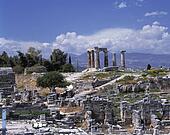
My good friend and colleague from 12 years ago has been suffering from Alzheimer's disease for the last 5 years. He's young, but something about his genes triggered this disease at that time in his life. It has ravaged him, and he stands as a constant reminder that time does take its toll in one way or another on us all.
My recent bout with a leg joint disease reminds me too that time is going to take its toll. I'm not immune. I still bear some of the visible effects of this bout.
And somehow, I still have to be comfortable in my skin or I go crazy. Before my body descends any further into the stages of aging, I have to know that I have intellectually taken right paths, or at least good paths, paths that pay dividends physically, mentally, and spiritually, that bleed over into the next generation. I constantly evaluate that. So far?- so good.
Wednesday, April 08, 2015
Just can't compete
A recent online newsletter touted the forward thinking of Sweden's school system. They were retraining their teachers to teach an integrated curriculum. It seems their people at the top didn't like their students taking subjects in isolation. The article thought this was a first in the world move on the part of educators.
Apparently, the writer ignored or was ignorant of similar movements in the U.S. that have been occurring on a regular basis. The first wave came in the form of magnet schools, but the during the last 5-7 years Harmony schools and STEM academies have been popping up all around the U.S. with similar approaches. I suppose the fact that Sweden was making this a system wide change in one fell swoop is a first, but then again, Sweden is only the equivalent of maybe five states in the U.S., so a change would be much easier to accomplish in a smaller environment. If the truth were known, the same number of children in the U.S. and in Sweden are probably undergoing the same type of formal training.

I would say, however, the world is about to see a really large change. It's not in the area of integration of ideas anymore. That is yesterday's news. The change will be away from building knowledge of what has gone before, in favor of being able to use collections of ideas to predict the future. In math and science this is known as learning the algorithms that have produced results and being able to change the algorithm's constituents to yield different results. Presentation skills will supplant reading and writing skills. Knowing where and when to touch a screen will be as important as having a high level of vocabulary. Having the right set or combination of apps to rely on will be much more important than being able to recount and recall who did something when.
Schools that can read the tea leaves of where the world is headed will produce the next generation's leaders and wealthy class. When cyber hackers are one of the world's biggest problems because they can steal identity and cost businesses billions of dollars in theft and prevention of theft, then knowing facts, or even integrated ideas, can't compete with what is available outside of the educational circle.
As always, there will be those lone voices who lead the way. My concern is that this time, the usual number of followers a few years later (the better-late-than-never crowd) won't be able to follow. They won't be able to even speak the same language as those who lead the way. They'll be left behind. That has happened in history before, but during the most recent time that happened, the Middle Ages, the masses suffered greatly. At one point, (the Black Plague) the world shed its population by somewhere between 1/2 and 1/3. It saddens me to think that could happen again. But when people willingly leave themselves behind...
Sunday, April 05, 2015
The first order of things

The link here connects to a teacher's resignation letter. It's one of the longest ones I've ever read because she was trying to lead a cause. I think something got lost in translation, if her motive was to cause change, because of the blah-blah-blah effect of the length of the letter. But more than the arrogance that comes from the righteous cause she wants to lead is the fact that she names her profession as an English teacher. Now, my thinking is that if a person wants to name an area of expertise (in her case, only an area of experience) and then launch a tirade against "the system," then she better have her own craft of English in perfect order. If not, she is no better than the system she claims is broken. Her own area of teaching needs to have some additions to her own bank of knowledge.
My mother used to explain to me that I should not criticize someone else (implied something else, like a system) unless I had my own ducks in a row. Otherwise, it would be the same as the pot calling the kettle black. That's a good saying to know. It has kept me in touch with my roots. I recall also some other good, even if ancient, advice from when I was young. Why try to remove the speck from someone else's eye when you can't see past the log in your own eye? I'm just thinking that this woman needs to apply these principles before she starts lashing out.
In this teacher's lengthy letter, she makes the following statement as she compares students she taught before the advent of NCLB with those she taught after the initiative.
... my students from five to eleven years ago still had a sense of pride in whom they were and a self-confidence in whom they would become someday.
Here's the log in her eye: in whom they were and in whom they would become. In whom of course is a possibility in English, but only if whom is the only word following the preposition. In the case of a clause following the preposition, which is a noun slot, the choice for who or whom depends on the pronoun's use in the clause. In the two clauses this teacher uses, the choice should be who since on both occasions it appears as the predicate nominative after the verbs of being and becoming.
Because she wants to cast stones instead of focusing on her own craft, this woman's words fall on my deaf ears. First remove the log from your own eye, then remove the speck from someone else's. It's the first order of things. Violate it, and you should know that people are seeing your lips move, but not hearing a word!
Thursday, April 02, 2015
Changed but a better fit

But, something has changed. It's not on a pedestal anymore. I see many more aspects of it than I used to and know how to connect what it says a whole lot better because it belongs in a bigger world than I at first had imagined. I know a whole lot more about translation principles now and work with other languages as well. I have also seen this second language translated into a third and fourth language, not only from a second language into a first language. It's a really different experience now to read the language that at one time I had thought was so special.
If I apply that principle to the important things in life, I get the same effect. The world fits a larger context now. My world view has more experiences to make up its mosaic. Translation principles of what is really important have changed almost completely. Enjoyment and comfort have taken on a whole lot more meaning. And love? My whole definition for that word has changed. I'm not even sure I would use it anymore. It's such a misnomer. I know it when I see it, though, and it has a whole lot more to do with enjoyment and comfort, and a lot less with commitment and determination.
Tuesday, March 31, 2015
Selling addictive happiness
Now if I were going sell a drink to the public that contained a drug that was addictive, I would find it hard to find many buyers for it other than the current market of drug users. But what if I could create a jingle that had pleasant, modern music and appealed to the young crowd so that I could hook them for life and make money hand over fist. People would surely call me the pied piper and strenuously condemn my agenda.
I think it has happened, though.
Yeah!!! Open happiness.
You'll start and end your day with this drink. You share it with friends... and more friends... and more and more friends. It's a drink that has everyone's name on it. It's for both genders and all races. You might even fall in love while you're drinking it.
And the best part... You'll keep coming back around.
Coming back (as in continuous) around (as in continuous) keep (as in continuous) will (as in the future)
Right... addictive. But's it's the best selling drink in the world. And we're happy about it. We love to open happiness.
Sunday, March 29, 2015
Be careful, Poppy
I was walking out the front door for work the other day with my granddaughter right behind me. She was wishing me a good day and was going to close the door behind me as I left. It was one of those very cherished moments grandparents get once in a while. She looked up and told me as I was heading for my car. "Be careful, Poppy. Don't step in the poop." One day she had stepped in dog poop in the front lawn. So, she was warning me about it.

I chuckled and told her I would be careful and then left. As I reflected on that interchange, I chuckled again, but I also thought that it was a great metaphor for the day. Every day there are times when I am not paying attention to the ground I step on, metaphorically, the time that passes by. So, occasionally something is said or done that affects me that I should have seen coming or that I could have avoided if I had been paying attention.
So my granddaughter of 3 years had some good advice for me. Whenever, I don't look down and step on gum or poop, I always just shake my head, offer one of those common expletives, and then comment on how I wished that hadn't happened. Yep, it's great advice as I leave for the day - each day, as a matter of fact - Be careful, don't step in the poop.
Tuesday, March 24, 2015
10th verse, same as the first

But today, a person who was half my age told me a story that he has told on two other occasions. So, what is the reason he wanted to take up about 20 minutes of my time recounting something he was well aware of having told me? Generally, people speak unprompted for the reason of selling themselves, of showing that they have importance and value. They want to take up your time convincing you that something they did sets them apart from the crowd and you should be proud to have them as your friend. I have told him of his value the first two times he told the story. He apparently needed to have that verified yet again.
After the 3rd time, I usually find a quick escape from the scene, but if not, at least from the story. You don't have to toot your own horn anymore. If I am with you by choice, you have importance to me. It's really that simple. Save your breath, pipe down, and join me with the matters at hand. We're friends already.
Saturday, March 21, 2015
Rotations
Time is important, but it has its place. We have to be places on time and start our various daily activities on time. Otherwise, our world would operate in chaos. On the other hand, when we don't have these timed activities in life, why do we bother with measuring the time?
 The most regular untimed activity in life is our sleep cycle. (Even if we set an alarm, the time during the sleep cycle is not consciously noticed as being timed.) After we sleep, we wake to feel more rested than before regardless of the amount of time that has passed. Sometimes our bodies are fine with shorter amounts, sometimes with longer or more frequent periods. Whether short or long though, we feel better than if we had missed this untimed activity.
 The Earth in reality just spins on its axis and rotates around the sun. I suppose we have gained a lot by counting the number of rotations of the Earth around the sun because it gives us some idea of the length of our lives, the amount of time an era contains, and helps us with segments of our days so that we can act in harmony with each other and accomplish some things as a society.
But, really, other than the amount of time we charge out for our labor, I think more harm is done than good when we micromanage those segments of the Earth's rotation so that we can "pack in" a whole lot of activities to attend. Maybe we're better people for it. We learn how to manage our lives from some of those activities as the number of rotations around the sun accumulate. But, I really think quality of life disappears when we micromanage our leisure segments of time.
The key is to "enjoy" our time in the sun rather than merely to be busy during our time in the sun. And, that means that some of our little slices of life neatly packaged on some kind of regular basis should be curtailed so we can enjoy the moments that occur in unmeasured amounts.
During our waking hours, however, we choose to measure time. Generally,we fill it with hours that have monetary value assessed to the hours. But there is also time, measured or not, in which we are not charging for our labor? Do we simply pass it doing things we enjoy, or do we pass it by filling it with more timed activities? And what is the effect on our bodies and minds if we measure the time for activities? Are our bodies and minds more relaxed and rested, as during sleep, or more worn?

But, really, other than the amount of time we charge out for our labor, I think more harm is done than good when we micromanage those segments of the Earth's rotation so that we can "pack in" a whole lot of activities to attend. Maybe we're better people for it. We learn how to manage our lives from some of those activities as the number of rotations around the sun accumulate. But, I really think quality of life disappears when we micromanage our leisure segments of time.
The key is to "enjoy" our time in the sun rather than merely to be busy during our time in the sun. And, that means that some of our little slices of life neatly packaged on some kind of regular basis should be curtailed so we can enjoy the moments that occur in unmeasured amounts.
Friday, March 20, 2015
One more story
I was speaking to a Chinese young man yesterday. I have visited with him regularly for the last 3 months. He has a good sense of humor, a more-than-average knowledge of the world, and a decent skill in video games. He comes from a home of privilege in China. He's currently studying in the U.S.


I asked how he was doing in school, and he told me about his classes. But, he said he was failing in English. We continued talking because I wanted to know what kinds of activities he was having trouble with in English. It was the usual regimen: novels, short stories, vocabulary, Shakespearean plays, essays, etc.
Before he had come to the U.S. he had taken English in China. But, he had been poorly prepared. His listening skills were almost non-existent, but they taught him grammar well enough for basic understanding of simple sentences. He did well in his studies in China, but has struggled mightily in the U.S. because of the language barrier. Biology, American History, and English are virtually impossible to understand because of the academic jargon used by the books and teachers.

So, when I thought of trying to read the Elizabethan English of Shakespeare, of trying to slug through 150 or more pages of a novel in a short period of time, of trying to write essays in competition with native English speakers when verb tense, pronoun case, and SVO order pose huge problems, I had to just shake my head in disbelief. Of course, the school he attends put him in ESL classes. I think he understands the stigma. American students in this elite school vie for spots at Ivy League schools and prestigious state schools. They don't really give him much attention because he's the foreigner in ESL class who won't bump them from their spot in getting ahead in life.
This sad snapshot depicts a really broken approach to education. It defies understanding that a screening system for international students' understanding of English is not in place for both receiving and sending countries in an exchange program. And I am appalled that a grading system of averaging would be applied to anyone who has little understanding of the nuances of spoken language and the academic wording of written language.

I am certain that this year's experience will not hold this young Chinese student back in the long run because his spirit and background will allow him to rise higher. But the picture could have been and should be much, much different. The stigmas that our schools' grading systems put on people often aid young people in having a less than healthy view of themselves and their capabilities. At times like this I wish I had a magic wand.
Wednesday, March 18, 2015
For alien curiosity-seekers
Jimmy Kimmel had the president on his nightly talk show several days ago. While visiting with the president, Kimmel asked the president an area 51 question.
All former presidents have outright denied that alien life exists. Obama's reaction was different. He didn't deny aliens existed. The problem is that Kimmel's show is supposed to be entertainment where people relax and laugh at people's funny experiences or at jokes told. So, when Obama made statements about ETs, this context made it difficult to discern the meaning of the president's remarks.
Obama's three statements were:
1) The aliens won't let that happen - to reveal all their secrets.
2) They exercise strict control over us.
3) I can't reveal anything.
One of the best ways to tell the truth without lying, is to tell something straightforwardly in a context where it sounds absurd. Of course, it is really not. So, three times the president told the truth, but it sounded absurd. One can hear the audience laughing in the background. They didn't believe it.
The most telling piece of evidence is the answer to the question Kimmel asked. He said if he were to ever be elected president that he would go through all the files on Area 51 and UFOs to find out what happened. Then he asked the president, "Did you do that?" Jokingly, Obama said that that was the reason Kimmel would never be president. Eveyone laughed. Then shockingly, Obama said that aliens would not let that happen.
Kimmel was talking about Area 51 and UFOs. Obama used the words aliens. People who write essays, novels, and research worry about variation of terms, but in spoken language, that is not the primary concern. Redundancy of terms is the usual rule in spoken language, that is, the second conversant repeats the term(s) of the lead conversant when it is his turn to elaborate in the conversation. Some people don't, but most do. Obama didn't.
The reason? Maybe he wanted to cut through the chase and not play the game of continuing the very light-hearted chatter about Area 51 and UFOs. He uses the word alien so that they could move quickly through the segment, bring it to an early end, and move on. Maybe, Obama wanted to say the word alien so that in the joking context of the show, he could tell the truth, make it sound absurd, and move on without further prompting more questions from Kimmel.
Or maybe, he assumed Kimmel was talking of aliens. Many other kinds of activities happen at area 51. Hovercraft is merely one of them. In addition, it is only rumored that aliens have been kept at Area 51. Obama could have left the whole discussion in the realm of rumors and responded very nebulously. He also could have hedged and deferred to sensitive information the government keeps. But he didn't. He was straightforward from start to finish, ending with "I can't reveal that." The obvious meaning of that statement is that there is something to reveal.
If I were advising someone on truth value, I would say the truth was told. But, since the forum was Jimmy Kimmel Live, a not-so-serious talk show, the hunt for alien life will continue.
Sunday, March 15, 2015
That Ku-u-ntry accent
I was sitting in front of a restaurant in a small town today waiting for my daughter to pick me up. She had to park a distance from the restaurant and was picking me up due to a disease that strikes my leg periodically and makes it hard to walk. While I was waiting on her, I stood leaning against a pole listening to people around me speak.
 Several of the local townspeople were carrying on a conversation. I wasn't paying much attention to the topics they covered, but I was noticing their distinct country drawl. The pace of the speech and the lengthening of the vowels, like the long o sound and the short a sound, marked their dialect. A lot of people view that speech as stigmatized and further relate style of dress and type of job to their stigmatized speech in a way that is very condescending and disrespectful.
I admit that my first reaction to that variety of talking is not one of prestige, but then, if I think about it any length of time at all, I find it is merely another way of speaking and should not have a + or - prestige value attributed to it. Who am I who could render a judgment in the first place on people I don't know and whose lives I know nothing about?
 I know people play games with language all the time, categorizing people as prestigious or intelligent or educated or poor or oppressed (and all the other value judgments that can fall neatly into categories) based on accent alone. They shouldn't. Period. I'm glad to have heard that variety of English today. It keeps me in touch with my beginnings and reminds me who I am at my core.

I admit that my first reaction to that variety of talking is not one of prestige, but then, if I think about it any length of time at all, I find it is merely another way of speaking and should not have a + or - prestige value attributed to it. Who am I who could render a judgment in the first place on people I don't know and whose lives I know nothing about?

Wednesday, March 11, 2015
Life just... goes on
I have read two contemporary short stories recently. I don't know that they are representative of the literature that will shake out as the sign of these times, but if they are, a couple of traits stand out.
 The first story is about a high school girl sitting in class, bored out of her skull. She is called from class by the police who inform her that her mother has died. She is taken to the morgue to identify her mother's body. The story at this point goes into a narrative of the girl's thoughts about her life with dear mom. Mainly it was about all the dysfunction that happened between the two of them. At the end the police deliver the young woman back to her school. She goes to her next class, and the story ends.
 The second story is about men at a barber shop watching a man being beat by a couple of other men. The men make comments about whether people deserve the treatment they receive in life because of their own actions. Finally, one of the men leaves the shop, stops the beating to ask directions of one of the beaters, then continues on his way.
The main feature of the stories is that life is mundane. Even though important events happen, life is too strong, or even if events presented themselves where they could help to make the world better, they don't engage because life merely continues on its march through time. People's actions to change anything are overwhelmed and buried over time, so nothing to change its course happens. The other feature is about the main characters. They have no cause in life, or they don't have an interest in engaging anyone or any event in order to brighten, change, or provide enrichment to their otherwise mundane, isolated lives.
 While I do see those tendencies in a lot of people around me and in certain types of group behavior, I would hope that it doesn't form the core of a majority of society. If it does, the world of 1984 will happen without question. If it doesn't, the world of Star Trek and Star Wars, where good is still a cause worth fighting for, will have a chance of appearing on our horizon.

The main feature of the stories is that life is mundane. Even though important events happen, life is too strong, or even if events presented themselves where they could help to make the world better, they don't engage because life merely continues on its march through time. People's actions to change anything are overwhelmed and buried over time, so nothing to change its course happens. The other feature is about the main characters. They have no cause in life, or they don't have an interest in engaging anyone or any event in order to brighten, change, or provide enrichment to their otherwise mundane, isolated lives.

Monday, March 09, 2015
Game changer is here
Meanwhile, Curiosity, the Martian rover, is just getting underway again with its extended mission assignments. It is finally at the base of Mt. Sharp.


We have just entered (that is not "about to enter") the cusp of the phase that transforms reading and writing to the next evolutionary phase in communication and the transmission of information. This has been possible for a little while in movies and cinematography, but now it has real world applications. This will only grow in capability, completely nudging out the need to read and write except at the most basic and semiotic levels.
The article for this picture is found here.
Holographic technology of scientists examining Mars from different angles, but 360 degree angles, allows scientists from around the world to "meet" on Mars through their holographic figure, study the terrain, and talk to each other in real time. In January, NASA and Microsoft teamed together to make this study of Mars possible.
Such a meeting truly will change the style of dialog in the scientific community. Pictures are not sent back for scientists to debate in written journals. Streaming live feeds and points of reference for the holographic figures allows debate and conversation with spoken language in both real time and in recording. That recording will be logged, transmitted, and open for view for other scientists who want to join the debate. The only thing written might be the title and date of the file in an electronic database.
People have thought I was kidding. 2017 is just two years away. That's the end of the 10-year war that traditionalists have waged for keeping reading and writing at the forefront of education at every level. I am very proud to see that the breakthrough moment has come from the top level. It will trickle down from there. Exciting stuff! This is important for space exploration without a doubt. But its implications for wider application is absolutely a game changer!!!
Sunday, March 08, 2015
Never explored

So, what was the big deal last Friday when the news reported another orbiter dropping into orbit? OH, it was not our planet. Ever heard of Ceres? Yeah, that planet.

We've orbited Mars a number of times, so again, what's the big deal? The orbiter dropped into its orbit of Ceres on Friday to map a planet that most people have never heard of. Ceres, you say? Yeah, a little over 300,000,000 miles away... out there in the Asteroid Belt between Mars and Jupiter... circling the sun with hundreds of other fragments of the solar system exactly in the position predicted for a major planet. It's never been explored.
People are ecstatic about Dawn's, the orbiter's name, mission there. On approach to the planet, Dawn snapped hundreds of pictures. They show two bright spots in the craters of one side of the planet. Also, vapor has been detected coming from the planet. Now wouldn't that be just be the irony of the century! We find life on a little dark planet that wasn't even discovered till 1851 and ignored completely because it's only one of those "fragments" out there floating around between the two larger and more interesting planets Mars and Jupiter.
Stay tuned. In April, Dawn will be a mere 8500 miles above the planet photographing it to its heart's content.
I love undiscovered territory. I love the surprises it yields, the knowledge it adds, the secrets it reveals, the richness it brings with its freshness. I have my own Dawn going on, dropping in to observe a recent, latent, ground-floor opportunity.
I am hoping to find out what those bright spots are.
Saturday, March 07, 2015
People remember
I grew up in a totally religious atmosphere. Doctrine mattered. In fact, it mattered so much that I was taught that the particular doctrine given to me was exclusively true.


30 years later, I was raising children. Doctrine mattered less. In fact, when my high school son asked one time if what the preacher said was only his interpretation, I answered, "yes" because I had learned that truth doesn't come in a box.

Now a third generation has appeared. What matters? Not doctrine. But what is good, right, and true matters. Even if those are relative terms, one needs to know what is good, right, and true for their time and their place.

People remember you for the good things you do, the right things you stand for, and the authentic life you live. That's what matters.
Wednesday, March 04, 2015
It happened this way
I fell in love with her like one falls asleep... slowly, then all at once.



That's a great line from a good love story, the movie, The Fault in our Stars. It happens to some people this way. But not for me.
I fell in love with her like someone being presented an undeserved trophy... unexpectedly, but cherishing every moment.

That's not a line from any written love script for any movie. It happened to me this way. I am grateful for those moments.
Tuesday, March 03, 2015
When grayed out
As I passed the downtown area on the freeway, the fog was very heavy. Every skyscraper had only the first 12 or so stories visible. The higher 40 stories had disappeared into the clouds of the fog that had set in over the area. The usual beautiful architecture and color of the buildings were shrouded and gray.
 Occasionally events turn foggy. The usual color of life is grayed out, and the normal layers of my life can't be seen past a certain point. At these times I have to exercise extreme caution because my journey on life's highway requires people to rush on by without noticing how many stories there are or the careful craftsmanship and color that are missing.
But fog and occasional events are short-lived. Beauty and color return. Skies are blue. Nothing is hidden. The cold mist of the fog turns to the warm rays of the sun. Life resumes in its normal way. The fog is a good reminder of what life can be like when all is scaled down and one-dimensional. It's not fun, but it turns to warmer weather sooner than later.
I like reminders, though. Life is more basic for a short while.
Monday, March 02, 2015
Referencing our lives

Realization is a great happening in the brain and it happens over time, never all at once simply because a frame of reference takes a little time to establish and comparisons to that frame take time encounter. I have noticed, however, that some people encounter comparisons to their frames of reference and resist any change in themselves. They become less malleable over time. They usually stand as beacons of a day gone by, and they seem to have less and less to do with the world. Others learn about frames of reference and learn how to compare and glean what is best for them as life changes over and over.
At one time, the word "paradigm" was popular and took over the idea of frames of reference. But, it has diminished because it, too, is rather rigid in its meaning. Frames of reference has more of a flow to it as if one has the need to change the frame from time to time. Frames are not good or bad - they're just frames yielding the characteristics of points in time.
Picture albums are probably good symbols for frames of reference... people's changes are noted and tracked. In the same way frames of reference are good symbols of our essences, and it's good to review the frames from time to time.
Subscribe to:
Posts (Atom)