Search This Blog

Thursday, May 26, 2011

Soft rain


Ray Bradbury wrote a short story called, There Will Come Soft Rains. It is a story about realized dreams of reaching planets in space and having regular space travel. The title is an analogy about how sweet spring is when it arrives like the sweetness of the arrival of regular space travel. The USA is not quite to the level of regular space travel as a means of transportation to other celestial bodies, but almost. I can see the rest of the story from my place in history. But, I do like the title and what it is an analog for.

The meaning, there will be a time for dreams to be realized and how sweet it is when it happens, is also indicative of how to rise above the ebb and flow of life. First comes the dream or the great hope. Next comes the regular work, taking into consideration that regular work is how the goal, the object of hope, is reached. Then comes the regular gauging of the intervals that serve as the milestones toward reaching the dream and realizing the hope. Finally, comes the day when the soft rains begin.

It's the only path that works in realizing a dream except for encountering dumb luck. And, since I am very, very, very short on dumb luck, I have to rely on the one-step-at-a-time plan. The second step above is the step many people cannot do. It takes patience and discipline. Both drive you crazy, and it is true that some dreams do not get realized. So, being driven crazy is a hazard of working hard to realize a dream and failing. But living daily is hazardous to your health, so I'll be satisfied with being crazy, because you can never see around the corner. And, who knows but that your realized hope lies around the very next corner. Soft rain is so sweet to hear.



Sunday, May 22, 2011

A new take


Sometimes you hear words all your life but narrowed to a certain situation, never outside of a certain context. Then, out of nowhere, you hear a couple of words put together that you have never heard together. I was in a doctor's office not long ago and a nurse practitioner came in. He was entering notes about the condition into a computer and was talking aloud to himself as he typed. He came to a couple of words that I had heard in other situations, but never had I heard the two words together. He uttered that the bane history consisted of blah, blah, blah...

I've heard bane, and I've heard history, but never bane history. That's all right. I knew immediately what the combination meant. My mind wandered at that point for about 15 seconds. I had always heard of bane used with the word boon, as in Every circumstance has a boon and a bane side to it. Then, I thought about what could be written if the nurse practitioner had said boon history. Of course, I wouldn't be in the doctor's office if he was writing my boon history.

But I have a boon history. It's the history of the one who makes me better than I am, who puts the sunshine in my day, the laughter in my world, and the happiness in every second of time. I'll have to remember to use that sometime... boon history.

I have a bane history, for sure, and it's not just relating to health although it certainly affects health. And, I was just going through life, living my bane history out when I suddenly hit the boon era. Love it when that happens, and I definitely loved it when the boon era came.

Yin and yang, boon and bane, mountaintops and valleys. Life sure has them. But I have enough of the bane history already written. I'm glad to have encountered the boon history. What a difference it makes.

Monday, May 16, 2011

Treasuring Yellowstone


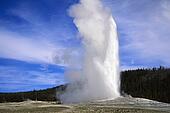
I don't know exactly what the allure was to going to Yellowstone National Park, but I think it was everything that it offered. by the time I was 15, I had visited Yellowstone 9 times. I enjoyed seeing Old Faithful, the geyser that erupted in water spouts every hour (at that time vs 90 minutes now). I remember the bears that inhabited the campgrounds and picnic areas. Sometimes they would cross the roads and back traffic up because people would cut their engines off and start taking pictures or trying to feed them. One trip I counted over 100 bears. Regularly I would count over 70. (Today people make trips without seeing them at all). One of the main features I enjoyed was the hike to the Paint Pots. Different colored mud came boiling out of the ground in spots. Sometimes the mud was pink or orange, sometimes it was dark brown and rust, occasionally ruddy red. I remember also staying at the foot of the majestic Grand Teton mountain in Jackson Hole Wyoming. I could hike around on the lower elevations of the mountain, always dreaming of climbing to the top. Jackson Hole would have a actors at dusk ride out on horseback and act out a shooting in a saloon and an hanging in the town square.

Today I look back on the Yellowstone experience and see good times, full of beauty and excitement. Even though they are days gone by, they were and still represent the good that life has to offer. In my adulthood, I have been able to recreate that experience only once... days of beauty and excitement. I looked forward to what each day would bring during that time period... days as idyllic and majestic as the outline of the Grand Teton on the landscape, as colorful as the Paint Pots bubbling from the ground, as spectacular as the heated water of the geyser spewing 50 feet into the air at regular intervals, and as mesmerizing as the bears crossing the roads by the picnic grounds. And because the Yellowstone experience has been recreated only once in my lifetime, I hold it in the highest of highest esteem. It is sacred ground. Nothing can touch it.

Friday, May 13, 2011

Viva la heights


How big a part does personality play when people are together? A lot. Some people you know from the outset that you don't need to be around. They would drive you to insanity or violence or some other behavior that doesn't benefit healthy living. Others you know you could be friends with since they are compatible in some way, morally maybe or philosophically. And there are personality types all up and down the personality spectrum. While there are precious few personalities that are entirely compatible with your own, it's still a little onerous when you are forced into a situation and you have no choice or limited choices on being around someone who doesn't share some of the key personality points it takes to peacefully coexist. They're just a reminder of how low on the roller coaster ride one can go. The good thing is that roller coasters have high places on their tracks as well.

Sunday, May 08, 2011

A day for the best


Today is the day for mothers to be honored. They are truly the hub of the home when they don't let selfish desires take them away from what mothers do best. I had one of thsoe great hub mothers growing up. She has always believed in my abilities and has given encouragement for my writing and educational endeavors then and throughout my adult life. Happy Mother's Day to her.

And speaking of the word best, there is one mother I know that embodies that title. She is above any mother I have ever seen. She makes sure her children know not only what the school has to offer, but what life has to offer. She makes opportunities for them to serve others. She seeks opportunities for them to be well-rounded and be exposed to interests that have immediate benefits and long-range ones.

She is the best! Bar none!! Happy Mother's Day!!!

Staying too long


You can be somewhere too long.

That's a lesson I have learned on a number of occasions. The lesson is nicely illustrated when investing in the currency exchange. Once a position is opened at a certain price, you predict that it will either go up or down from your opening price. There's no turning back once the position is opened. So, if you predict that the trend will be upward, and the trend goes up, you make money. If you predict that it will go downward and the trend falls, you make money. But, if you open the position and the price trends in the opposite direction from your prediction, you lose money.

I have opened a position with a prediction, and the trend went the opposite direction a number of times. The immediate thought is to stick it out and the trend will turn around. Many times that is true. But, you can stay in the doldrums too long. Bad things happen when that occurs. You can exceed your margin for one. Then you automatically lose your money to the brokerage house. I've had that happen. Or it ties up your money for so long before the trend comes back that you lose out on having enough margin for other money to work if it had been available instead of being allocated for the deep sleeper to turn around. Or you could be at historic highs or lows. The price will never be that low or high again, so no turn around is possible and you lose.

The lesson is that you can be in a geographic location too long, in a job too long, or in a relationship too long. Bad things happen. Waiting for the turn around always costs. Fortunately, there are patterns in the way prices move just as there are in the rhythms of life. Most of the time the patterns prevail and you make money or enjoy life.

But, you can be somewhere too long.

Friday, May 06, 2011

Goodbye to words


The evolution of the way knobs and buttons in a car are marked for identification is one of the best ways to show how thinking changes over time. When cars first came out, knobs and buttons were not identified, especially the crank, which was on the outside of the car. Everyone knew what the crank was for whether or not it was labeled. As car companies began marking their buttons and knobs, they would spell out the whole word beside it or above or below it. Then, the companies began abbreviating, like A/C for Air Conditioning. Finally, symbols were adopted for the buttons and knobs. Now you wouldn't ever see Heater or Htr, you would see two slightly off parallel bars with waves in between.


The reason that represents a change in thinking is that it shows that people react faster with fuller comprehension to symbols than to letters for words or abbbreviations. We live in a visually stimulated world where rapid reaction is required. Ask any gamer. I look forward to the next 10 years as visual stimuli becomes ever more the way life will be arranged. Goodbye words, which slow the reaction process down.

Wednesday, May 04, 2011

By comparison 2


I was talking to a friend about an attorney who only accepts two or three cases a year. It' s always a high stakes money case taken on contingency so that the stakes can be higher by winning. Over the course of the last 12 years, this attorney has never lost. So, he has amassed a huge fortune from the contingencies he's won. He's also good at investing, so the money he has won has multiplied considerably.
His wife has a housekeeper, two nannies, a yard and pool man. She flies to Paris as if it were only a day trip. She takes her friends to concerts and buys them front row seats for 3-5,000 per ticket. a five dollar bill is a nickel to her.

By comparison, my life is quite average. I am a part of the middle working class. But stories like the one these two people live keep me in line if I ever for a second think I might have arrived in some area or another.

Saturday, April 30, 2011

By comparison


Recently, I was in a place where the people were homeless and dirt poor. I didn't know any of their stories, but I am sure they were very interesting. The road that brings someone to a certain place in life is always interesting.

I saw a man in a wheelchair on the corner of an intersection, legless, with hand out for one car, cap out for another. I saw another lady sitting in front of a hospital, wild-haired, smoking, just passing the time of day. I had another lady hit me up for "gas money" as I was waiting in line to check out myself in a 7-11. She had come in at the same time with me into the store, waited till I got my Dr. Pepper and Zingers. Then asked for money so she could buy whatever she was checking out.


There were many more people that would have had interesting stories. I guess by comparison, my life is one of a king.

Friday, April 29, 2011

A measure for phenomenal


Max Anderson put out an inspirational book and Power Point once about the boiling point. I don't remember the name of either writing, but it was something about 1 degree of difference. The one degree between high heat and the boiling point is one degree. Then he went on to talk about what a difference it makes in one's life (for accomplishing goals) to ratchet up just one degree more of determination or passion or effort. Reaching the metaphoric boiling point is magical in accomplishing one's dreams.

Without the hoopla of the inspirational part, it is true that small increments are all around us that make a difference. The difference between two degrees of temperature from 99 to 101 is small. But, it makes a difference in whether the fever needs to be treated or not. If the normal or average temperature is 98.6 (or 99), then just a short two degrees of temperature make a difference.

The freezing point serves the same purpose as the boiling point in the original inspirational writing. One degree from 33 to 32 degrees turns water from a fluid to a solid. It makes a difference in the type of lifestyle preparations one needs to take, such as wrapping pipes for pump houses, covering or draining water from pools, procuring salt for bridges and roadways, planning trips, etc.

And in my line of work, just one standard deviation is the difference between honest, casual speech and contrived, rehearsed, dishonest speech. The range of type-token ratios between 0 and 1 is far less noticed than the range from 1-2. And the ratios above 2 are infrequent and highly significant when they occur. Small increments these numbers are, but increments that matter.

The list could contain many, many more examples of the difference small increments make. The point of the original boiling point illustration was to say that the extra, small amount of difference yields great results in life. It's true for the most part. Valedictorians and salutatorians are sometimes .001 apart in GPA. 1 degree of angle in a trajectory makes a difference between glancing off the atmosphere into deep space or piercing the shield for a safe landing. 1 inch of snow between one's foot and a crevasse on Mt. Everest determines life or death.

Mediocrity is unacceptable. Average is expected. What stands out I'm thankful for. But what is phenomenal is desired and immensely satisfying when achieved. And the difference between outstanding and phenomenal is probably just one infinitesimal unit apart.

Monday, April 25, 2011

What am I missing?


I understand most things in life. If I have an interest in them, I usually study them until I understand them very well. A couple of things in life, I have pursued formal training to know the nth degree about. So, when I hit something I have really tried to understand and can't, it bothers me severly.

I was told early on in life, "Everything has a shelf life." I understand this concept. But, I don't like how it has played out in life since I left my 30s. I know that we were "born to die." That will come in due time. I comprehend that there are cycles to life, so that many things resurface; they come and go, leave and return. I get it. What I don't understand is why the important matters/people have been plucked from me one at a time. Even formal training for acceptance of this principle I know about and can quote the steps for. However, I am not a whole individual as much as I could be because what I considered to be the #1 priority at different times in my life has been taken one priority at a time in a methodical, successive fashion. This I don't get.

At one time I thought that religion would help... of course, it didn't. I thought that discipline would help... that's not the trick. I thought maybe there were religious "disciplines" I was remiss in... of course not. I thought pursuing ideas to the nth degree would give me insight... yes, but not in this matter. If I have had a #1 priority, I have been stripped of it.

All I have to say about matters and people I have priorities about is that I wish it had worked out differently. I don't understand it for sure, so I am forced to settle for wishes. I wish that J.W. Roberts had mentored me a little longer before dying in mid-semester of my second year with him . I wish that choices from the 20s had been different. I wish consulting for attorneys had played a larger part in my life. I wish that I had not gone through raising teenagers alone. I wish for my son's cancer to have had a cure. I wish that 2009 could have lasted the rest of my life. I wish 2011 had not included the path I am bound to go down.


I still need the understanding of the bigger picture. Without it, I am blind. I have never liked being blind and have fought against it with every ounce of my energy. It defies what I am about. But...

Friday, April 22, 2011

Most people


Outrageous and outraged are certainly from the same family if one were to write the related words, such as outrage (noun form), outrage (verb form), outrageous (adjective form), outrageously (adverb form). But there are subtle differences in the forms, one from the other. The noun and verb forms are pretty similar although there is the difference in which the verb form shows a burst of emotion and the noun form removes that from the meaning. The adjective and adverb forms share most of the same meaning except that the adjective still refers to anger where the adverb does not. However, the adjective form and the past participle form [a member of the verb family] (the two words starting this blog) are not very close even though they belong to the same family. One deals with rage, the other mainly with something far from the norm. It's a mirror image of the human family with members having different personalities or defining characteristics.

So it is with people. If we think of a class of people, women for instance, we find that they have shared characteristics like the outrage family. However, the members of the class are not the same. In the same way the mind chooses words for expressing the right meaning, people can see the differences in the individual members of the class and choose to pass or accept. And just as there are major distinctions between noun/verb and adjective/adverb, there are some fine-tuned distinctions between close members of a class as between noun and verb and between adjective and adverb. So even if we choose to accept the members of a larger class, there are even smaller distinctions that set the members apart for further scrutiny dictating how much we want to accept that member.

Where I would use the word outrageous, I could also use unbelievable (most people's first choice) or incredible (many people's second choice). But my choice is outrageous. Focusing on just the right word choice follows the same routine as choosing members of a class, then narrowing to focus on a preference. Language and life choices have a number of parallels. I used to think that I could not change my life choice preferences. But that's like saying I am stuck with outrageous as a preference and could not change to incredible, unbelievable, unique, over-the-top, way beyond, or any number of words that might be equivalent. It's just that I have a preference after closely examining the possibilities. My criteria might change for how I select preferences. If so, then I might change preferences. That's more a reality.

I would say, though, that most people stick with the language they learned as young people and it marks them for life. It gives them their recognizable characteristics. Well, that's most people.

Monday, April 18, 2011

UNspoken


Meanings of thoughts uttered definitely show up in a number of ways. Meaning is carried through tone used, voice pitch, gestures made, and facial expressions. But none of these means are quite as potent as the words uttered. And sometimes the most potent of all meanings is in the words that have been left unsaid.

Tomorrow I am going to hear a doctor's report of his surgery. He will utter words that will be accompanied by all the above means. He will use calm tones, normal pitch, neutral gestures if any are made, and quite ordinary facial expressions. I am certain he will use very precise wording to say very clinically and precisely what he did.

But the entire story of the degree of his success will be in the words unspoken. I will hear those words anyway... and that hidden story is the whole story.

Sunday, April 17, 2011

The substance box


Magazines adopted the practice for a while of capturing the substance of an a page in an inset box, bolding the print, and increasing the font so that everyone would know the heart or central thought of what was on that page. Soon religious and self-help books, pamphlets, and technical articles began doing that as well. That style of capturing the heart of the matter being read lasted for a decade and a half before it began tapering off. But, a number of magazines still do that.

I find myself being silent these days in conversations when I am among those who don't share any common interests or I am not among friends. I wish that I had a set of boxes that had the substance of what I am about in them. Then all I would have to do is pull one out and let people read it. If they wanted to stay around and talk about that, they would be welcome to do so. Otherwise, they would save themselves a lot of breath by reading the box, then deciding to converse with someone else who might share their common interests.

Friday, April 15, 2011

Music of our lives


I remember the era of the Chicago Bulls winning NBA championships. They had the best player in basketball, Michael Jordan, without a doubt. And the best coach, Phil Jackson, hands down. And the best supporting cast with Dennis Rodman and Scottie Pippin. But they also had the best song. Right before the introduction of the team, the lights were killed in the arena. A bull herd was shown running down one of the main streets leading to the arena, then entering it to the shouts of the thousands gathered there for the event. That short, wordless song became the icon of the Bulls and all they stood for.

Music can do that. Some songs represent a particular time or event in our lives. I heard the love songon TV the other day that served as the theme to the original Romeo and Juliet movie from years past. My thoughts immediately jumped to the time period. If I ever hear Won't Get Fooled Again by the Who, I always see the Tarrant County Colliseum with a huge ball revolving and sending chutes of light all over the ceiling and with smoke coming from the stage as the song is being sung.

I suppose we can chart our events with music. It's important to us. What was the number one song when we graduated? What song marked the passing of a loved one? What song is from your favorite movie? What song represents your chosen career field? What song inspires us to sing along with it every time it's played? What song can we never let go because it represents the heartstrings attached to it?... it's one of those forever songs.

Wednesday, April 13, 2011

Shifting Scenes

Once in a while, something comes along to let you know that the world you live in is not yours. You can't control it or predict it. You are left to react to it and adjust to a new schema. So be it.

The people living 70,000 years ago endured a decade of winter and darkness when Mount Toba blew its top in the worst volcano eruption in the known history of the Earth. Most humans didn't make it, and the few that lived to share the earth with their posterity lived in a very different place than before.

The people in the Sahara Desert understand about reaction to change. The Sahara was lush 20,000 years ago. Those in the transition from lush to desert knew they would have to adjust to live.

People in Nazi Germany had to make about a 15 year adjustment to a regime that changed the way a government treated the citizens of its nation. Some citizens were favored while others were hunted down and murdered.

So it's not new that in our personal lives, life might just radically take a twist. Bring it on. Survivors adapt to a new environment and learn its new ways.

Sunday, April 10, 2011

Malleability

At a garden park I recently visited, there were several sculpted metal figurines placed in a circle on the lawn. The figures showed a variety of positions a person could take in defending oneself in one of the martial arts, perhaps Jujitsu. I don't really know if there was symbolism with the figures being placed in a circle or with the positions of the figures, but I saw some parallelism with the figures and the way life is.

Life happens to a person in such a way so as to force him or her to develop a rhythm of positions to take while trying to figure life out, defending against some of its developments, or making plans to be more assertive to overcome some of the holes it puts one in. The shape helps one see how (s)he has mapped out the circular nature of her or his added or repeated responses. And the sculptures being metal show how rigid those responses become.

While this is psychologically protective, I think our responses to life should show a certain malleability. We do have to form a view of life and place our experiences within that view, but the view does not have to be narrow. It should broaden horizons and aid us in following what we deem best for ourselves.

Friday, April 08, 2011

Product of sheer natural beauty

Today was beautiful in a garden park behind the hotel where I have stayed for a week. On the hotel property is a park that contains about 3 acres. In the center of it is a sundial pedastal decorated with beautiful yellow flowers radiating from it for about 10 feet. The path I walk on takes about 5 minutes to walk around (my walk is 4 times around), but it has a bridge with ponds on either side of it, one of which holds about 20 large goldfish, the other a sculpture of a father and son fishing out of the pond. Flowers are also planted around a number of trees. Some of the trees are exotic looking like the cyprus trees whose roots come up like splotches all around them. The grass is absolutely green, verdent green. Fountains refresh the one walking the path. The product of walking along this path is the clear thinking that occurs. I need that. And, I have never had clearer thinking than I do now.

Sunday, April 03, 2011

Running rivers


One of the best movies from the last quarter of 20th century was A River Runs through It. Its theme of life just happening for good or ill next to a river pulsing through the territory still stands out to me. The picture above reminds me so much of the land from the movie, and its universal symbols for the lives of those who watched it.

Snow blizzard fences have been constructed to block blowing, blinding snow from covering the meadow where cattle or buffalo graze. Mountains form a ridge in the background to make their presence known without being too imposing on the landscape. The sky is partly clouded with some gray, some white, shielding the sun from the scorching the grass in the meadow. Sage brush clumps have grown in pockets around the land in the picture. And, although the sun is veiled, its rays still bathe the mountainside and the land at the foot of this tall terrain as if it is defiant in announcing that no one can truly hide the sun. All of this along the river running through the land.

Comparing the theme of the movie that life happens along the river, and the picture that represents it here, I find a number of parallels. I have certainly had mountains to climb (who hasn't!). I have fortunately had snow blizzard fences to keep the white blanket from completely covering my landscape, freezing the meadows I operate in or blinding me from seeing its worth. Skies in my world have been cloudy at times and shielded the sun. I have smelled the musty, rather colorless sage of life, but at least it shows that there is life going on.

Oh, and did I leave out the sun rays spilling down the mountainside filling the valley below? Oh no, not a chance! I saved it to single out the source of my living as the river runs through my life. I have one in a place within whose cheer allows me to press forward, whose spirit rains warm rays on my thoughts, and whose brilliance cannot ever be completely shielded from lighting the lay of the land in my life. It's the main feature in a life with a river running through it!

Wednesday, March 30, 2011

Heart in your hands

There are days... Everyone has them... You stand at the end of a trail of decisions that you thought would have led to a different destination. Of course, many other people have those same reflective moments on some days. In the late 1800s, those who survived the Civil War had such moments. Stephen Crane was one post-Civil War disillusionary who captured such a moment in a poem. He didn't write with titles for his poems; he just wrote the poems. Here's one of his reflections.

In the desert
I saw a creature, naked, bestial,
Who, squatting upon the ground,
Held his heart in his h
ands,
And ate of it.
I said, "Is it good, friend?"
"It is bitter -- bitter," he answered;
"But I like it
Because it is bitter,
And because it is my heart."


There are those days...

Sunday, March 27, 2011

Park sequences

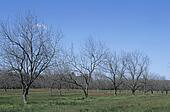
Every year I get to see spring happen in the park where I walk. There's a certain sequence to the build-up of spring. Winter begins to lose its grip about 3 weeks before March 21st. Winds come to clean the trees of any dried leaves left over from late fall/early winter or dried fruit or leftover pecans. It will usually rain a time or two. Willows begin to bloom, then the oaks. Robins come to dance on the grass. The grass turns green. Then the gaggles/ravens/crows/magpies (whatever these black birds are called) show up to drown out all other birds with their terrible voices. The sequence is orchestrated usually with how many cold snaps are left. Willows will bloom with 3 to 4 cold snaps left in the season. Oaks won't bloom until 1 or 2 cold snaps are left. Robins come at this time, so you know spring is close. The ravens/crows like a little warmer weather so they show up when the oaks bloom and are always surprised by the couple of cold snaps that are left. But, pecan trees aren't fooled. They like warmer weather and won't bloom until the cold snaps are over. When you see the pecan trees budding, you know spring has truly arrived. Incidentally, most of the pecan trees have not started budding yet. There's at least one more cold snap ahead. Life has a certain sequence to it, also, unfortunately. Events happen in a certain order and its hard to break that order. Wish it weren't so in some cases. I would love to use the wisdom accumulated to revisit certain events and alter them. But, I'm not in charge of the order of the changing of the seasons or in sequencing the events in life. All I can do is shout an expletive or two when I run across something I would change. This year, the willows bloomed quickly, the grass was slow in turning green, the number of robins visiting the park was way down, as was the number of crows/magpies. The wind didn't blow all the pecans from last November out of the limbs of the trees. The pecan trees don't have buds 5 days after spring has begun. And, the number of cold snaps since the willows have bloomed has only been two. The winter was colder and drier this year (which probably means the summer will be disjointed in some way as well). Things have been different this year. I do hope with everything in me that that is a sign that things will be different in life as well. I would love to have something I have run across that I would change to be different this year, to be out of the natural order... would love to have that happen. It would cut down on the number of expletives I utter.
Saturday, March 26, 2011

Pickin' and grinnin'


Once in a while I get to write songs with a cousin who writes and sings country and western songs and sends them to Nashville. Over the last 5 years he and I get together 3 or 4 times a year to write songs. I leave the singing and playing to him and his group. He also makes demo CDs to send to Nashville. I've only had one song sent there out of the ones we have composed, but soon two more will be sent. Here is a preview of verse one and the chorus of one of the songs my cousin and I wrote together.

Alll kinds of pickin' goin' on
Pickin' peas, pickin' corn,
Pickin' hats and dresses and birthday gifts,
Pickin' up those kids, pickin' out their clothes,
Pickin' at those strings on a new banjo,
But all that pickin's not the same,
As pickin' stars from your eyes - pickin' you.

Chorus:
I can pick a college, or ring, or some clothes to put on,
I can pick peaches, pecans, or some healthy nut bar,
But the most major pick of all is the one where I shine,
I pick you time after time after time.

There are a couple of verses and a bridge besides what is written above. It's kind of fun writing songs. And it is really inspiring when I write and later hear the tune and full instrumentation of the words he and I have composed. I hope you hear this song a year or so from now as you're listening to the radio on your way to work.

And I hope everyone has had the highest form of pleasure of picking that one person who lights up her life... who makes him happy above all others... who adds spring to her step... who becomes a part of his fabric... who inspires music in the heart... every time that one person comes to mind... and time after time after time after that.


Wednesday, March 23, 2011

The art of the hedge


Hedging is an art form these days. There are at least three levels of it. The level of least hedging, and the most transparent, is through tone of voice or the obvious change of subject when the topic makes one uncomfortable. The mid-level is through using the word "well," which nearly always means there is a problem with the topic under discussion. Occasionally, a dialect will use well as a filler, such as "you know," but that is rare. Identifying with only a very specific part of a statement is another form of the mid-level hedge. The last way to hedge is to tell a lie based on the premise of something true or to mix something false with something true, a hybrid statement. These go undetected most of the time. Very intuitive people recognize this as it is happening, but mostly this type of hedge is caught upon reflection.

We do it all the time for a variety of reasons. Hedging is usually done to save face, however. Sometimes it is for alignment, but that is really a face-saving feature in the final analysis. I think we've made hedging an art form because we don't really want to be transparent with others. There are precious few people we trust. With those few, we can be transparent. With all others, don't lie (because that creates an ethical problem), hedge. It keeps people guessing. It throws them off the real path. It allows us to remain private. It keeps hurt from happening.

Transparency is a value, however... and truth.

.

Tuesday, March 22, 2011

Foundations

The other night on the Nat Geo channel, a documentary told the story of a star device made by the Greeks in the 5th century BCE. It had a great number of cogs and wheels, and charted the movement of the stars for any given century past or future. Truly amazing... on two counts, the creation of the device and the math behind the movement of the stars. Our 5th century BCE Greek friends lived in a much more sophisticated society than we have ever given them credit for.


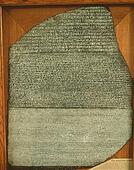
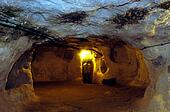
It's nice to find nuggets of surprise in history that we have not known before. It happens every so often. The Rosetta Stone showed how well the early cultures moved among themselves speaking each other's languages. An early form of portable generation of electricity was found in the middle east, the place algebra was born. An underground city was found in Turkey that had been carved in the very early centuries of civilization for reasons that appear to be related to evading aerial notice. A city has been discovered in India that contains bones and ceramics with all the signs of a radioactive blast. The list is lengthy. All the hints are that the past was a most sophisticated world.


So, we in this modern era are the beneficiaries of cumulative effect. We thrive because the foundation included a great deal of forward thinking and avante garde living. That seems to be a principle in life: we thrive because of events and people that propel us to heights we would not otherwise achieve.

Monday, March 21, 2011

Every road has a twist


Edward DeVere (Shakespeare) writes plays in 5 acts. Usually, Act IV gives away what is about to happen at the climax in Act V. That is true in the play Macbeth. The opening scene of Act IV is one in which 3 witches appear to give Macbeth some information. Macbeth demands to know his future since he sees trouble ahead of him as others seek to take the throne of Scotland from him. So, the witches oblige him with ghosts to converse with. Then they comment on the ghosts' conversations. Near the end of the scene, the witches cryptically foretell some of what is in store for Macbeth.

"Macbeth shall never vanquish'd be
until Great Birnam wood to high Dunsinane hill
Shall come against him."

Macbeth takes this to mean that he will not be defeated. In reality, the words are the ones that lure him to his death.

Unbelievably, Hailey Dunn's mother was arrested last Thursday. The Colorado City police have been pretty deliberate on how they have handled the Dunn case. But, eventually, people who are rash at heart reveal their tragic flaws. Macbeth had been careful to a certain degree in hiding his awful deed. But, he got sloppy after the witches apparently gave him their blessing that he would reign as king even though he was beset by the noblest lords of Scotland. He slipped.

The arrest was a deliberate move, but not a careful one. They arrested someone not a suspect, but have not arrested the case's only suspect. Birnam wood just moved against Dunsinane hill. The police interrogated Billie Dunn for 2 1/2 hours according to the Colorado City Record. Then they charged her on three counts. Oops. Milk someone for hours, then throw the whole case into the legal arena? Then, they found more pornographic images on computers. More smoke screens. But, that doesn't matter. The case is not merely in their hands now. It's Act IV in the case of Hailey Dunn. A clue to the climax was just given.

Fortune will now favor the legal pursuit and take the impetus from the law enforcement arena. Just love it when something deliberate happens to suddenly give an event an unanticipated twist. Witches could not have predicted a better twist than the one that happened naturally. Welcome to the world of the attorneys.

Tuesday, March 08, 2011

Judging your standing


In the 1960s, two researchers conducted a study on politeness in language. They used three languages in their research, which was seminal in the field of sociolinguistics. It was a little more obvious in French and Spanish to see the politeness patterns because of the tu/vous markers in the language. But, in English there are still ways to show politeness even though we don't have such a tu/vous marker in the language.

Because posturing is always part of a conversation, it is good to realize the underlying attitude carried in politeness. At least two ways are used in judging someone else's attitude exhibited when speaking. There is the casual/formal continuum and the deference/rapport continuum. Just as an example (and there are a great number of examples), the words yep/yeah/yes/yes ma'am or yes sir can show the two principles at work.

If you are talking with someone your own age, you would expect equality unless there is a mitigating condition. Thus, you would expect to use and for the other conversant to use the casual form of the affirmative word, yeah. If yes is used, it is a little more formal, so there must be a reason for it, such as emphasis, formality for higher position, exasperation, deference for distancing, or solid agreement. Otherwise, you would get yeah. If yes sir or yes ma'am is used then the one using it is showing politeness for one reason or another like deference to a supervisor or someone more financially well off or someone who has a degree of expertise or more knowledge than the speaker. The deference shows less solidarity. On the other end of the spectrum, if yep is used, then casual agreement is signaled, or perhaps the expected alignment marker of mostly women's speech, solidarity with the speaker, or some other bonding meaning.

Of course, if you are talking with someone a different age from you, then different semantic contexts might be in play. Regardless, the cardinal principle of communication is that words carry meaning or they wouldn't be uttered. The fields of semantics and pragmatics exist in order to more exactly identify what is being conveyed. So, the next time you are carrying on a conversation, try judging one's attitude toward you in the conversation by checking whether their language is showing casualness or formality, deference or rapport. It will allow you to know if someone is trying to be your friend or if there is distancing taking place. It's always nice to know where you really stand.

Sunday, March 06, 2011

Noticing the underpinnings


Conversation operates by established principles. Those principles are developed by peer groups as they grow up. The problem is that there are several types of peer groups.

The most obvious is the same age peer group. During adolescence the youth counter culture uses extant words to have new meanings, like the hippies did with the word cool and Generation X did with the word bad. Or adolescents make up new words, most of which don't stand the test of time, such as the Baby Boomer word groovy and the next generation's word bling. The degree to which we participate in counter-cultural language is a marker of the degree to which we identify with our peers in later years.


Another peer group is formed during early adolescence: the female peer group and the male peer group. Each of these groups develops different rules for interacting with each other. One of the studied rules is that of competition. Both groups have competition but manifest it differently.


Girls have an alignment rule first, but if disagreement arises (competition), then they show it by agreeing with something a peer said first before expressing the item of difference.


Boys, on the other hand, challenge statements directly, and either gain face or lose face fairly immediately.

Rules also develop around interactions between younger and older peer groups. Baby Boomers wanted to interact with those older than themselves as equals; however, they wanted to hold Generation X at bay a bit by creating rules for deference. Generation X said that Baby Boomers had to earn their respect, but in turn, they wanted Generation Y to be in awe of every achievement they accomplished.


So, we are all marked in our language habits by the peer group we grew up with. That, of course, sets up all kinds of conflicts - between generations, between men and women, and within a peer group itself. "Don't use that language with me," is a phrase you hear parents say to teens, one peer to another, and a man to a woman or vice versa. The rules for language use from our peer group during our adolescent years are deeply seeded in our psyche. So, when a difficult situation arises, it is important to notice if you're speaking to a peer, a woman or man, or an older or younger generation. Ignoring the underpinnings of language use with the other party makes it fairly certain that a conflict will arise with no apparent resolution.

Thursday, March 03, 2011

Slipping away into bravery


Brave New World has to be one of the best novels ever written for a number of reasons. The characters were dynamic. The plot didn't drag. It was a bit prophetic. It took on themes for its time that made the book ban material. The symbolism was universal. And it pointed to conflicts so representative of the human condition.

I find myself referring to it often in conversations I have, especially those involving education of any kind or religion. People eschew the book if they only cursorily read it or read it as a high schooler and have some vague memory of it. But it is one to take seriously. Bernanke, the Federal Reserve Chairman, recently mentioned having a global currency. That remark would strike fear in those who have seriously read Brave New World, the realm of one-world government. Having a global currency is not too many steps away from the consolidation of nations into a one-world state.

Oh well, it's already too late. Only the alpha pluses among us understand what I'm talking about now. Tomorrow I will hire a delta, say good morning to a beta, and take a phone call from an alpha who reports to a board of directors who reports to a government agency who reports eventually to a world controller. I'm on Soma, so it's ok with me!

Wednesday, March 02, 2011

Something's rotten in the state


One of Edward DeVere's (Shakespeare's) most famous plays is Hamlet. There are a number of famous lines from this play, but the one where Hamlet is contemplating his father's recent death and his mother's actions with his uncle is the trademark line from the play. As Hamlet tries to make sense of what is happening early in the play, he comes with the line, "Something is rotten in the state of Denmark."

That's exactly what I am thinking as I contemplate the rotten state of affairs in Colorado City with the disappearance of Hailey Dunn. I have followed the coverage from the news media. But, there is a apparently a story behind the story. It's such a sham to have all these volunteers coming from all over who give freely of their time searching for Hailey when all along people close to the case know no body is going to be discovered by any of the volunteer teams. And the case is really shaping up to discover that law enforcement officials are in on the cover-up of the disappearance. Most recently, the police are saying they have a flash drive with child porn images and that the grandmother's computer has a greater number of images on it. When is the last time any grandmother had such images on her computer? And the sudden appearance of a flash drive is suspect. Investigation 101 teaches that the sudden appearance of "evidence" happens only in mystery novels in which the author has to piecemeal the evidence throughout the story to hold the attention of the reader. These new findings are nothing but a ruse, smoke and mirrors to distract from the truth.

It's a pretty stereotypical series of events from a small town. If I were to ever get involved in a case like this one, I would probably have to work with an outside investigating team to crack the truth. For sure, it is not going to come from the inside where it should come from. What a shame that small town people get so caught up in Peyton Place shenanigans that they hide the reality of what is going on.

Tuesday, March 01, 2011

Hiatus in the flow of time


100 million years pass before diamonds are ready for the Earth to produce its most precious gem - the diamond. I don't have any diamonds, but I have seen them before. They're precious because there is a finite supply of them, and they take so long to produce. When they're polished, they shine a spectrum of colors. They have value above all other gems. The closer to colorless, or a slight blue tint, the diamond is, the higher the value of the diamond. The yellower the tint of the diamond, the lower the value of the diamond. The higher the carat weight of the diamond, the more value it has also. Most diamonds are cut with 58 facets, but those with less are less in value. Then there is the shape, but that is a matter of preference, not value.

About a year ago, I was around one of the most flawless of all diamonds. It was beautiful beyond imagination... the perfect shape, cut, carat weight, and color... perfect.

It was one of those pauses in time where I knew that I was around 100 million years in the making. Other gems like emeralds, sapphires, onyxes, and rubies, are pretty, but they are not the diamond I saw, they were not 100 million years in the making, they don't pause time, and I would have no interest in them. Only one diamond has captured my interest... and if I had to wait another 100 million years to be around that diamond, it would be worth the wait.

Monday, February 14, 2011

Celebrating the day


Back in the day when gods were bigger than life and beyond the grasp of the average person, Aphrodite, the deity who liked to control every aspect of the affections of human beings, according to Greeks, grew so vain that she instructed her son to go to earth and destroy one of the famed, beautiful women among human beings. Aphrodite would not allow anyone to be in competition with herself. So, her son, Eros, went to Earth to destroy Psyche, the woman whose beauty was reported to rival Aphrodite's.

But, as Eros spied Psyche, he fell head over heels in love with her. So, instead of doing away with her, he created a beautiful castle for them to live in as long as she never looked on him because he was a deity. She agreed to feeling his presence without looking at him. But, Psyche's sisters convinced her to look one day. When that happened, Eros left, and with the absence of his presence, the beautiful castle with all of its gardens instantly changed to weeds and a pile of rubble. Psyche loved Eros so much that she went looking for him. Of course, it came to the attention of Aphrodite that someone beautiful was again walking the Earth.

She would brook no rival, so she met Psyche and told Psyche she had to bring Aphrodite the piece of the soul or essence (the meaning of the Greek word psyche) of one of the goddesses of the underworld. Psyche succeeded through a little trickery to get a part of that soul, but the effect of the goddess' soul in the box where Psyche carried it caused her to fall into an eternal sleep. Eros could not believe what his mother required of Psyche, so he went looking for his wife and found her eternally asleep.He went to plead the case for her life with Zeus, king of the Gods. Zeus relented, gave Eros his wife back to him, and Eros and Psyche lived happily ever after in a beautiful castle with extravagant flower gardens.

We are told the story by a Roman, Ovid, so the names were changed to those of the Roman pantheon, Venus, Jupiter, and Cupid.

The allegory is a great one to show that the human essence (Psyche) longs for the sweet fruits of attraction, falling for someone completely. Of course, that explanation came from a world far away and long ago.

Today, we understand the world so much more clearly. We frame the affection that consumes us so totally for someone as something innocent, pure, and sweet, saying it is sweeter than summertime. It's the taste of honey. Our busy work days ask us to be everything to others, causing us to miss out on the sweet nectar of our lives, our American Honey. That's the modern version, and I'm sticking to it on this day celebrating Cupid's expression of his eternal affection for the most beautiful woman of his life.

Tuesday, February 08, 2011

Winnowing


The sports model of success is what I think all successful people operate by. In junior high everybody plays a sport, and usually several sports. I'll focus on football since it is America's biggest sport. Junior high students, small and large, fat and thin, white, brown and black all play. Then they all go to high school. Amazingly, only a portion play at the high school level, the good ones. Probably about half as many or fewer play because more than one junior high feeds a high school, and so competition is a notch above junior high. Then those players graduate. Some go on to college, the best. Probably around 20% of the high school players play for a college. After college, only a few become professional football players, maybe 5%. Those are the cream, the best of the best.


When a player makes the pros, he can see that there are levels even among them. Some of them wear superbowl rings or have Pro Bowl beside their names, the very best of them. But even among those elite, there is a single spot available for a league MVP, just one, the very best of the very best.


Successful people learn this sports principle as they experience life. At first everyone is a friend. Then, they see that not everyone can benefit their positions at school or on the job. So, they make a few cuts on the ones they allow themselves to be close to. It seems that with every passing year they notice that they need to surround themselves with better friends or significant others. They want a symbiotic relationship with other successful people. They want positive energy, not negative. They want cheerfulness, not sullenness. They want lifted spirits, not a denigrating aura. At some point, successful people surround themselves with only those on whom they can rely fully. They have friends or significant others that they trust, that they need, that they depend on. And usually people have an MVP.

I can't imagine going through life without looking around and seeing faces of those I trust, need, and depend on. It's been a process. But I have followed the model and found those who are the best of the best. They have great successes of their own that they offer our friendship or significant relationship.


And everyone has that reserved spot... for the best of the best of the best... of the best.