Search This Blog

Friday, October 23, 2015

The real lab


I know it is really hard for people, but imagine this - that people want to be taught how to speak a second language and they have no formal training using or developing their native tongues.  That may not sound like it should be a huge obstacle, but consider how most schools teach language.  That's right, through grammar and written language.  Grammar and written language, of course, are an exercise in formal training and these second language learners have none.  So, to develop it after a child's learning window has closed for acquiring it naturally, is to learn it by repetition and being in many hundreds of different circumstances over time.  Right again, that's impossible.

So, what a challenge it is to learn a second language without being able to rely on the formality of grammatical nomenclature, written expression, or a sense of what is native expression.  There is a way, of course, to learn a language without the three methods just mentioned, but many educators don't know how to do this since they were taught formally, and they tend to teach in  the way they learned.  Many of them will tell you it's impossible to teach a second language without describing what happens in grammatical terms.
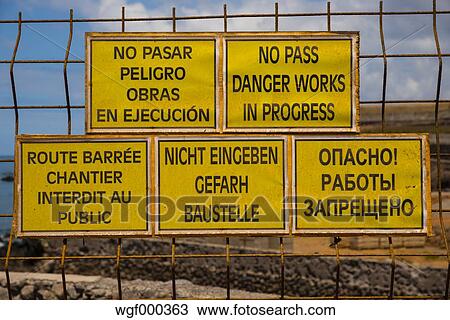

If people would think how they learned science, (in the lab, right?), then they can better understand how to learn a foreign language.  There is an axiom that has to be followed.  To the extent that grammatical description is not used, then to that extent people have to be in the lab.  And by lab, a classroom environment is not meant.  A real world environment is meant. So, the successful formula is GD-n=L+n (Grammatical Description - the amount of ability from understanding grammatical description  =  use of the Lab of the real world + the amount of ability from hearing, practicing, and experiencing real world language) 
Public, private, and business schools who don't discover this don't really teach for fluency, they teach to say they have taught.  The proof of any method is always in the success of the students who become bilingual as a result of the method. That measure alone would condemn most of the language learning methods used.  Roughly, and without regard to a person's determination to learn, 1000 hours of actual practice of language are necessary to achieve a measure of fluency.  That excludes any instruction by a teacher.


As the world becomes more globally networked, the need for a second language is likely to be more in demand.  Those who pay attention to what is on the horizon for higher paying jobs should begin looking at the field of second language development to include on their lists.  And ABSOLUTELY, method is important.

Wednesday, October 21, 2015

But then...


The above scene from the movie Contact, starring Jodie Foster, is my favorite of all time for what it symbolizes about Life.  No one truly prepares for all that (s)he encounters.  We prepare for a baseline in Life, but not for the individual encounters.

In the movie clip, Jodie Foster has prepared all of her life for what might come her way in the form of planetary science.  She even made the arrays ready to receive signals from other life in space.  She thought she was ready, but it proved to be a confluence of failures for her even though eventually she was very satisfied.  She prepared all of her life for the one moment she thought she was prepared to hear.  When it came, she swung into immediate action as she trained herself to do.  Then everything changed on her.  Numerous unexpected events tested her mettle in ways she had not prepared for even though the initial event happened according to her plan.

This clip captures the moments her entire life was centered around and prepared for.  It is the moment her life changes in very unexpected ways, none of them to her liking.  Eventually, all those changes worked out for her, but only after a whirlwind of unplanned situations.

I have supremely prepared for the encounters I wanted to happen in Life.  I've had more than a few of those eye-opening moments when I swung into action according to my plan.  But then...

Tuesday, October 20, 2015

Replacement time now


Over the course of the next two years, until the end of 2017, more and more developments will happen to indelibly change the status quo from the world of print and reading to the world of the visual arts and graphic presentation.  The digitization of the world around us and the world outside of our own has fundamentally changed the way people think.  It is painful to see people try to read anymore.  It is also becoming slower in its development in children because the world they live in develops their brain connections (synapses) around entirely new stimuli.  The following two app developments for phones serve as sterling examples of things to follow fast and furiously.

MasterCard today announced a pilot for a new way to "sign" a charge to their cards.  According to a poll MasterCard had conducted, 83% of Millennials  use their phones to purchase online.  So, now there is an app to take a selfie, by simply blinking into your phone's camera.  That verifies your purchase, and the picture is translated into 1s and 0s and sent as your code to complete the purchase.  What a masterful approach! Note there are no typed passwords using this method.

Also an advertising campaign started today on TV to download the app called LetGo.  A person simply snaps a picture, sends it to the LetGo app and it is immediately put on the LetGo network for people to buy.  People can sell their own pictures now instantly.  What a fantastic innovation in entrepreneurship!  Note the need for picture production is greater than the need to write an ad to sell anymore.

Over the next two years, smart educators will make writing code a part of their math curriculum rather than their optional technology curriculum.  Algorithms and programming for digitization of everything will absolutely take over what is going to be produced in this world.  And because the realm of the visual presentation will assuredly replace the fading need to store and transmit the alphabet, these same smart educators will make video storyboards and video transmission a part of their English curriculum rather than their 6th grade, 5-hour introduction in technology.

Assuredly... Absolutely... Now!

Saturday, October 17, 2015

Turning thoughts

I'm here tonight on my patio watching the sun disappear below the horizon and the skies gradually change from bright blue to dark blue to gray to star-lit black.  Gazing at the transformation is not mystical.  It happens everyday in the same way.   But, it is thought-provoking.


Watching the change allows me to ponder the type of day it was as it disappears.  Was it a productive day?  Did I accomplish something of note today?  Did I make the day work in my favor?  Was someone else better today because I was in their day?

It also reminds me of the process of the daily phenomenon that is so much larger than I am.   A planet turns on its axis in the middle of nowhere in space as it rotates around the sun and spins away from the sun so that it faces only the darkness and coldness of nothingness.  I am but a speck on the planet peering out into the vastness.

On one hand, my life is meaningful because it makes a difference to me how I live.  On the other hand, my life is completely swallowed and overshadowed by the insignificance of life on one planet among hundreds of billions of them.  It's good for me to contemplate both the importance and insignificance together I think.  That perspective keeps me from arrogance, but allows me to make a mark in the world in some manner or another.

Saturday, October 10, 2015

Subtle flattery

A psychological study done about 3 years ago reported that if someone (speaker A) stands or sits in a position similar to the person one is talking to, then the other conversant (speaker B) is more likely to identify with the speaker A.  That is an important principle for those in sales.


In addition, if speaker A were to use a couple of the same words carrying the main idea of the topic (content words), then the identification of speaker B with speaker A was formed.  The measure of both words and body position gave an enhanced strength of identification.

A common saying in English is that flattery will get you nowhere.  But, a subtle form of flattery seemingly gets a person places.  Even if one is not trying to sell someone on some product or idea, showing solidarity with someone else is appreciated.  A number of sociolinguistic studies have been conducted to explore the idea of identification.  People identify with others using a variety of methods with speech.  The father of sociolinguistics, William Labov, conducted one of the first studies showing that the presence of final "r" or lack of final "r" in words like park, car, and floor was connected to social status (which is linked to solidarity).  The Milroys in Dublin, Ireland, two decades later showed the strength of the solidarity in speech with the idea of covertly using slang forms when working with others of the same status even if a person didn't speak that way at home.  Other studies with populations from other countries are numerous.

One of the traits of the so-called woman's intuition is to somehow know when people are connected or not.  But, showing loyalty or bondedness is part of the socialization process for girls as they learn to converse with each other as teenagers.

Call it socialization, covert solidarity, or (non)prestige status, the result is the same whenever it is studied.  I know I've had "better luck" with people when I follow the suggested features for identification with someone.

And what would happen if I applied this principle to software in advertising?  Watch below.


Wednesday, October 07, 2015

Showing contempt in (not) conversing

I was eating a barbeque place for lunch the other day.  I was by myself, so I sat by a monitor on the wall to watch the NFL channel.  About five tables away three men were engaged in a conversation they were really enjoying.  They were telling stories about the people they worked with.

I like to hear samples of conversations because it reveals a lot about the individuals engaged in those conversations.  One of the really noticeable, very predictable behaviors of language is that it follows one of the world's oldest observations: familiarity breeds contempt.  A number of societies have seen this to be true, even making it into Aesop's fables, The Lion and the Fox.  Shakespeare uses it in The Merry Wives.  Mark Twain is famous for saying it and adding "children" to the quote.  Latin works have it.  It's a time-tested saying.

So the men "talked up a storm" we might say.  What about others in the restaurant who were eating around me.  Well, it was almost 2:00 in the afternoon, so there were not many people in the place.  However, after I had been there about 15 minutes, two couples came in separately.  One was a couple in their mid-20s it appeared, the other a couple in their mid-60s.


If I follow the line of thought used in the age-old observation, the younger couple would have not been together long enough to have contempt for each other.  But, the older couple would show contempt.  As I listened to the younger couple's snippets that were loud enough to hear, I could hear laughter, animated stories, a number of questions, a lot of short answers, but very little silence.  The older couple came in sat down, began eating, looked around at the empty tables, watched TV, but did not talk to each other.  In the 25 minutes they were there, they spoke twice to each other, that I was aware of, and then only a one turn exchange.

I see this pattern again and again.  It's an amazing pattern.  The very reason conversation exists is to share and ask for information.  When a person gets to the point that the reason for conversation's existence is not enough, then (s)he should not waste another person's time.  (S)He should exit before the point of contempt.  Society has a lot of people wasting others' time.  I would rather be around people I want to share with or want to ask questions of.  I can be by myself the other times.

Wednesday, September 30, 2015

Enjoying trails of foorptints

I caught up with a friend last week that I had gone to school with starting in 6th grade.  We have known each other for a very long time, but we haven't kept in touch through the years.  We were on the same football team when we were 11 years old, in school together during junior high and on the football team there too.  When we went to high school we began to travel in different circles, and we branched out from our junior high spheres, becoming involved in different activities and with the friends of those activities.  But certainly we still passed in the halls and had a few classes together.

After high school I didn't see him again.  Many years passed and our lives took us to places very far from our hometowns, so the intersection of our paths didn't happen again until last week.  We spent about an hour rehashing our journeys.  I never would have guessed where his journey took him.  I was really surprised he had landed in the banking business and eventually training bank managers for one of the largest banks in the country.  Coming out of high school I would never have figured that for him because he was a rather reserved guy with good grades, slightly better than average, and had very conservative values.  He mentioned that he would never have guessed my journey either.


We had a calm, interesting conversation because that's what old friends do.  The two of you go so far back, you knew the other before he was impressive to everyone else.  You don't tell your journey to impress, he knew you back at your roots.  So, you might not want to exaggerate your story in any way.  When you have one of these conversations, there are two trademarks for them.  A sense of calm or ease pervades your words, and an element of genuine interest in the other person's events lightens the spirit.  I had a conversation with a high school friend and teammate earlier this month, and the same two trademarks surfaced.

Old friends do a heart good in this world of deceit, ambition, and ego-centrism.

Tuesday, September 29, 2015

Trailblazing


The thing about a supermoon is that it is enlarged enough for a person to imagine what it would be like to live there.  That's about to be a reality since NASA has decided to tell the world that they have found water on Mars.  They have known this for quite some time, but I am glad that they have decided to release the news.

Of course there is the group that believes the secret military of this country already has colonized both the moon and Mars, but for the rest of us who don't get to see much evidence of living on an extraterrestrial body, the supermoon represents the awe and wonder of space travel and space living.  It's a good thing that the possibilities are opening up since our world will be at 7 million occupants in the not-so-distant future.  Food and water will be at a premium.

I will probably not live long enough to do any space living or traveling, but I wish I could sit in a spaceship soaking in the splendor of looking back at Earth, anticipating the trip to the new planet, and gazing at the majesty of its first glimpse as it would draw closer to our landing.  I would love the feeling of being some of the first to ever do this and that a crowd would probably follow.  I am just a trailblazer at heart.


(Un)real things


I am always amazed at how people respond to symbols and traditions.  They are two sides of the same coin.  They both represent the values people have.  People forget the two are not the values themselves.  Flags and flowers are the usual examples given.  A flag is not the same as the country.  It stands for the country.  Flowers are not the same as a person's loving actions.  They stand for loving actions.

A really good other example is the language people speak.  When that first happened, there was no writing.  That was invented later.  Language was just language in the beginning.  But, at some point people invented symbols for language so that they could store the language and transmit it to others.  Thus, people in civilization centers around the globe invented symbols for the languages they spoke.  Some invented letters for separate sounds, such as t and d and n to show where the tip of the tongue is placed and whether one wanted to use the vocal cords, use air only, or use the nasal passage.  Others made symbols for ideas.  Still others would put sounds together and show a word by circling it with an oval.  These inventions were not the languages themselves, but representations of the language.

I have a friend who puts pictures from a website called Traces of Texas on his Facebook.  The site contains many, many pictures of Texas during the period of the 1930s and 1940s.  He is a nostalgic friend and muses about the good values of the early days of his life.  So, he puts symbols up for the values he cherished that are different from today.  Since the values today are so different, he gets stuck in a time warp and responds to symbols from the past.

I have another friend who is really caught up in the idea of family.  It's really a facade, however, because the family she came from and the family she raised are dysfunctional, more than average.  So, she has adopted the symbols for family - pictures of everyone, singly and in groups, on walls all around her house - to help her realize the ideals that family represent.

Don't get me wrong.  I like the occasional symbol.  They can be very meaningful.  But, as a way of life, I want to deal in the real events, real values, real relationships, and real jobs.


Friday, September 25, 2015

Revising the base

I grew up in a humble little home many years ago.  I was taught that religion and education made the world a better place.  I supposedly needed copious amounts of both in my life to be successful and moral.

Now I find myself in a world where religious people fight among themselves and denigrate those outside their beliefs. I hear people who go to church saying the most awful things about the people they work with and religion and democracy often get confused.  I look around at the successful people and see truck drivers with little education making $150,000 a year, plumbers charging $80 an hour and earning $40 of that for themselves.  I get my hair done by a stylist who brings home more than most people with college degrees.  A felon I know makes 80K running a landscape business, and an illegal immigrant I know runs his own pool service business that employs others and provides for the families of the two brothers who own it.

It's a little hard to believe anymore in what I needed copious amounts of to be successful and moral.  So, I have retreated into a different view of things in lieu of the puzzle that life presents for making sense of one's experience.  This new world consists of doing good for the ones who need it, loving the events that each moment presents, and following my heart in matters of sharing love.  I find this yields a much, much more satisfying life.  Val's art diary is a good visual for my current state of affairs.


Thursday, September 24, 2015

Being handed lemons

Recently ? has been in the news.  Here is a case of one of my favorite principles in life.  "When life hands you a lemon, make lemonade."  Watch below.


So, Ahmed spent a little time in jail.  I would like to have recorded what went through his mind those first 30 minutes in jail.  Maybe he thought about prejudice against his nationality.  His father certainly did in an interview about the arrest.  Maybe he thought about how life was tougher than he bargained for and he would give up making things.  Maybe he was bitter at the school, especially his English teacher who turned  him in, and thought that he wouldn't be able to finish school and accomplish his dreams.  Maybe.


All of us are handed such circumstances in life.  And we can't see past the dimension of momentary time walls to the next move in Life's game called "our lives."  But we can make lemonade from the lemons if we will have patience to let things develop on their own.  If left to his own and his family's logic, a discrimination lawsuit would have been filed, publicity about national bias against Islam would have ensued.  Ahmed would have served a suspension from the Irving school district.  People would have taken sides.  All of that was in the works.  Instead, what happened was that the white house offered him to visit the president.  MIT offered him a scholarship.  Twitter and Microsoft both reached out to him.  And soon he will enroll in a technology-oriented school where he can further his interests.

That's beautiful, isn't it?  With a little patience and time, our paths turn from being sprinkled with lemon juice to being mixed with a little sugar and water.  The transformation is amazing.

Wednesday, September 23, 2015

From thin air

I used to hear the expression, "You can't just make something out of thin air."  I knew that saying would disappear once holographics came on the scene.  Already it is a saying that young people don't use because they're the virtual generation.  Air is not a dimension of separation for them.  Their world is seamless between reality and virtual reality.

But, I'm not going to have to wait for the holographic realm.  Something else has been invented.  It's in the real world, not the virtual, but it allows you to make something from thin air.  Watch the video below.


I know a really artistic girl who would enjoy this invention.  It would help her go to the next level that paper can't take her to.  It would allow her and her generation to imagine things AND draw them to make them come alive.  I look forward to the time when she and others become adults and put their ideas into place in a society where reality can come from thin air.


Monday, September 21, 2015

More in the tea leaves

I saw a Facebook post of a photograph of a someone's second grader's homework.  On the line for the name the child had written her name "Alyssa."  The name was in cursive handwriting.  The teacher had written a comment by the child's name, "Do not write in cursive.  I have already warned you twice about this."


This is really unusual, but it illustrates where literacy is headed.  Reading and writing are definitely on their way out the door.  Even in traditional circles at least one person is thinking that printing is the only legitimate kind of handwriting.  That could just be the effect of the computer on a generation of young people, but I see it as a signal that even the traditionalists are moving toward a different definition of literacy.  Cursive handwriting has effectively been greatly diminished in use for a decade now.  One teacher is waging a campaign to keep it that way.

But in the larger picture, printing is on the way out too.  A recent Reuters News Agency ad in a Google banner read, "Read less, know more."  Included in the ad was a video of a news story.  The dots have been put in place over the last 9 years since the advent of the iphone.  Now the dots are being connected.  It's amazing to me that people continue to want literacy to be writing/reading-based rather than opting to embrace what is on the horizon now and soon to be mainstream.

I promised myself I would chart this change from 2007 to 2017.  I have, but it's hard to see so many unbelievers.  Well, one day...

Thursday, September 17, 2015

A horrid selfishness

I would have thought that one of the parts of given to Meryl Streep in Ricki and the Flash was an error on the part of the script writer if I hadn't seen it for myself.  Streep's character is one of a divorcee who has not lived with her children.  Apparently, the children had sided with their father in the divorce.  Nothing was ever explicitly stated, but one gets the idea that Ricki (Streep) had not been stable or present enough in the kids' lives for them to respect her.

During the course of the movie her adult children definitely didn't want her to be a part of their lives.  The script writer here doesn't show a callousness in Ricki's character but a willingness to support her children with the awareness that they didn't want her around.  That's reality in the case of many broken marriages.  That part of the story is plausible.

But, without reason, there is a scene in which Ricki's boyfriend from the band she plays in tries to encourage her to go to her grown son's wedding.  She had actually been invited.  But she was going to miss it since she was aware of the son's animosity toward her.  So her boyfriend goads her to go, saying, "It doesn't matter if they don't love you.  It's not their job to love you.  It's your job to love them,"  (1:44-1:48).


My first reaction to that line was one of artificiality.  What parent doesn't know that?  Children are fickle.  Anyone who has raised teenagers knows this.  Anyone who has raised a child to age 25 knows how egocentric he or she is.  It's no mystery you have to love your kids through certain stages before they achieve an adult understanding of life.  I thought the script writer had  made a glaring error in his writing.

But, I have seen this first hand in at least three different women.  They bore resentments toward their daughters in their cases.  They castigated them, put them off, and treated them horridly saying that their children didn't show them the proper love and respect.  They didn't know it was their job to love their children, rather than waiting for their adult children to show them the respect they thought they deserved.  It's not pretty, but it is reality.  I appreciated the script writer for showing how real the situation was and for having a character try to coax a selfish mother into a better way of thinking.  Kudos for the psychological fight for good this writer built into his movie.  He was trying to rid his viewers of an evil among us.

Wednesday, September 16, 2015

Gracious, but true to herself


Meryl Streep puts in another very good performance.  The movie is not a complex movie of weaving the lives of many characters to form a mosaic like her movie August: Osage County, nor does she depict a character that spans a number of years to show dynamic change in a person's life like Sophie's Choice and The Devil Wears Prada.  However, she delivers in a movie that shows the strength of a static character, a mom who is needed to help her daughter in a particular situation.

She depicts a divorcee who has found her own truth in life apart from what her wealthy husband could live with.  Her interaction with each of the story's characters, mainly her biological children, shows the trials she has to face as an "outsider" to her own children.  Her children have had a hard time accepting their mother's life and dreams, so they portray their disdain for her during the entire movie except at the very end.

It is this part of the story that carries the clear and poingnant message of the movie.  In the trailer above,that message is found at 2:12-2:18.  She is at her son's wedding in the midst of a very wealthy crowd.  She lives a rather hand to mouth lifestyle, so she knows she can't participate to any monetary level worthy of this crowd.  So, she takes her participation in the wedding to an arena the others can't participate in.  She gracefully says, "I have never been a traditional mother.  But I am a musician. And I'd like to give all I have to you."

It is that last comment, "And I'd like to give all I have to you," that moves me.  I am motivated to be that gracious and giving to those I have in my circle of contact every day.  Years of practicing music made Meryl Streep very good at music.  That is what she had to offer, so she offered it.  I hope those around me see me constantly doing the same.

Monday, September 14, 2015

Just a little thought about literacy

An acquaintance put a post on her Facebook today encouraging teachers to "fight the good fight."  By that she meant to keep fighting for literacy.  She included a link to a Mississippi newspaper article talking about a literacy program that had helped literacy test scores in that state.

I'm all for literacy, but my definition of that term is very different from anything that would show up on a test score.  The acquaintance went on to say that she knew that cursive writing, sentence structure, and diagramming "had gone by the wayside."   It's good she noticed that they've been gone for a while now.

Newsflash!  Those three things are not returning.  They're gone into infinity.  Fight that fight all you want to.  Literacy has changed direction and meaning.  It's just one more sign for those who want to remain in denial that even the die-hards like my acquaintance are noticing that reading and writing are about to hit a hiatus.  I'm serious.  They will be pretty much gone by the end of 2017.

The commercial on the radio today pretty much sums up where young people's heads are these days.  There's a new app out for your phone.  It connects everything you do on your phone to a screen in your car so that you can do everything "hands-free".  Texting is done by voice command.  Touching icons for app activation is a thing of the past. Icons are voice activated too.  Search is by voice command.  Call directory is by voice command.  And more.  All via bluetooth to a screen in your car.

Yep.  Writing is pretty much out the window, down the toilet, and otherwise gone with the wind with this new app.  Mississippi better start preparing students in a different way or it will really be a sinkhole of a state to grow up in.  That would be true for any state that tests reading and writing literacy skills.  I'm thinking that video and voice presentation has more than adequately shown it is the new literacy.  It's past time to swallow that pill.


Thursday, September 10, 2015

Words as a glimpse


It's hard to say sometimes how much of a person's behavior is due to personality given by genetics, and to conditioning of our training given by others, and to experience given to us through life's situations.  From observing people I have known a long time, I can see the merit of the saying, "You can't change the stripes on a zebra."  Genetics play a large part of our behavior.  But the idea that "clothes make the man" lends itself to the environment and its influence on our behavior.  And, Janet Fitch's words, "The phoenix must burn to emerge," cannot be counted out of any formula for dealing with people.

Psychologists have been working for years on what shapes a person's behavior.  Studies include changes in behavior due to hormones and medication, changes in one's environment, manipulating routines, and changes to one's preferences in established routines.  Still there are no definitive answers.Since the science of the mind can't really produce the ultimate answer on why people act the way the do, I don't mull that question too much.

Personality to me drives behavior, so understanding personality is the path to enlightenment on this issue.  But personality is a tricky thing.  It has facets to it.  It seems to be related to genetic makeup more than any other factor.  In a lot of cases, knowing the pattern of the stripes on one side of the zebra allows for one to predict what the other sides of the zebra look like.  Personality is not divided into four quadrants showing primary and secondary traits as major companies have presented this idea.  Personality has a blend of traits that react to all kinds of circumstances, even to elements in a circumstance that may seem minor to an onlooker.  The trigger that activates anger in one setting is allowed to pass without reaction in a different setting by the same person.  Why?

One way to find out is by analyzing the words people use.  Words can serve as the windows to see into the mind.  Patterns develop with words that indicate the patterns developing in the mind.  That allows one to see behaviors such as lying, risk, preoccupation, depression, nurturing, and love.  To a great extent, patterning the words of someone, reveals the patterning of a person's mind.  So, knowing how to listen is a real virtue these days.

Monday, August 31, 2015

The stuff of movies


Where was I?  I stood at the front door.  They were made of heavy metal and locked from the inside.  20 feet glass panels were on either side of the doors.  Through the doors I could see students eating at cafeteria tables.  They could also see me, but no one moved an inch to allow me to enter.  Faculty members with badges on lanyards around their necks also walked past the door.  I punched a button on the wall next to the door, and answered the voice that asked me what my business was.  Click. The door had been remotely unlocked.

I walked past the students eating lunch to a reception area, showed them my ID, received a lapel guest sticker for my shirt pocket and waited for my party to show up.  I accompanied him to a classroom but had to change buildings on the way.  The doors behind us in the first building shut,  and I heard the click again of the door locking.  Across a courtyard we had to enter the second building.  My friend whipped out his ID badge and tapped the scanner to show that we were authorized to enter.

We went to his office, unlocked the door for him to get a piece of paper he needed, then departed the building for his car, the door to the building locking behind us.  We left in his car from his designated parking spot, stopped at a gate that he opened with a remote opener, and left for about an hour to eat lunch.

Upon returning, we went through the gate using the remote opener again, parked in the designated spot, tapped the scanner with the ID badge to reenter, then walked to his second story classroom.  I visited the bathroom on the way.  I opened the bathroom door, entered, and the door clicked lock behind me.  It had all the automatic amenities - flushing toilet, water spout motion sensor, automatic towel dispenser, and something I had never seen before... but why not in this building.  To dispose of the towel, I had to wave it in front of the disposal receptacle so that its cover automatically opened for me to deposit my used paper towel and automatically shut after the towel was dropped in.

I joined my friend in his room and sat in front of the newest version of a smart board which  was the focal point on the wall at the front of room.  He and I visited, then left, but not without scanning our way through locked doors of two buildings, retracing our steps to the receiving desk where I had started my visit in order to check out, then leaving the building, the door clicking behind me to lock it remotely.
 
Where in the world was I? One would think that I was visiting my friend in a high security prison.  But no - it was just a good ole American high school.  It was renovated and parts of it newly built, but it was certainly a state-of-the-art, extremely high tech building.  I was informed that next school year the cafeteria was going to be converted into a technology court that would replace the library.

Easily this school could have been used in a science fiction movie for a future school.  I plan on returning to see this futuristic library next year.  I don't know that it is the most 21st century school in the country, but it might be.  For sure, it is one of the 3 safest places I have ever visited. 

How things have rolled

From time to time I get to see people after a hiatus of several years.  It's always interesting to catch up and see what has happened, how things were dealt with, and what the outcomes have been.


I ate lunch with a friend today that I have known since I was in 7th grade.  We have periodically kept in touch, so we don't have to catch up in ten year leaps, but it has been interesting to see how things have turned out for him after all these many years.  In the last two years his two children have both married, so he had to spend a whole lot more time with his ex-wife than was bearable at times.  Over the last 12 years he returned to what he wanted to do in life the most - coach basketball at the high school level.  And before that he owned several businesses after starting out from college as a banker.

One of his real talents is with investments.  So, he has done well over the years dabbling with different entrepreneurial ventures and putting money in building value with various instruments. Most surprising to me, however, has been to watch his philosophy of life.  In high school, I was raised in a more conservative home than he was.  Over the years, he and I have switched places completely.  Now, he has become really worried about society's values, and has opted personally for a devout religious life.  My bent has been to liberalize most of my views and to opt for a more open religious life.

Nonetheless, we had a great time talking about everything under the sun, parting friends, and pledging to eat lunch again soon.  These kinds of days are the way life should be rolling.

The best gift

Gifts are always nice to get.  It's the thought that someone cared enough to get you something that you didn't have that's nice.  The object being given is also nice because it's symbolic in nature if nothing else, but many times it's something that is useful or that you desired to have.  But then there's always that one gift that has a special quality - it multiplies itself.  It delights you when it is first given, but then you are able to use it again and again, in many instances for to help other people.

I was given a gift several decades ago, and it was something I had desired and worked for.  It blended with my personality, and lo and behold, here several decades later it still is giving me the thing that enchanted me about it in the first place.  I can see that it will give me quality of life until I die, so I am forever grateful for having it.  From time to time, I have seen others enjoy receiving the gift when I would regift it in a form useful to them, and I have been told by others who received it of benefits they have received.

I worked hard for the gift that keeps on giving and received it, but unwittingly didn't know it would be that way.  It is my hope that everyone can receive the gift of their desires and in return, shower others in her/his sphere with its benefits.  That's just how the world is made a better place.


Friday, August 28, 2015

One would think...

This is why communication is so hard.

Me: Thanks for the birthday wish.  I feel the heat from it coming from your place. (My cousin lives in Arizona) [I'm thinking of temperatures between 112 and 121.]

Cuz: It's not as hot as you think.  I don't live in the Phoenix area where they get hot temperatures. It's about 20 degrees cooler here. [She's thinking between 85 and 90 degrees.]

Me: 118-20=98.  Even so, that's still hot. [I'm thinking upper 90s and low triple digits. I'm thinking her next remark will be to say OK, you're right.]

Cuz: OK. Maybe 30 degrees cooler. [118-30=88.]

I have been talking to other people for several decades now, and it seems like communication has never become easier.  One would think...


Tuesday, August 25, 2015

Look around to feel better

Some things feel bad at a particular moment.  They sometimes feel intense or hurtful.  We tend to compare them to the worst of times.  When this happens, comparisons are sometimes the balm we need to feel better or to know the severity of something.

A little lesson from the stock market illustrates the point.  Over the last two weeks the stock market has dropped a thousand points on the Dow-Jones, 500 of the points in a one-day slide, yesterday.  The market underwent a correction.  Everyone knew it was coming because historically, it was long overdue.  The  bull market run was longer than usual, so the correction was more severe than usual.  And how severe was it?


Yeah, 2008 was worse.  1932 was worse.  1928 was worse.  Black October was worse.

So, when circumstances around me seem more than a little bad, it's always good to compare.  It really could be worse.

Sunday, August 23, 2015

Life's seasoning

The poster said that storms would come but not to be worried.  The storm would stop, and you would come out on the other side just fine.

Several different versions of this poster have surfaced over the last 50 years.  I think the gist is good in that one needs to maintain a positive outlook on life.  But the particulars of the poster don't reflect reality.  A storm is something that is not a soft, gentle rain.  A storm is something that has high winds, sometimes rotating winds, lightning, thunder, sometimes hail.  Storms in winter bring heavy, damaging snows or blizzards.  It's numbing cold.  Sometimes winds dump rain from hurricanes, or at other times leave sheets of ice for people to slide around on.


Storms change the landscape and lead to a healthy respect for the part of nature that isn't controlled by humans.  In our lives those two principles season us from the time we enter adulthood until we depart the Earth.  Storms come on us sometimes with warning, sometimes without, and they pound away on our philosophies of life, our core values, our relationships, and our direction in life.  They change the landscape around us and they change us directly.  They cause us to change directions, to meet or need new people, to redirect our steps, to challenge our beliefs, and to reevaluate our philosophies.

Storms come and go.  That part of the poster is true.  And the part about our coming out on the other side is true as well.  But, now whether we're fine or not is up to how accepting we are of the changes in us the storms bring.  They make us play the shoulda, coulda, woulda game.  They make us have regrets sometimes, only if temporarily.  They drive us to accomplishments, and proud moments.  They drive us to strive so we don't have regrets.

Experience tells me what the poster should read: Storms will come and we should prepare for them ahead of time and be accepting of the changed landscape after it leaves.  Respect every single one of them that hits your life.

Tuesday, August 18, 2015

Tracks everwhere


Tracking aspects of life is everywhere in the world around us.  As an example, one of my daily routines is to follow a graph of the exchange rate between the U.S. dollar and the British pound.  The graph tracks the value of each as it rises and falls yielding the difference in value between them.  It is really helpful to see the track so that one can make predictions about the currencies' future paths.

Every night when I watch the news, the weather report contains the track of several aspects.  Maps show where the drought is in Texas and how severe it is.  The series of maps shown show the growth or decline of the drought area and the severity.  The report also tracks a comparison of today's weather features to other years in the past.  Today, for instance, is the 43rd day since the last rain, that is fourth in the all time record's list of days between rains.  Ten more days without rain and it will be number one on the all time record's list.

Tracking is just helpful to put things in perspective.  Historically, it's good to track events too.  The naysayers of the current president's political decisions usually don't use history to form their opinions.  If they did, they would pipe down a bit.  The detractors say the president is giving amnesty to thousands of immigrants unnecessarily.  Looking back just about 30 years shows a president of the opposite party granting official amnesty to about 5 million immigrants.  Detractors say that the Affordable Health Care act is a terrible burden forced on the American people.  Following the track back through time shows a number of public programs forced on people, not the least of which was the income tax.  The income tax dates back to Congress' passage of the bill in 1909 and states' subsequent ratification in 1913.  Yes sir, the American people passed the onerous income tax themselves and made it an amendment to the constitution.

People are short sighted, though.  That's called myopia and it's caused by a lack of knowledge of the past or the lack of willpower to look back in order to see tracks in the sand behind.  If they would just look at the tracks everywhere around them, people would be happier because they would be better informed .

Wednesday, August 12, 2015

Connecting dots

I read the national news in several areas, sports and technology being two of them, avidly every week.  Today, a couple of stories from different sectors highlighted my reading.  First was a sports article that was telling of records established by the top 10 teams in the NFL.  About midway through the article, the author said that the "record books" would indicate his point.  But immediately following the words "record books" was a parenthetical expression "(kidding: what are books?)."

The next article was really an explanation of a specialized training school.  It began with "Wanna know how to code?"  It went on to tell about a school that offered only programming courses including to know how to write code for mobile apps.  It also offered classes for kids called "Coding for Kids."  The name of this specialized training center was The Iron Yard, and the article showed a map of about 10 training centers scattered throughout the states.


I had two simultaneous thoughts.  One, how appropriate at the beginning of another school year that I should see these two articles on the same day that tell the story of what education should be, not what many, many children will be receiving.  They will go to a liberal arts school to prepare to give answers on tests that don't resemble the world they will enter.  Two, further proof that the dinosaurs who want to continue with the current educational landscape are very shortly to meet their demise.

And that's the size of it.  A sports page sarcastically referring to books and a specialized training center for children and adults learning something to prepare them for being really productive and well paid.  The article for Iron Yard predicted 1.4 million jobs available in 5 years for mobile application needs and only 400,000 people to fill those jobs.

Two years separate us from the magic number 2017, the end of the ten year war for supremacy between the education of books, reading, writing, simple math and the education of algorithms, programming, general computer savvy, and holographic virtuality.  I think by now the dinosaurs really do see the meteorite streaking through the sky and know that they are about to be decimated.  But they seem to have accepted their fate.

Monday, August 10, 2015

Some do, some don't

I find that many people don't like history.  If I ever follow up on that sentiment, I usually find that the people don't know how to organize history, therefore they find it hard to understand.  At the base of organizing history is to know chronology.  Timelines are basic.  Those who can learn to put events on a timeline usually know how to categorize in other ways to.  For example, if one can put Sumer in ancient history (between 3500 and 2500 BCE), then it is also easy to know that there were three other civilizations that were similar under the category of River Valley Civilizations.   When learning the history of England, if you know that the Romans left England open around 450 ACE, then it is much easier to understand how the Angles, Saxons, and Jutes decided to inhabit the vacated lands, begin the Anglo-Saxon culture, and start the English language.  Pivotal dates are probably the next most helpful organizing method.  People don't know which came first, the Romans, the Greeks, or the Phoenicians.  Not knowing that doesn't really hurt anything in anyone's modern life, but it is evidence that probably the same person doesn't know if the Civil War happened before the Revolutionary War or World War I.  Which doesn't hurt, either, in the modern world, but they probably then can't tell you whether Roe vs. Wade happened before Brown vs. the Board of Educaton or The Affordable Health Care Act.


None of it matters in a person's daily life except that it is also an indicator of the organizational level. one has in general.  Of course, personality plays such a huge part of organizational ability, that at any given time there are more people who don't care a whole lot about organization as opposed to those who do.

Strangely there is some balance, a yin and yang, between those who can live in the moment, spontaneously, and those who need structure.  A word of caution is in order, however.  Those who get overwhelmed by life and meet their demise, more times than not, come from the camp of those who don't organize well in their minds.

Play the odds: If you start life not knowing chronology, it might become a rather random series of events, unconnected, and a little overwhelming.  That could spell u-n-d-e-r-d-o-g for a person and that's not a good position in life to be in.

Sunday, August 09, 2015

You have to see to appreciate

I remember well a friend of mine calling me one Sunday afternoon 20 years ago to discuss a topic he had heard in a Sunday sermon.  The topic moved my friend and changed his understanding of one of Jesus' analogies.  The topic was found in the first two verses of John 15 about pruning grapevines.  The person in the sermon was saying the translations had not translated accurately, that the analogy was not to pruning grapevines, but in lifting them off the ground so that they could produce since they couldn't produce while lying on the ground.

Translation of any language to another is full of explosive mines, so it was credible that perhaps a new understanding of ancient Greek could change a usual translation, especially if new manuscripts had been discovered.  We talked about the topic, but I remember that the conversation didn't end with any kind of definitive answer on the accuracy of the concept of what was happening with the grapevine.

Today another person raised the exact same topic referencing the same author that my friend had called me about 20 years earlier.  It's strange how things keep getting circulated even it's a generation apart.  I've seen ideas being put forth before with how people deal in naming things that are indigenous to their area in sociolinguistic studies.  Outsiders don't do well when they translate without knowing the culture intimately.  I think what happened in this case is that the translators of traditional versions didn't know what was involved growing grapes.  On the other hand, it would appear that the man challenging the traditional concept of pruning didn't allow for or know the number of methods and reasons for trimming, so he overstated his case.

If I were to interpret the first two verses of John, I would use words more adequately depicting the "vinedresser" of verse 1.   The man you hear in the video below is a true "vinedresser."  He is deliberate in his descriptions, a slow-talking, country man who knows from vast experience what he is talking about.  What word or words would you use to describe him?  I'm fairly certain "vinedresser" would not be your choice.  And watching how and why he would trim leaves to make his grapes thrive would not call to mind the word "prune."  It would seem that the person tending the grapes knows how to make grapes grow by properly trimming in the right places at the right times of the growing season, not arbitrarily inspecting branches to yank and tear off the branches without fruit.

A person can watch the video and be able to discern more properly how to translate the two verses.  The cultural overlay of knowing how to grow grapes does help in knowing what Jesus said more than the just the words, more than attitudes of the listeners, and more than a narrow way of seeing how to trim grapevines.

The point of the analogy is probably not getting rid of those who don't bear fruit, nor is it in helping those who need lifting from the ground so that they can't grow fruit.  It has something to do with a holistic view of stimulating healthy, growing vines, like trimming leaves for sunlight, trimming clusters for large grapes, and trimming a certain number of stems so as to nurture the branches deriving from a main, or true vine, as a whole, which is the summary of the analogy found in verse 8.


Friday, August 07, 2015

Oh, the oppressive heat!

Hemingway wrote Hills Like White Elephants in order to show how hostile an environment had been created surrounding women out of wedlock having babies.  In the short story, his main feature was the setting he created, that of Spain in the heat of summer at a non-descript, remote train station.  The characters dealt with the heat by moving around and eventually to the inside of a bar and by drinking alcohol.  Constantly, Hemingway narrated or put in the mouths of his characters how severely hot the day was.

What was the point of creating such a setting?  It was, of course, to depict a hostile, harsh, and forbidding environment.  The station was located at a crossroads, which symbolized the crossroads of a decision by the pregnant woman on whether to have an abortion or not.  But, the setting overpowers the decision so as to show the harsh sentiment of society that drives the woman to opt for abortion.

As I write this blog at midnight the night has only cooled from 106 degrees during the day to a mere 92 degrees.  It's really, really hot.  There has been no rain in a month, the humidity is low, the grass in the yards is burning, turning green to brown.  The forecast offers only more 106 degree, rain-free days.  I think I am a character in Hemingway's short story.

My next thought was whether the deep heat was some symbol as to what was going on around me (as if I were a character in this story).  I think so, society has changed so much, but its values have taken a rather flat track in many areas such as religion, education, interpretive history, and political policy.  The device that has changed our way of doing business is again about to change our way of communicating altogether.  Everything we see on screens, which are monitors mounted on a device for the moment, will now be moving as the person moves, that is, untethered visuals.


Such a change is as monumental as the young woman opting for abortion in Hemingway's era.  Our values conflict with changes that must take place, away from incumbent methods of how to interact with the environment and each other.  The current environment is harsh for moving in that direction.  But people will have to deal with it.  It's not going away.  What's the answer?  The same one that the woman made.  She was driven to make a decision that progress allowed her to take.  We'll make the same one.  To fight it will be to die in the too oppressive heat.

Monday, August 03, 2015

Selection process

There are pathways in life just as there are roads between towns and trails in the country or the mountains.  There are actually many of them.  The beauty of adulthood is that you get to choose which paths you want to take at any particular time.  And, you can change to a different path any time you want to.  You can't help but to notice that some paths are wide, some are narrow, or that the some are worn, others grown over.

Another parallel is that when you are on a path, or when you see a different path, you can see it for its present value, but you can't see the end of where it leads usually.  You just have to trust the hints of the path as you see it or the information you have heard about it.


That's a pretty good parallel to the way life works.  One great difference is that paths don't tell you anything about the people that have taken it.  In life you get to see some of those people, their results and their personalities.  That helps.  Every hint helps because there are so many paths to choose from. Some of them come out at the same place, so it doesn't matter which one you take.  You get to take one depending on your personality.  But they don't all lead to the same place.  That's what keeps the selection process interesting.

Friday, July 31, 2015

A decade reflection


I'm sitting by dim lamp light at a table in a mountain cabin far away from the 100 degree weather of my hometown.  I can hear the stream babbling by the cabin just 20 yards from the front door.  Windows are open letting in the fresh mountain air that makes for good sleeping.  The canyon I'm staying in is quiet.  It's blue moon night, so I can really say that I was away in the mountains once, in  a blue moon.  The sides of the mountains on either side of the cabin are invisible because the darkness outside is so black.

I like being comfortable, relaxed, hidden, unbidden, and off the beaten path.  Many people call it being off the grid.  I wouldn't since I have internet access, but at least I don't access the internet unless I want to.  It's not a necessity here.

My mind certainly clears when here.  The last time I was here was 10 years ago.  The English saying is "What a difference a year makes."  Now if I extend that by ten times - what an immense difference 10 years makes.  So, I have taken the time to review the last ten years while I have been here.  The decade started in a desert area and ended in a metropolitan area.  I am gainfully employed for only half the amount of time now than I was 10 years ago.  My outlook on life has changed fairly radically.  I had a middle of the road kind of philosophy that swerved to the left on most issues.  My beliefs about religion, politics, and work day issues have mostly changed by almost 180 degrees.

The saying is that the only constant in the world is change.  It's true.  Raise any issue, such as marriage, raising teenagers, managing money, working, or vacationing, and I can tell you what a departure my words would be now compared to 10 years ago.  Things solidified for me a little over 5 years ago.  It hasn't been the same since.  I have a good life, an acceptable life - not always what I have wanted, but what I can live with.  The last 10 years could have been better, but they could certainly have been worse.  The thing I wanted most in life didn't happen during this period, but wanting something and getting it are two different matters.

I need to live in both the literal and figurative place where waking up each morning is worth it.  I have reached that place.  And sitting here by dim lamp light at a mountain cabin table far away from 100 degree weather drives home these thoughts.

Foreign events


I have passed this road no less than a couple of hundred times.  I have passed it so often that I know how to pronounce its name by heart.  Finally, I drove down the road to see what this Wat was all about.  The spire is symbolic to the Buddhists for the reverence that should be shown to the deity, the higher power.  The design of the temple courtyard and the temple itself is conducive to conveying a humble spirit, a decent journey in life, and reaching as close as possible to Nirvana.


So be it.  Such is Buddhism.  Any concept I have of Buddhism is only from what I have read, not from experience.  So, my limited knowledge is not enough to make me an authority on Buddhist beliefs at all.  It seems like a really strange religion.  Its tenets are foreign to the American way of thinking mainly because its eastern flavor of seeking takes time, seems to lack direction, and takes away from the pursuit of making a living or becoming happy because of its total neglect of anything material.  The words Wat Buddharatanaram  are indicative of how far away from American idealism this religion is since they are written in a way that is unmistakably NOT English.

I ponder the things that have happened in life more than I should, trying to analyze them, thus to understand them.  Many events defy my understanding.  They are as foreign as the near-eastern words are from English.  I don’t stand for them.  I didn’t train to accept them.  They don’t represent me in any way.  Yet they happen.  I can’t control their happening or the way they happen.  Anymore, I just refer to such events as my Buddharatanaram events or moments.  They make me a more accepting person to refer to them that way.  I sure don’t understand them, but I have to live in the same country that they are in.

Saturday, July 25, 2015

The logic behind the motive behind the words


It's one thing to look at words and see what was said.  It's quite another to look at words and see why something was said.

If someone were to say, "I enjoyed the trip. Nothing really happened other than I was a little cold most of the time," and then subsequently you came into knowledge that during the entire trip snow covered the ground, the cabin had only a wood stove in the main living area, and each night for two weeks the temperature fell below 32 degrees.  It would be easy to see that what was said was either an understatement about weather conditions or that the speaker wanted to emphasize enjoying the trip even against nature's odds of trying to spoil it.

Why someone would say something this way is not so clear.  This is the domain of pragmatics where context is important.  For example, the words might be a part of a joke, so that understatement (a little cold) contributes to the humor being created.  Or, the speaker is trying to spare the listener's feelings because the listener had paid for the speaker's trip.  Or, the speaker is trying to brag about her or his prowess in extreme conditions.  Or, the person speaking didn't want to ridicule the poor living conditions the listener has to endure regularly due to the listener's inability to pay for a better way of life.

But, given a context, why did someone use the word, "enjoy" if that were really not the case?  Why would someone say, "Nothing really happened," if something happened "most of the time?"  If the context is plain, it helps to understand the motive, but to ask why someone would use a circuitous way of speaking would yield information other than motive.  Perhaps a person's style is round-about because of a self-esteem problem.  Circuitous speaking means that a person has room for error in speaking since she or he is not assertive enough to speak with certainty.  Perhaps a person thinks that minimizing the conditions enhances the emotions (s)he feels about the trip.  Or perhaps the person wanted to lie about how (s)he felt about the trip for whatever reason by enhancing enjoyment and diminishing the cold.

The word choices definitely had a reason for being chosen.  Establishing context is the first step in understanding the reason.  Focusing on the semantics also helps to narrow in on the motive of the speaker.  But the word choices are indicators of something more exact, the bedrock that produces motive, the logic behind the motive.   One has to consider why "nothing really happened" instead of "nothing happened?"  Does the word really strengthen the statement of fact?  Or is the speaker hedging?  The only thing that happened was in the speaker's mind, not in the real world.  Why make a general statement, "Nothing really happened," and then negate, maybe refine, the statement with "other than" unless the speaker wants to highlight a negative quality?  Why use the words, "the trip," which is inclusive of the whole time, then say that something was not enjoyable "most of the time" except to further highlight the negative quality of the trip?

The answers of course tell you about the personality of the speaker and the pattern of logic he has used.  And that information is the well guarded secret most people want to keep from listeners.

Thursday, July 23, 2015

Sorting through facts

I was speaking with a young adult tonight who mentioned in the course of the conversation that he had quit school very early in life.  By the time he was 15, he wanted to return to school, but it was too late for him.  So, he has paid for it with hard work the rest of his life.


He's not alone by any stretch of the imagination.  Most young adults in the U.S. don't really like school well enough to choose more education after high school.  Roughly 25% of young adults didn't really like education enough to finish high school, and about a third of that crowd decided to drop from school before that.  The National Center for Education Statistics has a lot to say about education buried in the numbers it has compiled for over 50 years.

I feel for my young friend who is working so hard to make ends meet.  But, he has made the best of life.  Really, he has done quite well over the last 3 years.  He is in business for himself and seems pretty happy with his family of 6.  On both of those counts he has much on his educated counterparts.  He works hard, but he plays hard and holds family time at a premium.  In addition, he is currently learning to read and write in a second language. 

I really don't know what the quality of life is for the vast majority of people without much formal training.  But, if the people in that category are as industrious and resourceful as the man I spoke with, I think that I will gladly trust what comes for the last part of my life.  I can sleep with that.

A narrow line of vision

Sometimes I am reminded of an event that I was a part of by someone who has a clear memory of it.  I try really hard to remember the details of the event, but usually to no avail.  What has happened?  Has my brain deteriorated?  Is someone trying to plant a memory for an event that never happened?


Sometimes, if it's one of my family, the memory difference or gap is merely a matter of perspective or maturity at the time.  But at other times, it seems that anything could have happened because truly I have no memory of that event.

Tonight one such mention was made of an experience my son had.  I was with him at the time of the event that had been brought up.  I didn't think that the experience happened in the way that was being told.  I was there, though.  I should have known.  It's possible that the person telling of the event totally confused two events and told the wrong one, or that we snapshot the event from different aspects and so, in the retelling, only one aspect showed through.  Maybe my memory of the aspect of the experience and the other person's perspective of the aspect could both be true.

Our judgment is only as good as our information - at least that is how the saying goes.  But what if our judgment is wholly colored by the aspect our memories snapshot.  That changes the whole game.  And, if that's true, then all of life in our memories is not reality as a whole, but merely a slice of much more robust reality. 

That makes me a little more understanding.  And I also realize how arrogant I was when I was younger.  My how youth is wasted on the young.

Tuesday, July 21, 2015

A trip through languageland

I received a call from my friend and scholar buddy today.  It's always a pleasure to speak to him.  We mainly talked about, as we do each time he calls, his endeavors in his field - his conferences, papers, courses, etc.  So we talked today about those and his newest project.

Recently, I heard that one of the professors at a local theological seminary had dubbed my friend the best Greek scholar in the area.  Hmmm, I thought.  The next time we speak, I'll just check out whether I can keep up with him in a discussion or not.  Today was this next time.


We talked about his newest project and his upcoming class in the Fall semester.  In particular, we talked a while about the discourse structure of the Greek works he was teaching.  Nice.  I always learn a thing or two from such conversations.  Once in a while, I get to throw in something so that it looks like I have a contribution to make.  We differ mostly differ in the online tools we use and in the authorities that have been in our backgrounds.  But, we mainly enjoy comparing notes from our different approaches to language.

By the time we finished, we had touched on the nature of tone in indigenous African languages, the Hasa language, the Pame/Xixuay language, Greek, Spanish, and English.  It was a nice little trip... and, I didn't fare so poorly I'm glad to report.

Monday, July 20, 2015

Now, where are you?

In the middle of the desert, it's a little hard to do some of the basic things - walk for any distance, drink water, cook a meal, and orient yourself as to where you are headed.

People don't live in the desert for those reasons.  People live where there is food and water aplenty, they can easily get to places they need to go for shopping, work, and play, and can establish themselves in their work and avocations.   I have to admit that I have ended up in a place where all of the ingredients for living a full and more-than-adequate life exist everywhere around me.

But, being here is paradoxical like being alone in a crowd or being thirsty in the middle of the ocean.  Why, you say?  I'm in the middle of the desert where it's a little hard to do basic things...


Sunday, July 19, 2015

Really?


Something's going on.  I just don't know what it is.  I hear various theories of what it is, but information is sketchy.

Fact 1: In 1989, a man named Bob Lazar had an interview with a reporter in L.A. in which he spoke of reverse engineering an actual UFO at Area 51.  He was really lighthearted about what he did, seeming not to care about ramifications for revealing such classified information.   25years later the same reporter interviewed Lazar again, but this time Lazar was not so indifferent to the ripple effect of his actions.  He was hesitant and said he regretted revealing the information he had recounted.  Over the last 25 years, every record of his college experience and work record had been expunged.  It's almost as if he never existed.  Now, people just relegate Lazar to the looney bin.


Fact 2: One of the pieces of evidence Lazar offered in his original interview was that the UFO he worked on was powered by Element 115.  He even gave the physics of how it worked.  Was that unusual?  Well... that element didn't exist, and officially still doesn't exist.  In 2006, scientists began to theorize about the element, but only started experimenting enough to know that it could exist.  They called it Upupentium.  How did Lazar know nearly two decades ahead of the idea that Element 115 existed?  Was he that good of a physicist?  Of course, there's no record of his college career, so we don't know.

It's intriguing.  The next thing you know, I'll be hearing about an alien base of operations on the dark side of the moon.  Oh, wait.  There  is that rumor already.


Friday, July 17, 2015

Eschewing the typical

August: Osage County

The film is worth watching.  It is very good at showing about how every family rolls.  The characters are stereotypes of the kind of people one would find in every family.

The clip below I particularly like because it hits home personally.  I have to deal with the same scenario on a recurring basis.  The son shows how loving he truly is.  His mother comes in and spoils it all by castigating him.  The conversation following the incident between the dad and mom, starting at 2:40 is the one I could have any given day.  It's so sad in a way.  But it's also so typical.


I have a daughter I love very much.  She shows how loving she can be regularly.  But, she receives castigation on a regular basis.  It would be good for me to have one of those "fat, Irish ass" moments with the perpetrator.

I totally can identify with the line saying, "I don't understand this meanness."  I react by longing to be around someone who is cheerful and encouraging.   I better understand these two attributes.

Monday, July 06, 2015

Changing what you see


If you change the way you see the world, then you change the things you see.

It's a pretty incredible world that is available now.  Many can't see what is being offered.  That's more than a shame.  Google Glasses are old news.  The next generation of computing is now seamless with the real world.  It will change the things a person sees - guaranteed.  I plan for my granddaughter to be educated only in places that offer what is available now so that her future is not on the streets regretting what other children with parents of foresight provided for them.

Those in the field of education should demand to lead, to take this technology to the children and young adults who will take the seamless world of reality and irrealis to a whole quantum height above the world now.

The norm has been for education to lag about 10-15 years behind what technology has offered.  It was fortunate that most people were in the same boat.  But this time is different.  Education will not be turning out what the business world has to have and has to offer if it lags behind.  And that will make education irrelevant.  It almost is already. The work force has dwindled.  Fewer people are working full time hours.  College graduates aren't working in their career fields.  It is up to educational leaders, especially those who are experts in their field, to totally ignore the voices that tell them that schools are okay, change is gradual, schools will change with the times or that the school is already on the leading edge.  It's different this time.

The educational application is shown in the video below from 11:15-14:15.  It's simply astounding.  Those who possess the skills of this kind of learning will indeed lead, change, affect, and innovate for all others on the Earth.


Five years in virtual time is the same as 25 years of real time.  Schools will be divided in 5 years.  The ones who prepared will lead.  The ones who plodded will exist no more.

Sunday, July 05, 2015

The town square


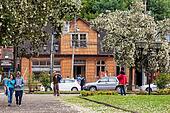
Town Square is usually a term to denote a one block area with a city courthouse in it from the 1920s through the 1950s, and around the four opposing sides of the street are lines of store fronts decreptoit from age.  Town Square doesn't conjure up ideas like upscale, trendy, ungodly rich, or opulent.

Within a radius of 20 minutes from my house are 4 town squares.  The closest is 8 minutes away.  It fits the usual concept and is called historic Oak Street.  It has restaurants and novelty stores down a street that ends at a courthouse.  The buildings and houses are really old even though they have been restored.


Another town square is about 10 minutes away and follows the same pattern, the historic section of Main St. with old houses and restored brick buildings containing well established businesses and restaurants with a couple of novelty shops thrown in.

About 15 minutes away is a third town square, but this one is modern.  The oldest shop is a little over 10 years old.  It is located on a major thoroughfare, so it is heavily trafficked. It is a shopping center with 20 different eating places and double that number of places to shop.  It's called a town center.

The town square 20 minutes away is much different from the other three.  It is actually called Town Square.  At its center is a courthouse, but it is fairly new about 20 years old.  Unlike the historic sections, honeycombed modern streets weave in and around stores - all kinds of stores.  But, they all have one thing in common.  Let me explain.


In a recent visit to this square, I ate in a Mexican food restaurant.  I split the food in the meal with another person, but I paid $40 for the one dish, $3.50 for teas, $8.99 for the appetizer, plus the obligatory tip of 20%.  I do have to say we were waited on hand and foot though.  We walked across the street to an apparel store.  T-shirts started at $125.  Polo shirts began at $189, and some of the silk shirts and other rare fabrics placed the shirts at above $350.

The ladies' store across the street had the same kind of offerings.  I didn't try the jewelry store, but the costume jewelry store had the prices of a jewelry store selling the normal stock of diamonds.  The cars in the two parking garages and designated parking areas bore the labels Audi, Infiniti, Lexus, Mercedes, Cadillac, and BMW.  A person can stay the night in the Hilton in the square if need be.  Businesses vary from Central Market and Whole Foods to Brighton, Sephora's, Soma's and Malouf's.  There are two fountain areas with trees and benches (miniature parks) where live music plays during the summer months fairly often.


I come often to this town square.  I particularly like eating at the Cheesecake Factory there and a hamburger place called Snuffer's.  I browse and occasionally buy a shirt from Brooks Brothers and another locally owned men's wear shop.  I have to do business there to register my cars and frequently use the postal services in the square.  Investment bankers have offices there if a person wants that service.

It's really refreshing to go there.  People are overly nice and easy-going.  The many stores and park areas are relaxing.  And I probably need to mention that this town square is different in another way.  Of all the towns and cities in the U.S,, this town square belongs to the 6th wealthiest city in the entire country.  I love going to my historic Oak and Main streets closer to my house to eat and shop on occasion.  I even like catching a movie and meal at the town center a quarter hour away.  But, there is nothing like the movie, shirt, or dinner from the Town Square just a short 20 minute journey down the road where the concepts of upscale, trendy, ungodly rich, and opulent are the norm.